
Idea 1
The Campaign Against Knowledge
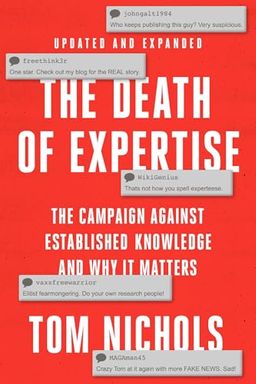
Have you ever caught yourself Googling an issue, scrolling for twenty minutes, and walking away feeling like you suddenly knew as much as the experts? In The Death of Expertise, Tom Nichols argues that this false sense of confidence isn’t just annoying—it’s become a civic crisis. He contends that society’s rejection of professional knowledge is eroding trust, conversation, and even the democratic foundations that depend on informed citizens. Americans, he says, are not just uninformed—they are increasingly proud of their ignorance, equating every opinion, however baseless, with facts discovered through rigorous study.
Nichols asks why this happens at a time when information is more abundant than ever. He examines a paradox: though we live in the Information Age, we are experiencing a collapse of the very idea that expertise matters. Everyone with a smartphone feels as qualified as doctors, scientists, journalists, or foreign policy analysts. This, Nichols insists, undermines rational discourse and weakens democracy itself, turning political debate into a noisy, angry free-for-all where no one can admit they’re wrong.
Ignorance as Virtue
According to Nichols, Americans have not simply lost respect for experts; they have turned ignorance into a badge of honor. In earlier times, citizens doubted intellectuals but still respected professional competence—pilots fly airplanes, doctors treat illnesses, engineers build bridges. Today, many people mistake opinions for reality and interpret expert disagreement as proof that all knowledge is relative. Nichols likens this to a new Declaration of Independence: instead of "all men are created equal," citizens act as though all ideas are equal, including ones demonstrably false.
The Internet’s Double-Edged Sword
Digital life fuels this illusion. Search engines deliver millions of results instantly, obliterating the sense that learning requires patience, context, and humility. Nichols shows how the endless stream of posts, tweets, and blogs turns debates into confirmation battles rather than genuine searches for truth. We click until we find something that validates what we already believe, mistaking access to data for understanding. The Internet, he writes, produces opinionated pseudo-experts who value immediacy over insight—a dynamic that intensifies polarization and rage.
Education and the Customer Mindset
Higher education should teach critical thinking, but Nichols argues that universities have become commercial businesses where students act as customers and professors become service providers. This erodes authority and trains young adults to assume that being offended is proof they’re right. He fears colleges now reinforce narcissism instead of curiosity, creating graduates who leave with inflated self-confidence and little capacity for self-critique. When those graduates face complexity in the real world, they often lash out at experts who challenge their opinions.
Why It Matters
In a democracy, citizens must learn enough to evaluate policy and elect responsible leaders. Yet Nichols warns that uninformed voters create a vacuum filled by technocrats or demagogues. Either experts seize power without accountability, or populists exploit ignorance by promising easy answers. Both paths lead away from democratic balance. The antidote, he insists, is humility: citizens must accept that expertise earns respect through study, experience, and evidence—not charisma or certainty. Experts, likewise, must engage people honestly and admit their own fallibility.
Nichols’s challenge is both moral and civic. He doesn’t call for worshiping intellectuals; he calls for dialogue grounded in trust, facts, and logic. By the end of the book, you see his argument as more than a lament for lost manners—it’s a warning that rejecting expertise is not only irrational, but a threat to the survival of informed self-government.