
Idea 1
Women Warriors and the Fight for Freedom in The Daughters of Kobani
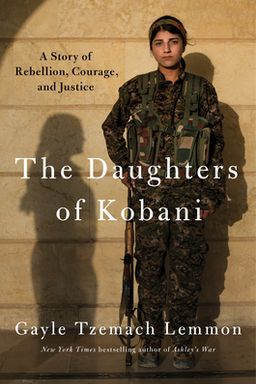
What does it mean for women, long confined by patriarchy and war, to seize history’s reins and fight for their liberation — not just through politics, but through guns and grit? In The Daughters of Kobani, journalist Gayle Tzemach Lemmon answers this question by chronicling the astonishing rise of the Kurdish Women's Protection Units (YPJ) in northern Syria and their decisive role in defeating the Islamic State (ISIS). Her book is both a stirring war chronicle and an exploration of how women can transform societies—even in the heart of a region long dominated by male power and religious extremism.
Lemmon contends that the Kurdish women who fought ISIS were not only defending their homes but pioneering one of the most radical social experiments in the Middle East: a democracy built on gender equality. Their story reveals how war can accelerate social change, and how ideals tested in battle can ripple far beyond the battlefield. At its core, the book asks whether true freedom can exist without women’s equality—and whether the act of taking up arms can become an act of liberation.
From the Margins to the Front Lines
Lemmon situates her narrative amid the Syrian Civil War, an environment of chaos, competing powers, and collapsing state structures. Against this backdrop, Kurdish fighters—long denied political and cultural rights—seized the moment to build a self-governing region known as Rojava. Embedded within its ideology, shaped by Kurdish leader Abdullah Öcalan, was a revolutionary principle: that no society can be free without the liberation of women. Out of that conviction emerged the YPJ, an all-female militia determined not only to fight ISIS but to dismantle millennia of patriarchy (a theme echoing authors like Martha Nussbaum in Women and Human Development).
Lemmon weaves detailed portraits of women like Azeema, a fierce sniper; Rojda, a calm, methodical commander; and Nowruz, a steady, strategic leader whose discipline shaped the movement. These women become living symbols of self-determination, transforming gender roles in one of the world’s most rigid societies. As they battle ISIS, they also battle the very notion that women belong at the margins of history.
Two Revolutions Collide: Equality vs. Extremism
Lemmon compellingly contrasts two irreconcilable worldviews. ISIS’s creed of enslavement and domination of women—seen in their mass abductions, sexual slavery, and public executions—is met by the YPJ’s doctrine of equality and inclusion. The battle for Kobani in 2014 becomes the flashpoint where these ideologies clash. Lemmon writes vividly of women fighting house-to-house in the devastated Kurdish town while the world watches via live broadcasts from across the Turkish border. For the first time, global audiences witness women fighting—and winning—against one of the most vicious terrorist movements of modern times.
The author portrays the YPJ’s victories not just as military ones but as ideological triumphs. When women who would once have been forbidden to walk alone in the streets can now command troops—including men—the revolution transcends the battlefield. Their defiance resonates far beyond Syria’s borders, becoming a statement about women’s agency everywhere.
America’s Unlikely Allies
Lemmon also explores a geopolitical irony: that America, a superpower that long resisted putting women in direct combat roles, ended up depending on an all-female militia in the fight against ISIS. Through U.S. Special Operations officers like Mitch Harper, Leo James, and Brett McGurk, the book reveals the evolving relationship between the YPJ and Washington. At first skeptical, American soldiers become awed by the tenacity and effectiveness of their Kurdish counterparts. These women, armed with little more than AK-47s and conviction, succeed where others had failed, turning Kobani into the first major ISIS defeat.
(Lemmon draws on her prior work Ashley’s War, which told of U.S. women who entered combat zones through the Cultural Support Teams. Here, she extends that inquiry globally: how women’s inclusion in warfare reshapes everything from battlefield tactics to national identity.)
The Meaning of Liberation
Ultimately, The Daughters of Kobani is not just about war; it’s about what comes after. As Lemmon follows her protagonists beyond the ISIS fight—to Manbij, Raqqa, and the eventual creation of a new Syrian democratic charter centered on gender equality—she explores the peril of building freedom in a region where every ally comes with limits. Even as the U.S. celebrates victory over ISIS, political abandonment looms, culminating in Turkey’s later offensive against the same Kurdish women it once relied on. Yet, Lemmon leaves us with a flicker of hope. The women of Kobani may have lost their Western allies, but they lit a torch for future generations of women determined to live—and lead—freely. Theirs is a modern epic of resilience, rising from rubble to rewrite the story of who gets to hold power when the world turns to ashes.