
Idea 1
Thinking Like a Data Detective
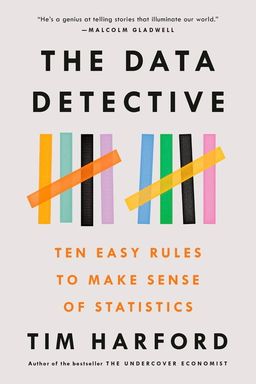
When you wake up to an alarming headline, a viral chart, or a smug tweet citing a statistic, how do you know what to trust? In his book, Tim Harford argues that numerical claims are not just facts to be believed or mocked—they are clues to be investigated. The book, often presented as a kind of manual for “data detectives,” shows you how to use curiosity, skepticism, and good reasoning to navigate a world awash with numbers. Harford’s premise is simple yet radical: data, when properly interrogated, can bring you closer to the truth, but only if you resist two traps—naïve faith in numbers and cynical dismissal of them.
Harford builds his argument through a series of principles, each illustrating one skill of a careful reasoner. The result is a synthesis of lessons from psychology, journalism, statistics, and ethics. Each story—from Vermeer forgeries to Google’s predictive algorithms—reveals a facet of how data interacts with human emotion, institutional power, and design.
The emotional side of evidence
Harford begins not with equations but with feelings. Expertise and logic fail when pride and tribal identity take over. Motivated reasoning explains why Abraham Bredius, a leading art scholar, fell for a fake Vermeer produced by Han van Meegeren: he needed the painting to support his belief in Vermeer’s genius. Similar emotional biases distort how citizens interpret news—whether about vaccines, climate change, or elections. Harford urges you to pause, name feelings like triumph or outrage, and ask: “What do I want to be true right now?” (A technique borrowed from cognitive reflection research by Shane Frederick.) Curiosity, not confidence, is your first defense against deception.
The craft of counting and definition
Numbers only make sense when you define what you are counting. Harford’s examples—from infant mortality classifications to self-harm surveys—show how small definitional ambiguities can produce misleading conclusions. In public debates about inequality or crime, people often quote figures without realizing that those figures depend on administrative labels, sampling strategies, or arbitrary cutoffs. His remedy is “premature definition avoidance”: clarify first, compute later. Before trusting a number, ask what the categories mean, what timescale is used (lifetime or annual), and who’s in the denominator. Truth often hides in these details.
How data and experience differ
You trust your eyes, but Harford shows why personal experience is partial. On his crowded London commute, he feels squeezed while statistics say buses average a dozen riders. Both are “true” through different lenses: his personal worm’s-eye view versus transport planners’ bird’s-eye view. Understanding this difference helps reconcile how people can feel unsafe despite crime drops or overestimate inflation while official measures fall. Combining perspectives, as Anna Rosling Rönnlund’s “Dollar Street” does, turns raw data into lived insight. The art of statistics lies as much in empathy as in arithmetic.
Why context changes everything
Harford insists that a single number is almost never meaningful on its own. Step back from short-term fluctuations and compare across scales. Headlines like “London’s murder rate higher than New York’s” dissolve under long-run graphs. Knowing landmark numbers—population, GDP, typical incomes—anchors understanding and prevents manipulation. “Max Roser’s long-view newspaper,” Harford notes, would replace panic stories with perspective: fewer child deaths, fewer wars, longer lives. Being numerate, in this sense, means knowing which timeframe and comparison make a claim truly significant.
The hidden hands behind datasets
Every dataset includes choices and omissions. Harford’s principle “Ask who is missing” means looking for voices excluded from the measurement. From Milgram’s all-male samples to biased election polls and big data drawn from smartphones or tweets, invisible patterns of exclusion distort results. Bias doesn’t require malice; it needs only convenience. Recognizing who was uncounted—women in labor statistics, residents without digital access, entire income groups—turns skepticism into justice: data gaps mirror social gaps.
The modern challenge: biased science and opaque algorithms
The same curiosity that helps you question a news graph must also guide you through scientific studies and algorithmic decisions. Harford recounts how publication bias—and its cousin, algorithmic opaqueness—makes dazzling claims seem stronger than they are. Journals prefer surprising results; algorithms hide their logic. From Daryl Bem’s “precognition” study to Google Flu Trends and Amazon’s résumé screener, you learn how missing replications or proprietary secrecy can entrench false confidence. The fix is not rejection but reform: preregistration, replication, transparency, and fairness audits. Public scrutiny is science’s lifeblood.
Trustworthy numbers and civic accountability
At the institutional level, Harford praises statistical offices like the US CBO and UK OBR as the quiet heroes of democracy. Their integrity matters because they create a shared factual floor beneath political debate. When politicians manipulate unemployment data or suppress crisis statistics—as in Greece or Argentina—the entire information ecosystem corrodes. Protecting statistical independence is therefore a civic duty. As Harford quips, such agencies cost less than a rounding error in budgets yet pay back their value thousands of times over through better policy choices.
From emotional bias to curiosity and humility
The final move in Harford’s logic is personal. To think well with data, you must not only master definitions and methods but also regulate your emotions and accept error. Like Keynes, who changed his mind when evidence shifted, you must practice intellectual humility—not the hesitant kind but an active habit of updating beliefs. Philip Tetlock’s “superforecasters” exemplify this mindset: they break problems into parts, use base rates, keep score, and revise. Curiosity, Harford concludes, is your antidote to certainty. It keeps you learning, empathizing, and resisting the easy highs of outrage or tribal belonging.
Putting it together
Across these rules, Harford builds a worldview where numbers are neither villain nor savior. They are tools—powerful, fallible, and human. To use them well, you learn to define before you count, balance lived experience with data, look for missing voices and hidden incentives, demand transparency, and stay curious enough to be surprised. The ultimate goal is not perfect truth but better inquiry: a life spent reasoning honestly in a noisy world.