
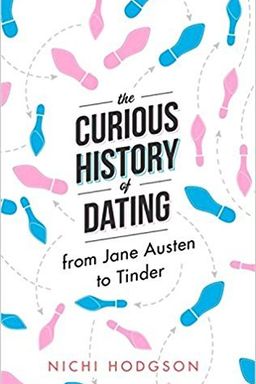
The Curious History of Dating cover

The Curious History of Dating

by Nichi Hodgson

The Curious History of Dating takes you on a compelling journey through the evolution of romantic relationships in the UK. From the strict courtship rituals of the 1700s to the digital age''s dating apps, this book uncovers the cultural, societal, and technological shifts that have transformed how we find love today.

The Evolution of Love and Courtship Through Time

Why do we date the way we do—and how did we get here? In The Curious History of Dating, Nichi Hodgson argues that modern romance is not a sudden invention of digital culture but the culmination of hundreds of years of social, sexual, and technological evolution. Hodgson contends that every era—from the ballrooms of the Georgian elite to the swipes of Tinder—has shaped how we understand love, choice, and sexual freedom. The book traces how dating evolved from a transactional act of securing marriage and property into a quest for self-realization and pleasure.

To truly grasp the modern dating landscape, Hodgson shows that you must understand the chain of cultural and moral revolutions that led to it. Chastity, class, and gender roles dictated the terms of courtship in the eighteenth century, but these began to unravel with the Victorian rise of romantic love and women’s increasing agency. Industrial growth, global travel, and mass communication expanded the possibilities of partnership; war, feminism, and technology later redefined intimacy itself. You can see echoes of these transformations in today’s dating habits—the lingering prudishness of Victorian etiquette in our social caution, or the performative courtship of Regency balls reflected in social media’s display of romantic success.

From Transaction to Emotion

In the Georgian and early Victorian eras, finding a mate was primarily a matter of economics and social standing. Women were effectively bartered into marriage based on dowry and reputation, while men sought beauty and virtue as symbols of class mobility. Hodgson illuminates how personal ads in the 1700s—often requesting ‘an amiable lady of good character and fortune’—foreshadowed today’s dating profiles, with their coded references to status and desirability. Yet amid these transactions, seeds of love were being planted through literature (Jane Austen’s Pride and Prejudice) and evolving ideals of emotional connection.

The Industrial and Social Revolutions of Love

With industrialisation came more freedom of movement and communication. Railways, bicycles, and urban life expanded the dating pool far beyond local villages. These changes, paired with growing feminist consciousness, allowed women to begin taking initiative—as seen with Queen Victoria proposing to Albert. Hodgson suggests that the Victorian era’s paradoxical mix of moral repression and sexual curiosity birthed a generation that spoke endlessly of propriety while secretly experimenting. Letters, Valentine’s cards, and coded flirtations made intimacy something that could be publicly expressed yet privately controlled.

War, Feminism, and Technology

As World Wars upended gender roles, women entered the workforce and gained independence, bringing dating out of ballrooms and into dance halls, cinemas, and military camps. Hodgson describes ‘khaki fever,’ the wartime infatuation with uniformed soldiers, as both symptom and catalyst of female sexual liberation. Postwar media—from magazines to radio—began teaching women how to date with both decorum and desire. By the 1960s, contraception and the Pill transformed sex from obligation into choice, triggering what historians call the sexual revolution. Yet Hodgson argues the revolution wasn’t purely liberating—it created new anxieties about freedom, fidelity, and identity.

The Digital Age and the Gamification of Desire

Fast-forward to the late twentieth and early twenty-first centuries, and dating migrated from classified ads to screens. What began with computer matchmaking in the 1970s evolved into online messaging and finally the instant gratification of apps like Tinder. Hodgson parallels this digital transformation with historical precedents: just as railway expansion changed how couples met in the 1800s, algorithms now expand our emotional geography. But she warns that while technology democratizes romance, it also commodifies it—turning affection into data points and attraction into a swipeable game.

Ultimately, Hodgson’s argument is that the history of dating mirrors the evolution of personal freedom. As women gained legal and financial autonomy, love itself became less a social contract and more a personal choice. From the Georgian marriage broker to the 3D avatar date, each transformation reveals how social systems adapt to our deepest human urge: to connect. Whether you’re navigating dating apps or decoding Austen’s courtships, Hodgson’s sweeping account helps you see that every romantic choice you make is part of a centuries-old story of desire, negotiation, and self-expression.


Class, Chastity, and the Georgian Marriage Market

In the Georgian era of the 1700s, dating wasn’t the playful social experiment it is now—it was a business transaction wrapped in etiquette. Hodgson plunges readers into a world where women were commodities in a market of manners, and every gesture, corset, and chaperoned walk was a coded move on a marital chessboard. The primary aim wasn’t romance but survival: ensuring you married into financial security and held onto your reputation.

Lonely Hearts and Manual Etiquette

Personal advertising might feel modern, but Hodgson reveals it began as early as the eighteenth century. Newspapers published drawn-out pleas like “A Gentleman of fortune seeks an amiable lady of good character.” These early Lonely Hearts ads required intermediaries and careful secrecy, as respectable women could not directly engage with strangers. Answering such an ad was risky but thrilling—a kind of Georgian version of sliding into someone’s DMs, complete with social peril.

Women’s Virtue and Visibility

A woman’s beauty was measured in reputation rather than appearance. Age, demeanor, and chastity were vital commodities, often equated to profitability. Beauty standards drew on physical features—the sloping shoulders and fair complexion of the Regency ideal—but moral conduct mattered more. The Complete Letter-writer (1800) advised daughters that 'reputation will last to the end of your days,' teaching that virtue was lifelong capital. Even the act of visiting social venues required parental permission; young women had to be ‘out’ before they could even reply to a suitor.

The Performance of Romance

Balls and chaperoned dances served as semi-public auditions for courtship. Hodgson compares Almack’s—London’s exclusive ‘Marriage Mart’—to the modern club scene: social gatekeepers, dress codes, and limited access to high-value partners. Fans became tools of clandestine communication, with coded gestures like placing a fan near the heart to signify love. Women floated between grace and strategy, balancing allure and restraint in a system that gave them little agency yet demanded their charm.

The Hardwicke Marriage Act and Legal Control

Introduced in 1753 to curb clandestine unions, the Act legally standardized marriages within the Church of England, rendering unions outside it potentially invalid. This constrained romantic choice but sparked rebellion through elopements to Gretna Green, where Scottish law allowed quick weddings without parental consent. Hodgson frames this as Britain’s first dating hack—a loophole for those unwilling to let family or finance dictate their hearts.

Through the Georgian lens, Hodgson exposes romance as a negotiated social contract. Women’s virtue was currency, men’s solvency was credibility, and love was an aspirational bonus at best. But this delicate choreography planted the seeds for emotional passion later championed by the Romantics and the Victorians. If dating apps encourage strategic presentation today, it’s because Georgian society perfected the art of self-marketing centuries ago.


Love and Restraint in Victorian England

The Victorian age reshaped love from duty into devotion, but it also smothered desire under a corseted moral code. Hodgson paints a portrait of society caught between passion and propriety, where a woman’s heart—and hemline—became battlegrounds for emerging ideas about gender and sexuality. While Queen Victoria’s marriage to Prince Albert sparked public enthusiasm for romantic love, the reality of dating remained tangled in hypocrisy.

Courtship as Choreography

Etiquette manuals dominated Victorian courtship. The rules for ‘calling,’ conversing, and dancing were so rigid that spontaneous romance was nearly impossible. Gentlemen could call at a woman’s home only with permission from her mother, carefully navigating the parlor politics that dictated status. Hodgson likens this to the algorithmic efficiency of social media—ritualized performances meant to signal value while avoiding scandal.

Letters, Language, and Lawsuits

Expressing affection came through words and symbols. Valentine’s cards exploded in popularity thanks to cheap printing and postal reform. Flowers and stamps became coded communication systems, embodying secrecy and sentiment. But love could have legal consequences—especially for women. ‘Breach-of-promise’ suits allowed jilted females to sue for broken engagements, a rare means of asserting agency in a society that prized female modesty over justice. Hodgson illuminates these cases as early feminist gestures cloaked in respectability.

Sexuality and Hypocrisy

Victorian sexuality was cloaked in contradiction. Acton declared that ‘the majority of women are not troubled by sexual feeling,’ yet a thriving underground of porn, prostitution, and sexual science suggested otherwise. The same era that produced Marie Stopes’ proto–sex manuals also birthed campaigns for purity and abstinence. Hodgson argues that this double life—the public denial and private indulgence—set a precedent for our modern discomfort with open sexual conversation.

Class and Constraint

For working-class women, industrial life loosened restrictions, offering opportunities for socializing at music halls and factories. Yet premarital pregnancy often meant economic ruin. Hodgson’s accounts of servant girls forbidden from having ‘followers’ expose the cruel intersection of morality and poverty. Even so, these women pioneered casual relationships and independence long before upper-class society deemed it acceptable.

In short, Victorian love thrived on restraint. It made desire dignified but precarious, laying the groundwork for twentieth-century rebellion. Hodgson’s insight is simple but devastating: the modern fear of seeming ‘too forward’ has its roots in Victorian etiquette that equated virtue with silence. Every text left unanswered, every overthought message? A ghost of the Victorian parlor lives in you.


Modernity, Mobility, and the Sexual Revolution

By the early twentieth century, the world had changed—women could travel, work, and even fight. Hodgson traces how independence during the Edwardian era and World Wars transformed dating into a faster, riskier, and more emotional enterprise. Love now had locomotion, powered by trains, bicycles, and an emerging sense of equality.

The Edwardian Woman on the Move

Hodgson’s depiction of cycling women—the ‘New Woman’ of 1890s Britain—is striking. Freed from chaperones and corsets, she rolls into modernity, flirting in motion. As Susan B. Anthony said, bicycling emancipated women more than anything else. This newfound speed echoed in art, photography, and early personal ads, creating a romantic culture built on contact and chance rather than class and lineage.

War and Desire

World War I catalyzed ‘khaki fever’—women’s fascination with uniformed soldiers. Hodgson reveals how wartime pressures replaced courtship with urgency. Hasty marriages, correspondence-based affairs, and grief-fueled flings blurred traditional boundaries. Wartime freedom also gave rise to controversies about female sexuality, with watchdog groups policing young women’s conduct. In the chaos, women found power: they became volunteers, workers, and flirts, equal participants in shaping romantic leisure.

Twenties Freedom and the Jazz Age

Postwar liberation burst into the 1920s, the age of the Bright Young Things and flappers who redefined femininity. Short hair and shorter hemlines signaled rebellion; the dance hall replaced the drawing room. Hodgson compares these women to social media influencers—living their lives in public, setting trends, and challenging norms. Romantic experimentation became a badge of modernity, encouraged by writers like Marie Stopes, whose Married Love validated women’s pleasure and contraception.

From Scandal to Selfhood

By the mid-century, films and novels such as Lady Chatterley’s Lover and The Well of Loneliness made sexual autonomy thinkable. Yet scandals—like the Profumo affair—showed the price of female independence. Hodgson uses these stories to explore the tension between liberation and reputation, a theme that persists into today’s culture wars.

The Sexual Revolution freed bodies but complicated hearts. Hodgson notes that while the Pill democratized sex, it also commodified it, creating expectations that pleasure should be constant and commitment optional. If freedom is measured by choice, the twentieth century gave us abundance—yet not always happiness. What we call ‘hookup culture’ has roots deep in the emotional fallout of postwar emancipation.


The Digital Transformation of Dating

When Hodgson turns to the late twentieth and twenty-first centuries, she describes an era obsessed with love at first click. The emergence of computer matchmaking and online communication transformed courtship into a data-driven endeavor. What once required letters and introductions now runs on algorithms and pings.

From Dateline to Digital Intimacy

The first computer dating services emerged in the 1970s, like the UK’s Dateline system, where participants mailed in questionnaires to be ‘scientifically matched.’ Hodgson presents these early experiments as precursors to our digital swipes, noting that the same anxieties haunted users—fear of deception, superficiality, and overinflated expectations. The rise of bulletin boards and online chat rooms in the 1980s expanded this culture of mediated connection, foreshadowing modern text-based flirtations.

From the Modem to the Smartphone

As the internet blossomed in the 1990s, chat rooms and early messenger programs (like AOL and MSN) gave lovers a new way to connect. Hodgson notes how flirtation evolved through digital language—‘ping’ becoming the 1990s version of a fan flutter. In parallel, dating websites like Match.com, eHarmony, and Gaydar formalized online connection. The anonymity that once fueled secret love letters now produced both romance and risk: virtual cheating, catfishing, and obsession with appearance.

The App Age and Gamified Desire

Tinder’s arrival in 2012 marked dating’s transformation into entertainment. Hodgson examines the app’s swipe mechanics—the gamification of desire—and its psychological effect: endless choice fostering shallow commitment. Yet this isn’t unprecedented; it echoes the abundance anxiety of ballrooms past, where partners were evaluated like trophies. Apps such as Bumble, Hinge, and Grindr refined the experience, catering to empowerment, identity, and immediacy alike. Dating, once an ordeal of patience and propriety, became an instant pastime.

Hodgson concludes that technology didn’t corrupt romance—it simply mirrored human habit. We’ve always used tools to find connection, from fans and letters to phones and screens. What’s changed is scale: love became global, searchable, and measurable. In this digital mirror, every ghosted message, every right swipe, is a reflection of our centuries-long dance between desire and control.


Freedom, Identity, and the Future of Love

The book ends on a provocative note: in a world of gender fluidity and digital intimacy, dating isn’t dying—it’s diversifying. Hodgson explores how the boundaries between romance, sex, and identity are dissolving, and what that means for the future of love.

Gender and Fluidity

In recent decades, the rise of LGBTQ+ visibility has redefined dating norms. The legalization of gay marriage in Britain in 2014 capped centuries of struggle that began with the criminalization of same-sex acts under the Victorian penal code. Hodgson interprets this as both culmination and continuation—proof that equality doesn’t end with rights but evolves through culture. Millennials and Gen Z, less tethered to binary labels, now navigate identity as part of courtship itself.

Redefining Intimacy

Virtual reality, teledildonics, and remote connectivity introduce a new intimacy economy. Hodgson cites sex-tech devices such as OhMiBod and Kiiroo, which let couples connect physically over Wi-Fi, as the latest iteration of humanity’s long pursuit of closeness. What was once constrained by geography or propriety is now boundless but fragmented. Technology extends touch, yet paradoxically may reduce emotional depth.

Ethical Non-Monogamy and Choice

More couples now practice open relationships, polyamory, or ethical non-monogamy. Hodgson connects this to historical echoes of free love and bohemian circles, arguing that modern non-monogamy isn’t rebellion but adaptation—a response to economic instability and shifting expectations. As marriage rates plummet, ‘dating is the new wedlock,’ she says: fluid, negotiated, and sustained by choice rather than duty.

Love as Legacy

Ultimately, Hodgson reframes dating as cultural legacy rather than modern trend. Our flirtations on apps are connected to centuries of correspondence, etiquette, and emotional experimentation. To understand this continuity is to see ourselves as participants in a long lineage of hopeful hearts. Every love story—even a digital one—is history in motion.

Hodgson leaves readers with a gentle challenge: acknowledge how freedom changed not only who we love, but how we love. The Curious History of Dating isn’t nostalgia—it’s a mirror, showing how centuries of courtship have shaped the way you search for connection today. From the fan language of 1797 to the emoji of 2024, our pursuit remains the same: an eternal curiosity for love.

Dig Deeper

Get personalized prompts to apply these lessons to your life and deepen your understanding.

Go Deeper

Get the Full Experience

Download Insight Books for AI-powered reflections, quizzes, and more.