
Idea 1
Faith That Straightens What’s Crooked
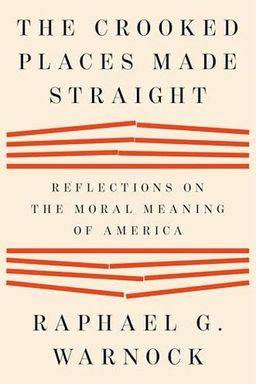
When your life or body feels bent out of shape—by illness, accident, or even someone else’s mistake—how do you keep going? In The Crooked Places Made Straight, Raphael G. Warnock argues that enduring faith can meet life’s most disorienting suffering with patient hope and courageous action. Yet the text you’re reading is, in fact, George Palmer Pardington’s 1886 testimony “The Crooked Made Straight,” a first-person account of crippling injury, failed treatments, and a long, gradual healing he attributes to the “prayer of faith” (Note: Though the metadata lists Warnock as author, the content is Pardington’s 19th-century narrative). Pardington contends that God’s healing often comes after surrender, in community, and through the humble work of acting on what you believe—step by step.
Across nearly a decade, Pardington goes from a healthy ten-year-old to a severely deformed adolescent after a teacher’s violent discipline in 1876 triggers uncontrolled movements, muscular contractions, and a spine so contorted that he forms an arch when lying on his back—only his head and heels touch the floor. Doctors brace him in Taylor neck supports, steel corsets, and even double-thick plaster-of-Paris jackets reinforced with wood. A Detroit medical society examines him. The State Homeopathic Medical College in Ann Arbor pronounces there is “no help.” He tries mineral baths in Mount Clemens and Grand Haven. Electricity is administered daily. Nothing works. His right arm contracts so tightly the palm rests between his shoulder blades for three and a half years. His head later loses support, falling back between his shoulders. He is mostly on the floor, breathing shallowly, barely able to walk a few steps without collapsing to breathe again. And yet—he reads, jokes, hosts friends, prays, and refuses despair.
Core Claim: Surrendered, Stubborn, and Specific Faith
Pardington’s core argument unfolds in three movements. First, surrender: his mother, secretly praying, releases her will to God—“whatever the issue is to be, she would be satisfied.” Not long after, George casually lowers his arm to his lap. The three-and-a-half-year spasm ends in a single, unremarkable motion. Second, solidarity: friends, pastors, and a wider network in Buffalo form a circle of intercession, aligning at exact hours (July 21 and 28, 1881) to pray. Third, action: on Thanksgiving Day, 1881, George removes his plaster jacket “forever,” declaring by faith he is “every whit whole” on the basis of Christ’s finished work—even while still weak, ungainly, and obviously crooked. He then acts his way into healing: walking as far as he can, traveling to Buffalo to be anointed, resuming studies, and re-entering school and life.
What You’ll Learn
You’ll see the detailed arc of his illness, the limits of late-19th-century medicine, and the interior work of faith under pressure. You’ll learn how George discerns between instant and gradual healing, how he resists fruitless arguments, and why he anchors hope in Scripture (“James 5:14–15,” “Ex. 15:26,” and “Isa. 40:31”). You’ll also meet the network that sustains him—parents, pastors, fellow believers like Carrie F. Judd (later Carrie Judd Montgomery), and even a protective little dog who refuses to let strangers disturb him. Along the way, you’ll see how George’s story rhymes with modern insights (e.g., William James’s “act as if” principle; Herbert Benson’s relaxation response; the power of social support documented in health psychology) while remaining distinctly theological in its logic of surrender, anointing, confession, and communal prayer.
Why It Matters
If you’re carrying chronic pain, a long rehab, or a devastating diagnosis, this account offers a pattern of hope that doesn’t deny hardship. It shows what to do when medicine runs out of explanations: lament, listen, surrender, gather companions, and take small but stubborn steps that align with what you believe. If you’re a caregiver, it shows how faithful presence, practical support, and prayerful community anchor a sufferer. And if you wrestle with faith-and-medicine questions, it suggests a humble path: respect the best available care, yet remain open to the God who can heal instantly, gradually, or ultimately.
A Thread Running Through
“They that wait upon the Lord shall renew their strength… I am the Lord that healeth thee… O that men would praise the Lord for His goodness.” The testimony frames healing not as triumphalism but as worship-filled perseverance.
In short, George Pardington’s story is about how God straightens what is crooked by shaping a person through patience, community, and embodied faith. It’s a guide for anyone learning to move again—physically, emotionally, or spiritually—one faithful breath at a time.