
Idea 1
Creative Thinking as the Competitive Advantage of the Future
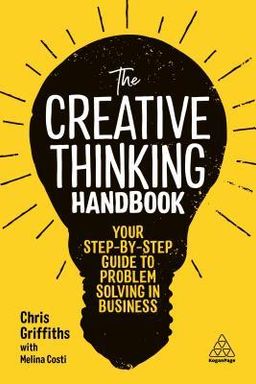
When the world changes faster than your plans, how do you stay ahead? In The Creative Thinking Handbook, Chris Griffiths, along with co-authors Melina Costi and Caragh Medlicott, argues that the essential skill of the twenty-first century isn’t technical expertise—it’s creative thinking. In an era where knowledge alone no longer provides power, Griffiths contends that creativity has become the new currency of success. Yet, he cautions, most people and organizations have forgotten how to think creatively, trapped by rigid assumptions, reactive decisions, and selective biases.
Griffiths’s central claim is simple: creativity can be taught, structured, and applied. Using his method called the Solution Finder, he reveals a repeatable process for producing innovative, logical, and actionable solutions to real-world problems. Drawing on neuroscience, business strategy, and decades of training Fortune 500 leaders, the book argues that anyone—individual or team—can learn to think more creatively, if they first learn to manage their thinking errors.
A Time Machine to the Future of Work
The authors open with a challenge: technology and automation are transforming everything from customer service to leadership. The World Economic Forum lists creativity, problem solving, and critical thinking as the most crucial skills for the modern workplace. Griffiths calls creativity your “personal time machine”—the ability to design your future rather than be displaced by it. He contrasts this creative necessity with what he calls the "knowledge trap": the assumption that past expertise guarantees future relevance. Quoting Henry Ford and NASA studies, he shows that adults rapidly lose their natural creativity over time due to educational conditioning and fear of mistakes.
The good news, Griffiths insists, is that creative ability isn’t genetically fixed—it’s a mental fitness you can rebuild. Like a neglected muscle, creativity revives through training, experimentation, and application. To do this, he introduces tools such as the Decision Radar (for assessing thinking patterns) and the Solution Finder framework for solving complex problems methodically.
Why Creativity Beats Information
Griffiths argues that the information age has made data commoditized. Knowledge, accessible instantly via a smartphone, has lost its exclusivity. What matters now is how you use that knowledge. Companies that cling to outdated methods—like Kodak and Blockbuster—fade, while those daring to innovate—like Amazon, Tesla, or TikTok—thrive by “thinking without the box.” The difference lies in applied creativity: combining logical strategy with imaginative risk-taking to create something useful and new.
Creativity as a Process, Not an Accident
Far from being mystical or whimsical, creativity, Griffiths argues, can be organized systematically. The book divides its approach into three parts:
- Part One – Thinking About Your Thinking: exposes the mental traps—selective, reactive, and assumptive thinking—that sabotage creativity.
- Part Two – The Solution Finder: a four-step framework (Understanding, Ideation, Analysis, Direction) to move ideas from inception to implementation, inspired by design thinking and cognitive science.
- Part Three – The End of the Beginning: focuses on sustaining creative habits, leading with innovation, and embedding creativity in culture.
Across these sections, Griffiths combines psychology with hands-on tools like brainstorming techniques, creativity canvases, and templates accessible through his Ayoa platform. He shows how to build metacognition—the ability to “think about your thinking”—so you can identify biases, interrupt old patterns, and carve new neural pathways for innovation.
From Inspiration to Execution
Ultimately, The Creative Thinking Handbook is a manifesto for applied creativity—turning ideas into action. Griffiths dismisses romantic notions of genius as lightning strikes of inspiration. Instead, he defines innovation as “the marriage of creativity and sound logic.” He backs this with case studies—from Toyota and Pixar to Airbnb and Noom—to illustrate how structure transforms inventive sparks into sustained success. Creativity without process leads to chaos, he reminds us; logic without creativity leads to stagnation.
In a conversational tone, Griffiths invites readers to master both. He promises that by understanding how you think, embracing play and experimentation, and applying structured processes systematically, you can achieve breakthrough results no matter your role or industry. Creativity isn’t a gift—it's a skill. Cultivate it, and it will become your most powerful tool for both problem-solving and personal growth.