
Idea 1
The Creative Act as a Way of Being
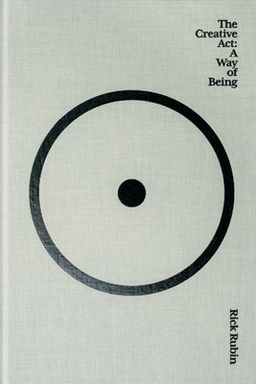
How can you live your life as if every moment were an artistic creation? This is the central question in Rick Rubin's The Creative Act: A Way of Being, a book that redefines creativity not as a skill possessed by the few, but as a fundamental mode of human existence. Rubin—known for shaping music from Johnny Cash to Kanye West—argues that creativity is not about talent or training. It is about awareness, attention, and openness to the invisible currents of inspiration that flow through everyday life.
Rubin invites you to see yourself as part of a universal creative unfolding. Trees blossom, rivers carve landscapes, sunlight changes tone—and you, too, are always in a process of creation, whether you write, cook, speak, or simply observe. He calls this alignment with the creative energy of the universe “The Way of Being.” It’s less about making great art and more about cultivating a state of mind where art becomes inevitable.
Creation as Conscious Living
At the heart of Rubin’s philosophy is the idea that everyone is a creator. You don’t have to be a painter or musician to create meaning, beauty, or change. The very act of perceiving reality—of noticing what moves you and how you respond—transforms your life into a creative canvas. Every decision you make, every conversation, is a brushstroke.
For Rubin, the artist’s purpose is to tune into what he calls Source: the vast field of ideas, sensations, and energies that exist beyond conscious thought. These impulses are always present, waiting for receptive minds to translate them into form. Creativity, then, is an act of listening as much as making. As he says, “We are translators for messages the universe is broadcasting.”
Awareness, Presence, and the Creative State
Rubin’s creative act is deeply spiritual. He weaves together mindfulness, Eastern philosophy, and artistic practice into a guide for living intentionally. Like a Zen master, he teaches that by cultivating awareness—seeing the world without judgment, expanding your perception—you expand your universe. Awareness isn’t effortful; it’s an act of allowing. The more you can quiet your inner noise, the more clearly you perceive both outer beauty and inner truth.
“Awareness is not something you force. It’s something you allow.”
This way of seeing is the foundation for what Rubin describes as living as an artist. Art isn’t something you do for an audience—it’s how you interact with the world. This aligns Rubin’s worldview with contemporary thinkers like Eckhart Tolle (The Power of Now) and Julia Cameron (The Artist’s Way), who also see creativity as inseparable from spiritual awakening.
From Process to Practice
Throughout the book, Rubin guides you through the full creative cycle: from tuning in and gathering seeds of inspiration, to experimenting, crafting, finishing, and eventually letting go. Each phase mirrors natural rhythms—the seasons of creation and decay, growth and renewal. He emphasizes practice over performance. Living as an artist means paying attention, following curiosity, and working with patience, humility, and playfulness.
Importantly, Rubin’s perspective rejects commercial or critical definitions of success. In his view, success is internal: the quiet joy of doing your best work and setting it free. Like a monk tending a garden, your task is not to control the harvest, but to tend the soil. This theme echoes the Stoic focus on process over outcome (as in Ryan Holiday’s The Obstacle Is the Way).
Why These Ideas Matter
In an overstimulated, algorithm-driven culture, Rubin’s message feels revolutionary: creativity is not about producing content or following trends. It’s about reclaiming presence and authenticity. He doesn’t promise to teach you how to succeed as an artist, but how to live creatively—awake to the subtle, the unseen, and the miraculous in the ordinary.
By the end of the journey, you come to realize that the creative act is not a means to an end. It is the end itself—a way of returning to wonder, of aligning your inner and outer worlds, and of participating consciously in the unfolding of life. In Rubin’s universe, to be human is to be an artist—and to live creatively is to live fully.