
Idea 1
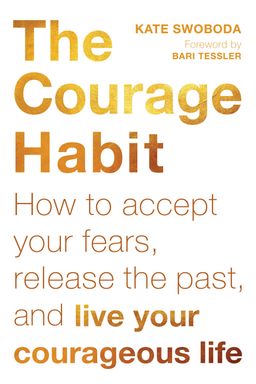
The Courage Habit: Transforming Fear into Authentic Living
When was the last time fear stopped you from pursuing something you deeply wanted—a career change, a creative project, or a more open relationship? In The Courage Habit, Kate Swoboda argues that courage is not a rare trait of heroes or risk-takers but a habit that anyone can cultivate. Her central message is powerful: we respond to fear through ingrained, automatic routines—but by retraining ourselves to replace fear-driven habits with courageous ones, we change our entire life trajectory.
Swoboda contends that fear is both inevitable and deeply human. Trying to eliminate it—through sheer willpower, positive affirmations, or ignoring it—doesn’t work. What does work is learning to engage consciously with fear through four repeatable practices: accessing the body, listening without attachment to inner critical voices, reframing limiting stories, and reaching out to create community. These four habits collectively form what she calls the Courage Habit, a framework that helps you face vulnerability and still take meaningful action.
The Core Problem: Fear as a Habit Loop
Swoboda blends psychology and coaching with insights from neuroscience (notably referencing Charles Duhigg’s The Power of Habit) to explain that fear operates like any habit loop. It has three parts: cue (something triggers fear), routine (your automatic response—avoidance, perfectionism, self-sabotage, etc.), and reward (momentary relief or safety). Over time, these loops reinforce themselves, making fear the default mode whenever uncertainty arises. The breakthrough comes from realizing that fear itself can’t be controlled—but the routine that follows it can.
The Bridge from Fear to Courage
Instead of trying to suppress fear, Swoboda’s process helps you acknowledge it and then redirect your response through four deliberate habits. Each habit builds psychological flexibility and resilience (paralleling ideas from Acceptance and Commitment Therapy and mindfulness research by Jon Kabat-Zinn and Brené Brown). The first step, accessing the body, involves slowing down and noticing fear’s physical cues. The second, listening without attachment, helps you meet your inner critic with compassion rather than hostility. The third habit, reframing limiting stories, transforms assumptions like “I’m not capable” into more empowering narratives. Finally, reaching out and creating community ensures that courage doesn’t exist in isolation but thrives through connection and accountability.
Context and Why It Matters
Swoboda’s own journey—from a high-achieving corporate professional trapped by “look-good” perfectionism to a coach teaching people how to live authentically—frames the book’s accessible tone. She’s not preaching fearlessness; she’s modeling vulnerability. Her case studies—mothers, artists, entrepreneurs, and ordinary people—illustrate how following these steps leads to tangible transformation. For example, Eliana learned that her “time management problem” was actually a fear routine rooted in overachievement; Carolyn reframed her belief that commitment meant giving up freedom; and Janelle used mindfulness to navigate guilt about motherhood.
Ultimately, the book argues that courage is not spontaneous but practiced. It’s a muscle strengthened through repetition. The Courage Habit positions fear as an invitation rather than an obstacle—it’s the first step toward becoming who you truly are beneath social expectations. By practicing these habits, you rewrite your story from “I can’t” to “I can,” turning small, daily choices into a larger pattern of brave living. As Swoboda puts it, everything you want is on the other side of your fear—but you reach that place not through avoidance or bravado, but by patiently cultivating courage one habit at a time.