
Idea 1
Family, Anxiety, and the Architecture of Modern Life
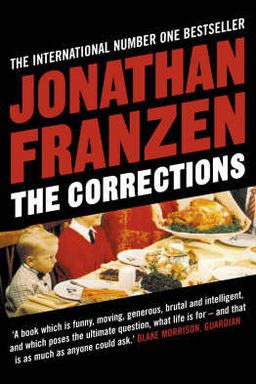
What happens when the structures that once gave meaning—work, duty, religion—break down? In Jonathan Franzen’s The Corrections, you follow the Lambert family as they try to live decently within the failures of modernity. Franzen shows you how anxiety, money, and memory become the new frameworks of morality. Every object—Alfred’s chair, Enid’s coupon drawer, the Ping-Pong table—stands for the shifting tectonics of family, technology, and selfhood.
The Book’s Central Argument
The book argues that anxiety has replaced faith as the atmosphere of domestic life. For the Lamberts, the “alarm bell of anxiety” never stops ringing; it mutates from background sound into the weather of their minds. Enid’s vigilance, Alfred’s tremors, Gary’s managerial tension, Chip’s humiliations, and Denise’s moral fatigue become case studies in how modern people sustain meaning after institutions dry up.
Franzen weaves personal dramas with cultural critique. The Midland Pacific Railroad, Axon Corporation, and the biotech Corecktall all function as mirrors to a society that treats emotion, intellect, and the body as tradable commodities. The family, like the market, depends on constant correction: small adjustments, concealments, and desperate rebalances meant to preserve a fragile illusion of control.
The Family as Mirror of America
Each Lambert represents an American type. Alfred, the retired engineer, embodies a Protestant work ethic that believes labor shapes virtue. Enid carries the spirit of domestic perfection and moral watchfulness. Their children inherit the contradictions of a service economy: Gary translates emotion into finance, Chip commodifies theory, Denise turns craft into brand. You learn that generational succession doesn’t transmit values—it converts them into transactions.
The family’s Christmas plan in St. Jude illustrates this perfectly. To Enid, a final family holiday is redemption. To Gary, it is a logistical and financial burden. To Denise and Chip, it feels like emotional theater. Ritual becomes survival performance—an attempt to restore coherence when no one truly believes in it.
The Social Themes in Motion
Beneath the plot runs a web of themes: the commodification of care, the collapse of public ethics into private shame, and the confusion between autonomy and management. Corporate medicine (Axon’s Corecktall), consumer psychopharmacology (Aslan), and the fetish of productivity (Gary’s banking, Alfred’s patent) reveal how wellness and morality turn into markets. Franzen uses those systems to comment on the privatized feeling of the new century: even emotions require ROI.
You watch language itself becoming transactional—emails, contracts, IPO sheets, and Christmas letters replace genuine confession. Secrets become the only remaining private currency. That’s why Alfred’s hidden inventions, Enid’s hidden pills, and Denise’s hidden lovers carry such charge: concealment is the last form of self-definition.
The Personal Becomes Structural
Franzen lets you experience how personal pathologies echo social transformations. Alfred’s Parkinson’s mirrors America’s industrial decay—muscular, disciplined motion breaking into tremor. Enid’s compulsive order parallels consumerism’s false control. Gary’s market logic reveals finance as new morality; Chip’s theoretical self-deception dramatizes the exhaustion of the critical intellect when everything is for sale. Denise’s perfectionism shows both the dignity and despair of craft in an age of spectacle. Each tries to live a moral life amid systems designed to monetize care or authenticity.
Why the Book Matters
By following the Lamberts through domestic rooms, boardrooms, and cruise cabins, you see a complete anatomy of modern American disquiet. The novel’s “correction” is both financial and moral—a long, slow leak in meaning that forces every character to improvise survival. Enid’s final moment of clear-eyed freedom doesn’t resolve the story; it redefines success as the capacity to adapt, not to win. (Think of George Eliot’s Middlemarch or Don DeLillo’s White Noise: both show moral life persisting inside systems larger than conscience.)
At its heart, The Corrections teaches you to read the domestic environment as an ethical microclimate. Every drawer and dinner table embodies the negotiation between care and control, intimacy and performance. Franzen’s correction is not punishment but equilibrium—an art of living amid entropy, to keep hearing the bell and still go on.