
Idea 1
Peter Thiel’s Architecture of Power
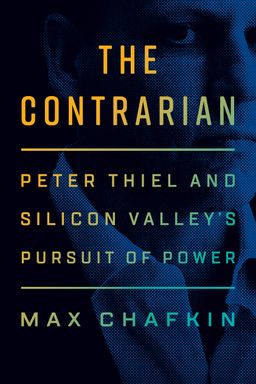
Why does Peter Thiel matter? Because he offers a blueprint for how ideas, money, and technology can be fused into power. The book traces Thiel’s path from a restless childhood strategist to a billionaire investor who leverages ideology as an operational tool. It argues that Thiel’s true project is not merely wealth creation—it is the engineering of political, technical, and cultural control within American capitalism.
Across the chapters, you follow a trajectory: Thiel’s formation in contrarian thought; his experimentation through PayPal; his evolution into a hedge-fund theorist; the creation of Palantir and the Thielverse; and his eventual deployment of capital to shape politics, media, and administration. This progression shows an intellectual and strategic continuity—the idea that systems are controllable if one possesses information and conviction.
Contrarianism as moral code
Thiel’s worldview begins with a belief that consensus is a form of mediocrity. Influenced by René Girard’s theory of mimetic desire, he sees crowds as trapped in imitation and scapegoating. His response: cultivate the outsider’s role and build institutions that reward dissent. From Stanford Review controversies to later ideological projects, Thiel builds a career on opposing mainstream narratives—whether about technology, politics, or education.
Technology as control mechanism
PayPal becomes the first laboratory for power through systems. Thiel designs an enterprise that flourishes in regulatory ambiguity and weaponizes technical fixes (like Levchin’s anti-fraud software) into leverage. His mantra of “move fast, rules later” becomes an ideology replicated in many Silicon Valley ventures. Later, Palantir scales that idea into national security infrastructure—transforming anti-fraud analytics into tools for surveillance and intelligence operations. Through these cases, you see how Thiel’s firms translate software into governance.
Finance, ideology, and statecraft
After PayPal, Thiel’s Clarium Capital demonstrates how contrarianism extends to macroeconomics. His fund bets against mainstream financial logic; even when trades fail, the intellectual posture remains the same—defy the herd. Thiel’s later ventures, from Founders Fund to Palantir, entwine finance with ideology: venture investment as belief system. By funding other contrarians (e.g., SpaceX, Facebook, Palantir), he assembles a syndicate of influence that crosses from markets into policy.
From wealth to political weaponry
The book’s later sections show how Thiel operationalizes money as a political instrument. His secret funding against Gawker, his presence in Trump’s transition, and his cultivation of protégés like Blake Masters and J.D. Vance reveal a calculated layering of power—media, courts, and bureaucracy aligned under one philosophy of disruption. You learn that Thiel’s contrarianism can serve both intellectual liberation and authoritarian control, depending on context.
Ethical contradictions and legacy
Thiel insists on libertarian ideals, yet profits through surveillance; champions free speech, yet silences critics with lawsuits. His influence touches every layer of contemporary politics—from Silicon Valley libertarianism to nationalist populism. The synthesis shows that Thiel’s deeper commitment lies not to ideology itself but to structural advantage: mastering environments rather than adapting to them.
Thiel’s guiding motif
“You get to determine reality.” That early Dungeons & Dragons instinct—the need to be dungeon master—becomes the metaphor for every later act. Whether in markets, technology, or politics, Thiel engineers conditions where he defines rules, not obeys them.
If you read this book as a study in modern power, you discover that Thiel is not just building companies—he’s designing a new social architecture where dissent, secrecy, and control are instruments of governance. His life reveals how Silicon Valley’s contrarian myth can evolve into political machinery.