
Idea 1
The Conservative Imagination and Its Revival
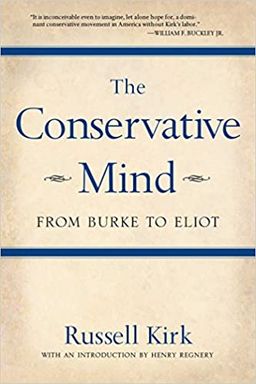
How does an enduring tradition survive amid modern transformation? In Russell Kirk’s grand narrative of The Conservative Mind and its broad intellectual descendants, you explore how moral imagination, historical continuity, and institutional prudence together form the backbone of Anglo‑American conservatism. Kirk’s book is less a political manifesto than a genealogy: he rescues conservatism from caricature and presents it as an ancient moral inheritance adapted to modern dilemmas.
The core argument you meet is that conservatism is not an ideology but a disposition grounded in reverence for custom, skepticism toward abstract reform, and a conviction that freedom thrives only within an inherited moral order. From Burke’s eighteenth‑century eloquence to Babbitt’s twentieth‑century humanism, Kirk shows you thinkers who balance liberty with duty, progress with continuity, and innovation with memory.
A Tradition Recovered
The story begins with Kirk himself, whose The Conservative Mind (1953) gave the modern conservative movement an intellectual lineage reaching back to Edmund Burke. Through Sidney Gair’s chance recommendation and Henry Regnery’s daring publication, Kirk transformed a nearly forgotten academic manuscript into a cultural force. Whittaker Chambers’ advocacy in Time magazine elevated it further, proving Kirk’s lesson that moral ideas triumph only when couched in narrative and championed with conviction. His life in Mecosta, Michigan symbolized the ideal of independence over institutional security—a personal version of the conservative preference for rooted liberty over bureaucratic comfort.
From Burkean Providence to Institutional Prudence
Edmund Burke anchors Kirk’s lineage. He taught that societies emerge from a providential moral order, not contractual invention, and that prejudice—collective wisdom—often guides more safely than rational abstraction. John Adams translated those truths into republican constitutional structure: checks, balances, and an aristocracy of virtue prevent liberty from devouring itself. When you encounter Kirk’s six canons—belief in transcendent order, affection for variety, structured classes, the link of freedom and property, respect for prescription, and prudence—you see Burke and Adams embodied in principle form.
Others elaborate the tradition’s scope. Romantics like Scott and Coleridge defended imagination against Benthamite calculus, teaching that meaning and beauty outlast utility. Southern voices such as Randolph and Calhoun struggled to preserve local liberty and institutional restraint, warning that constitutions without moral habit collapse under appetite and majoritarian force. Even their tragedies—Calhoun’s theory of concurrent majority and its entanglement with slavery—illustrate the constant tension between principle and morality in conservative defense of order.
Conservatism as Strategy
By linking past ideals to modern realities, Kirk reveals conservatism as an ongoing strategy rather than a frozen creed. Prudence—the art of judging reform by consequences—guides every chapter. Institutions embody experience, from common law and church to property and community associations. Leaders from Adams to Disraeli practiced this prudence by adapting while conserving: Adams balanced powers, Disraeli re‑enchanted Toryism with imagination and national feeling, and Newman restored moral authority through faith and education. Each demonstrates that healthy change depends on moral continuity.
Modern Crises and Renewal
Kirk traces how industrialism, mass democracy, and utilitarian rationalism fractured that continuity. From the Gilded Age’s corruption to the World Wars’ mechanized destruction, conservative voices struggled to re‑root political life in virtue. Babbitt, More, and Santayana answered through moral, religious, and aesthetic humanism; writers like Lowell, Godkin, and the Adams brothers lamented decaying manners and the triumph of force. The twentieth century’s managers and planners—described by Robert Nisbet and T.S. Eliot—threatened to reduce human beings to standardized units. Yet even amid modernity, conservatism’s task endures: to preserve the spiritual and institutional soil from which liberty and culture grow.
Central Lesson
Conservatism endures not by resisting all change but by ensuring that reform proceeds within moral limits, guided by tradition, prudence, and imagination rather than abstract zeal or technocratic confidence.
When you finish this intellectual journey—from Burke’s parliamentary eloquence to Eliot’s cultural criticism—you understand conservatism as a moral ecology: a web of habits, beliefs, and institutions that restrain power and nourish the human spirit. Its defense of order and liberty, property and piety, faith and imagination, remains not nostalgic but profoundly pragmatic—the art of turning historical memory into guidance for uncertain times.