
Idea 1
Parenting as a Path to Conscious Transformation
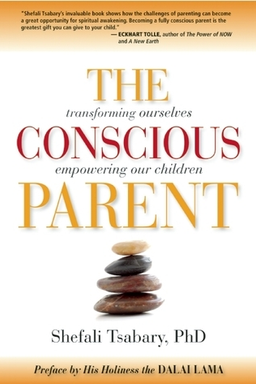
Have you ever wondered if parenting could be more than just nurturing your child—if it could actually awaken you? In The Conscious Parent, psychologist Dr. Shefali Tsabary transforms the way we think about raising children by proposing that parenting isn’t merely about guiding our kids, but about awakening ourselves. She argues that every interaction with our child, from the everyday frustrations to the tender moments, offers an invitation to grow spiritually and emotionally. The book’s revolutionary idea is simple but profound: your child is not a project to be perfected but a mirror reflecting your inner state. When you shift your focus from controlling your child to understanding yourself, you become what Tsabary calls a conscious parent.
Drawing on both psychology and Eastern spirituality (Tsabary was deeply influenced by Eckhart Tolle’s teachings on ego and presence), she contends that the parent-child relationship is not hierarchical, but sacred and reciprocal. You are not raising a miniature version of yourself; you’re raising a spirit with their own blueprint, freedom, and purpose. The paradox is that while we think we are here to shape our children, they are actually here to awaken us—to uncover the layers of ego, fear, and conditioning we unknowingly carry.
Parenting Consciousness Begins with Self-Awareness
Tsabary insists that the first step toward conscious parenting is knowing yourself. Most parents unconsciously repeat patterns they absorbed from their own upbringing—reactive emotions, rigid expectations, and inherited anxieties. Until these wounds are examined, they silently shape our interactions with our children. A parent who was criticized for being imperfect might overemphasize achievement; one who grew up ignored might crave their child’s approval. Tsabary gently exposes how these dynamics perpetuate dysfunction in families. She encourages parents to pause when triggered and ask, “What part of my past is being activated right now?” This self-inquiry is how you begin to break generational cycles.
Children as Spiritual Teachers
One of Tsabary’s key arguments is that children come into our lives with unique spiritual lessons. Every tantrum, every act of defiance, every moment of awe is a mirror showing us our own consciousness. Instead of asking, “How do I fix my child’s behavior?” she asks parents to wonder, “What is my child teaching me about myself?” A mother who feels triggered by her teen’s rebellion may realize she never learned to assert herself safely. A father who rages when his child makes mistakes may notice his own deep fear of inadequacy. In this way, a child’s growth becomes inseparable from the parent’s evolution.
From Control to Connection
Traditional parenting relies on authority—rules, punishments, and hierarchies. But conscious parenting replaces control with connection. When parents set aside ego-driven control and instead meet their children with presence and empathy, relationships become partnerships. Tsabary illustrates how this works through vivid examples from her practice: a teenager acting out may not need discipline but deep acknowledgment; a toddler’s tantrum may be calling the parent to practice patience and presence. As she puts it, “Our children don’t need our dominance, they need our engagement.” Echoing thinkers like Daniel Siegel (The Whole-Brain Child) and Alice Miller (The Drama of the Gifted Child), Tsabary grounds her argument in the psychology of attachment and emotional attunement.
Parenting as Spiritual Partnership
Ultimately, Tsabary frames parenting as a spiritual opportunity. Through our children, we learn acceptance, compassion, and humility. When you stop trying to mold your child into someone else and start seeing them as a full, sovereign being, you awaken your own consciousness. The process isn’t about perfection but presence—showing up authentically, embracing mistakes, and learning to love without conditions. Through this transformation, parenthood becomes not a battle of wills but a shared awakening. The outcome isn’t just a better child—it’s a more grounded, whole parent. In the end, The Conscious Parent promises not quick fixes, but a lifelong path where raising your child raises you.