
Idea 1
The Moral Vision Behind Conservatism
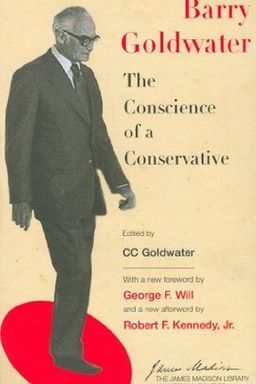
What does it mean to be truly free—not just economically or politically, but spiritually? Barry Goldwater’s The Conscience of a Conservative begins with this provocative question, reminding you that Conservatism isn’t merely about fiscal restraint or opposing big government—it’s about understanding the nature of man and preserving the conditions that allow each person’s spirit to flourish. Goldwater’s book isn’t a dry policy manual; it’s a passionate moral argument for freedom rooted in the individual’s responsibility, dignity, and moral choice.
Man as a Spiritual and Individual Being
Goldwater argues that the Conservative starts by recognizing man as a unique creature—spiritual as well as material—and therefore cannot be reduced to merely his economic circumstances. Unlike Liberals, whom he accuses of obsessing over material welfare, Conservatives believe that politics must elevate the soul, not just the paycheck. To him, government’s proper role is to protect the individual’s freedom to pursue his own growth rather than manage his life for him. This commitment to the individual sets the stage for his later arguments about limited government, States’ rights, and economic policy.
Freedom and Order
Freedom, Goldwater contends, is not freedom from all restraint; rather, it’s the opportunity to live responsibly under a system of order that prevents tyranny. He warns that governments naturally seek to expand their power. Thus, the central question for every policy debate should be: “Are we maximizing freedom?” He sees modern America slipping toward centralization where the federal government decides everything—from welfare to education—corroding the delicate balance between order and individual liberty. This warning, written in 1960, feels astonishingly prescient today when discussions of bureaucratic authority dominate debates about freedom.
The Failure of Conservative Demonstration
Goldwater opens with frustration. He believes the American people are essentially Conservative yet confounded by politicians who speak Conservative language but act like bureaucratic managers. He criticizes his own party’s tendency to dilute its principles with qualifiers—such as “Conservative with a heart”—which, he suggests, concede to Liberal narratives that Conservatism lacks compassion. To him, the heart of Conservatism is compassion rightly understood: the belief that real help comes through personal responsibility, not government charity. Conservatism’s challenge, therefore, is not to find new truths but to reapply timeless ones to modern problems. In this sense, The Conscience of a Conservative becomes a bridge between philosophy and practice.
A Rebellion Against Collectivism
Throughout the book, Goldwater identifies collectivism—the view that man is best served through centralized control—as the great enemy of freedom. Whether through welfare programs, federal education funding, or union monopolies, collectivism transforms self-reliant citizens into dependent subjects. He asserts that Liberals “play God with the human race” by elevating material welfare above spiritual liberty. Conservatives must resist not with emotion but with clear reasoning: man’s development must come from within, never by decree.
Under this moral framework, the book addresses concrete issues like taxation, States’ rights, and foreign policy, all seen through one lens—the defense of liberty from encroaching power. Goldwater’s goal isn’t to “streamline government” but to restore a Republic based on the Constitution’s restraints against absolutism. He insists that freedom is inseparable from self-reliance, responsibility, and decentralized authority.
Why This Matters Now
Goldwater’s argument has enduring relevance because it speaks to a recurring dilemma in modern democracies: can people remain free when they ask government to solve every problem? His answer is no. Freedom collapses when citizens hand over responsibility for their lives to the state. Thus, his call is both political and spiritual—a summons for every American to reclaim the moral conscience of a free person.
Core Message
Conservatism, to Goldwater, is not a nostalgic attachment to the past but an ethical framework for freedom. It rests on an understanding of human nature: that individuals are moral agents whose greatness—and their nation’s greatness—depends on protecting their liberty from the grasp of power. In his words, the task is not to promote welfare but to extend freedom; not to pass new laws but to repeal those that diminish it.
By the end of this sweeping introduction, Goldwater turns the question back to you: what kind of society do you want—the one that treats you as a capable, moral being responsible for your own destiny, or the one that relieves you of responsibility and freedom alike? This question defines not only the conscience of a Conservative but also the conscience of a citizen.