
Idea 1
Congo’s Long Arc of Plunder and Resistance
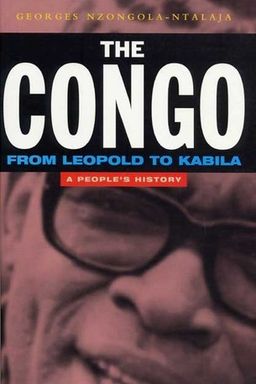
How can you understand the Congo’s turbulent modern history—from Leopold’s atrocities to Mobutu’s kleptocracy and the Great Lakes wars? In this book, the author argues that Congo’s trajectory reveals how colonial extraction, foreign manipulation and domestic authoritarianism intertwine to produce cyclical crises. The core claim is that Congo’s violence and fragility are not random but the product of deeply rooted institutions of plunder and coercion. To grasp the pattern, you must begin with the Congo Free State under King Leopold II and trace how extraction, international complicity and resistance evolved into the structures of modern Congo.
From Plunder to Empire
The modern Congo began as a business empire disguised as philanthropy. Between 1885 and 1908, King Leopold II’s personal rule turned the basin into his private estate. Using explorers like Henry Morton Stanley and lobbying networks such as Henry Shelton Sanford’s Washington missions, Leopold gained international approval at the Berlin Conference. Behind the legal rhetoric lay forced labor, chicotte floggings and quotas of rubber and ivory enforced by concession companies like ABIR and Compagnie du Kasaï. Millions died through murder, starvation and disease. This industrialized brutality produced the first global human rights movement—led by figures like Edmund Dene Morel, Roger Casement and George Washington Williams—and forced Belgium’s annexation of the territory in 1908. Yet the shift from personal rule to state rule preserved the same DNA of extraction and control.
Colonial Trinity and Resistance
Belgian colonialism after 1908 institutionalized what historians call the 'colonial trinity' of state, church and corporations. Conglomerates like Union Minière du Haut-Katanga (UMHK), Société Générale de Belgique and Compagnie du Katanga turned mining concessions into economic engines tied to European finance. Administrators co-opted chiefs, militarized the countryside and enforced taxes and forced cultivation through the Force Publique. The Catholic Church penetrated deeply, schooling and moralizing the population in the service of colonial order. Yet repression bred resistance—armed revolts, military mutinies and prophetic movements such as Simon Kimbangu’s Kimbanguism (1921), the Pende rebellion (1931), and labor strikes at Likasi mines (1941). These formed a continuity of protest that linked spiritual, social and political rebellion across generations.
Decolonization and Fragile Independence
By the 1950s, the evolution of an urban working class and educated évolués turned resistance into organized nationalism. ABako under Joseph Kasa-Vubu and Patrice Lumumba’s MNC transformed class grievances into nationalist demands. The January 4, 1959 Kinshasa uprising marked the shift from elite debate to mass revolt. Independence on 30 June 1960 occurred abruptly and without preparation, leaving foreign corporate dominance intact and administrative capacity weak. Within days, army mutinies and provincial secessions plunged the country into chaos—the so-called First Congo Crisis. Lumumba’s call for UN help and his assassination (with Belgian and CIA involvement) symbolized how Cold War powers manipulated Congolese sovereignty.
From Revolution to Dictatorship
After Lumumba’s death, popular forces attempted a “second independence.” Pierre Mulele’s Maoist Kwilu rebellion and the Simba insurgencies sought to reassert people’s sovereignty but succumbed to Western-backed counterinsurgency. Their defeat opened the door for Mobutu’s ascent. Supported by the US, Belgium and France, Mobutu established a personalist kleptocracy from 1965 onward. Through Bakajika laws, Zairianization and the nationalization of Gécamines, he amassed wealth while gutting institutions. His one-party MPR fused ideology and administration under the banner of “authenticity” and Mobutism, mixing nationalist ritual with repression. The result was a hollow state living off rents and patronage.
Democracy Movements and Collapse
Students, priests and civic activists resisted Mobutu’s autocracy across decades. From early university strikes to the UDPS and Etienne Tshisekedi’s democratic mobilization, street protests and candlelight marches signaled the return of mass politics. The Conférence nationale souveraine (CNS, 1991–1992) assembled thousands to draft a new constitution, but foreign interference and elite compromise derailed the transition. Western governments preferred stability over democracy, backing technocrats like Kengo over reformists. Meanwhile, Mobutu’s economic decay and manipulation led to implosion by the mid-1990s.
War, Fragmentation and Resource Plunder
The Great Lakes War (1996–2003) brought together genocide, refugee militarization and regional power politics. Rwanda and Uganda invaded eastern Zaire under the pretext of neutralizing génocidaires but exploited Congo’s minerals—coltan, gold and diamonds—for profit. Laurent Kabila’s AFDL, backed by these powers, ousted Mobutu but soon clashed with his sponsors, leading to further invasions and state collapse. Numerous factions—RCD, MLC and splinters—competed under external patronage. Minerals financed warfare, and transnational firms joined the network of plunder. Warfare became a business model, echoing Leopold’s legacy. By the early 2000s, Congo’s sovereignty fractured under militias and foreign economic interests.
Cyclical Lessons
Across centuries, the Congo repeats a pattern: exploitation backed by global demand, external involvement legitimized by “civilizing” or “stabilizing” rhetoric, and courageous but often defeated forms of popular resistance. Each era—Leopold’s Congo, Belgian rule, Lumumba’s revolution, Mobutu’s state and Kabila’s wars—demonstrates how extraction and foreign leverage overpower domestic sovereignty. Yet Congolese spiritual and political resilience recurrently reemerges. The book challenges you to see modern crises not as chaos but as consequences of a historical structure that equates wealth with domination and reform with merely new veneers of control.