
Idea 1
The Architecture of Trust and Deception
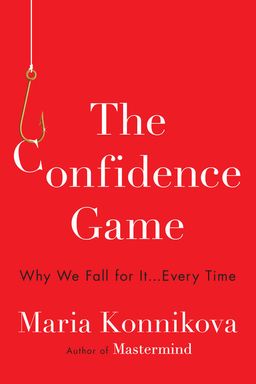
Why do smart people fall for obvious lies? In The Confidence Game, Maria Konnikova argues that every con—no matter how small or grand—relies on one universal human constant: your need to find meaning in the world and believe in coherent stories. The book is not simply about grifters; it’s about you, the mark. You are wired to trust, to seek order, to locate yourself in a narrative that feels complete. A con artist’s genius lies not in deceit alone but in understanding this universal drive and choreographing it into a psychological ballet that ends with your emotional and financial surrender.
The Core Argument: Meaning as Vulnerability
From Ferdinand Waldo Demara—the Great Impostor who became a wartime surgeon—to Sylvia Mitchell’s psychic readings, each case dramatizes how belief and storytelling intersect. Konnikova opens by reminding you that belief is not stupidity; it’s the natural mechanism of social learning. From infancy, you interpret reality through others. That dependence cultivates trust and makes shared narratives possible—but it also exposes a weakness. When you crave coherence, you become receptive to anything that delivers it. Con artists, like skilled storytellers and advertisers, understand this drive and exploit it. They weave tales that satisfy emotional hunger first, so that reason follows only after commitment.
The book situates this vulnerability in evolutionary psychology and cognitive science. Humans evolved to collaborate through shared belief—stories that bound tribes and families. But those same mechanisms—trust, empathy, pattern recognition—become liabilities in deceptive hands. Con artists are opportunists who weaponize social cognition.
The Psychological Machinery of the Game
Konnikova outlines an elegant eight-stage progression, like a theatrical performance: the put-up (profiling the mark), the play (emotional engagement), the rope (persuasive escalation), the tale (personal narrative), the convincer (early validation), the breakdown (dissonance moment), the send/touch (final extraction), and finally the blow-off or fix (exit and cleanup). Each stage manipulates your internal logic—your optimism bias, confirmation bias, and need for identity coherence.
The process is cumulative. The first stage gathers data—what you love, fear, or regret. The second frames it in a feel-good narrative. The third adds authority and pressure, turning emotion into action. By the time the convincing evidence arrives—fake returns, forged art, heartfelt testimonials—you’re already narrating the story for them. Cognitive dissonance keeps you trapped when inconsistencies arise. Each little proof becomes self-sealing validation, making you the co-author of your own deception.
The Mind of the Con Artist
Not all con artists are born psychopaths. Some exhibit the dark triad—psychopathy, narcissism, Machiavellianism—while others emerge from ordinary personalities corrupted by opportunity, rationalization, and permissive culture. The neuroscience of figures like James Fallon suggests that biology loads the gun, but environment pulls the trigger. A high-functioning grifter may rationalize deception as benevolent (“I give them what they want to believe”)—a theme mirrored in Demara’s self-justifications. Corporate frauds, cult leaders, and miracle healers all grow from this soil of rationalized manipulation.
Predisposition matters, but social conditions—weak oversight, greed culture, groupthink—determine whether manipulation blossoms into crime. Ethical climates can either curb or catalyze the grifter’s instincts. Konnikova connects this to modern scandals from SAC Capital to the Knoedler Gallery, showing how systemic opacity magnifies individual deceit.
Belief and Identity
The ultimate insight is that the con doesn’t end with money changing hands; it embeds itself in your identity. You remember events through the lens of self-consistency. So if you see yourself as smart, moral, or spiritually enlightened, acknowledging deception threatens that identity. Hence victims often defend the fraudsters (as in Oscar Hartzell’s Drake inheritance case) or continue cult membership despite revelations. In narratives of faith, love, or wealth, to confess error is to lose yourself. That is why belief-based scams—from religious revivals to pseudoscientific therapies—endure despite exposure: they trade in meaning, not merchandise.
A Practical Philosophy of Awareness
Konnikova’s message is not cynical. Belief is your strength—it creates art, science, and relationships. But unchecked belief, coupled with urgency and isolation, becomes your downfall. The defense isn’t mistrust; it’s metacognition: asking, “What need in me does this story feed?” Pause at that moment of narrative seduction—the too-perfect solution, the urgent opportunity, the flattering destiny. Confidence artists thrive where introspection fails. To resist them, preserve curiosity without surrendering skepticism.
Core Summary
The book reveals that the confidence game is not merely a criminal script but a mirror to the human mind. To understand deception, you must first understand belief itself: how trust forms, how stories bind, and how meaning can both save and ruin you.