
Idea 1
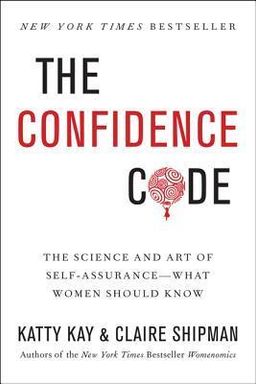
The Confidence Code: Why Belief Matters More Than Brilliance
Have you ever wondered why some people act with effortless certainty while others second-guess every decision? In The Confidence Code, journalists Katty Kay and Claire Shipman set out to understand why women—even the most competent and accomplished—often doubt their worth and hold themselves back. After years of research across neuroscience, psychology, and gender studies, they discovered a startling truth: success correlates less with ability and more with confidence. In other words, confidence isn’t just a nice-to-have trait—it’s the differentiator between those who simply dream and those who do.
Kay and Shipman argue that this invisible force, confidence, is what transforms thoughts into action. It’s a skill—not a genetic gift—that anyone can cultivate. Yet, for a variety of biological, social, and cultural reasons, women disproportionately lack it. When women undervalue their skills or see failure as personal incompetence, they avoid risks, stay silent, or wait until they feel “perfectly ready.” Meanwhile, their male counterparts act—and even when unprepared, they’re rewarded for it. The authors call this persistent imbalance the “confidence gap.”
The Confidence Gap and Why It Matters
The book’s central question drives from a deep paradox: women are more educated and qualified than ever, yet still underrepresented in leadership. Kay and Shipman’s reporting found that competence doesn’t predict success—confidence does. Citing studies from Carnegie Mellon and King’s College London, they reveal that women underrate their abilities and men overrate theirs, but the workplace rewards self-assurance more than accuracy. This dissonance isn’t rooted in ability; it’s rooted in belief. The implications go far beyond the office: confidence influences how much risk you take, how you handle criticism, and even how happy you feel.
The authors realized that confidence is both mental and biological. It intertwines genes, environment, and behavior: some of us may be born more cautious due to brain chemistry, but our upbringing, schooling, and culture often reinforce those instincts. Western societies, for instance, still reward girls for good behavior and perfection, while encouraging boys to be bold and defiant. By adulthood, women have learned that competence should speak for itself—but it doesn’t. The modern woman, they argue, is trapped by what they call “the tyranny of perfection.”
Breaking Down Confidence
Kay and Shipman define confidence simply but powerfully: it’s the belief that you can succeed—and the willingness to act on that belief. It’s not blind optimism or arrogance. In psychology, this overlaps with concepts like self-efficacy (Albert Bandura’s term for believing in your capacity to accomplish goals), but confidence adds a crucial behavioral component: action. It’s less about thinking positively and more about doing courageously. Through research with neuroscientists like Adam Kepecs, who studies confidence in rats, the authors show that confidence has both an objective side (accurate assessment of your abilities) and a subjective side (how you feel about them). For humans, the subjective side often trips women up.
Their formula—think less, act more—captures this distinction. Because women tend to overanalyze and fear mistakes, they get trapped in rumination, losing the opportunity to learn through trial and error. Men, by acting faster (even when wrong), learn more quickly and build authentic self-assurance. As MIT researcher Zachary Estes discovered, women perform equally well as men when required to attempt every question—but if given the choice, they hold back. Confidence, then, grows through doing, not waiting for perfection.
The Biological and Cultural Web
In exploring whether confidence is nature or nurture, Kay and Shipman spent time with geneticists and behavioral researchers who study serotonin, dopamine, and oxytocin—the neurotransmitters shaping calm, motivation, and connection. Genes explain part of our disposition, but the brain’s plasticity—its ability to form new neural connections—means confidence can be built at any age. Culture, however, can either amplify or suffocate those neural seeds. In Japan, struggle is celebrated as part of learning; in America, we pity or rescue those who struggle. The result? Girls grow up believing struggle signals failure, not growth. They aim for flawlessness instead of mastery.
Through stories of IMF chief Christine Lagarde, WNBA players Monique Currie and Crystal Langhorne, and political leaders like Kirsten Gillibrand, the authors show how even women at the highest levels wrestle with self-doubt. Yet their breakthroughs come when they act despite fear. Lagarde, for instance, admits she overprepares for every meeting, but she ultimately succeeds because she shows up anyway—and acts decisively. Confidence, the book insists, doesn’t mean you never feel doubt; it means you move forward regardless.
Why Confidence Is a Skill—and a Moral Imperative
Kay and Shipman see confidence as teachable, even moral. When women lack it, they not only limit themselves but also deprive workplaces, communities, and governments of half their potential talent. Closing the confidence gap isn’t just personal therapy—it’s social progress. Through neuroscience, parenting studies, and examples from classrooms to corporate boardrooms, they argue that letting girls fail, praising effort over perfection, and encouraging risk are the building blocks of real confidence. The book closes by urging women to “choose confidence”: to act without overthinking, to detach self-worth from flawless performance, and to recognize that authenticity—not imitation of male bravado—is the most powerful form of confidence.
In this way, The Confidence Code functions as both a scientific exploration and a rallying cry. It reveals that confidence isn’t an innate gift or masculine trait—it’s a muscle you can train, moment by moment, through action, risk, and honesty. For any woman who has ever thought, “I’m not ready yet,” Kay and Shipman offer liberating evidence: you already are; you just have to begin.