
Idea 1
Transforming Health Through the Ketogenic Lifestyle
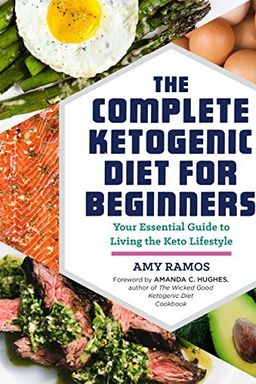
What if losing weight, gaining energy, and sharpening mental focus could come not from deprivation but from eating butter, cheese, and avocado? In The Complete Ketogenic Diet for Beginners, Amy Ramos argues that sustainable weight loss and health are not achieved by starving or eliminating pleasure, but by changing the way your body fuels itself. Her book is both a scientific primer and practical roadmap for transforming your metabolism—shifting it from carb-dependence to fat-burning efficiency through a well-balanced ketogenic lifestyle.
A Revolution Against Carbohydrate Dependence
Ramos begins by challenging decades of conventional nutrition wisdom. Popular diets have long demonized fats while celebrating carbohydrates, a trend shaped heavily by the USDA’s Food Pyramid that called for six to eleven servings of grains per day. But she points to America’s rising rates of obesity and diabetes since that guideline debuted, suggesting that carbohydrates—not fats—are the true culprit. In her opening chapters, she explains how constant glucose spikes from frequent carb intake force the body to pump out more insulin, eventually leading to insulin resistance, prediabetes, and metabolic chaos.
A ketogenic diet reverses that pattern. By eliminating most carbs and replacing them with healthy fats and moderate protein, you shift your metabolism into ketosis, a state where fat becomes your primary fuel source. The body produces ketones from stored fat, and these molecules provide a steady stream of energy without the blood sugar rollercoaster. This change is more than a weight-loss trick—it’s a biochemical reprogramming that has transformative effects on energy levels, mental clarity, and mood.
Ketosis: How the Body Changes Fuel
Ramos breaks down the science with clarity suited for beginners. She explains that carbohydrates convert into glucose, which spikes blood sugar and prompts the hormone insulin to store excess energy as fat. In ketosis, insulin levels decline, and stored fat becomes available again as fuel. The liver converts fatty acids into ketone bodies (acetone, acetoacetate, and beta-hydroxybutyrate) that power your brain and muscles as efficiently as glucose. Some cells still need glucose, she notes, but the liver creates it through gluconeogenesis from glycerol and amino acids—proving that “essential carbohydrates” don’t exist.
Why Fat Is Not the Enemy
Ramos reframes fat not as a dangerous indulgence but as a critical nutrient. Healthy fats like olive oil, coconut oil, avocado, butter, and lard are metabolically stabilizing. She cites research showing that saturated and monounsaturated fats have no significant link to heart disease (aligning with meta-studies by scientists such as Siri-Tarino and Volek). Fat’s high caloric density (9 calories per gram versus 4 for carbs or protein) means you eat less by volume yet feel fuller longer. Keto’s satiety effect reduces cravings naturally, helping you unconsciously consume fewer calories while maintaining sustained energy.
The Broader Benefits of Keto
The book goes beyond fat loss to highlight therapeutic applications. Ramos notes that ketosis improves metabolic markers—lowering triglycerides, blood pressure, and insulin resistance—while boosting HDL cholesterol. She draws on research that links keto nutrition to improvements in epilepsy control, Alzheimer’s management, and even cancer support (referencing clinical findings from researchers like Allen and Westman). It’s not just a trend but a return to the body’s natural metabolic mode, one humans evolved to enter periodically when carbs were scarce.
Turning Science Into Practice
What truly makes Ramos’s approach inviting is her empathy for beginners. She knows diet transitions are emotional and logistical challenges. You don't just flip a metabolic switch; you must clean your pantry of carb traps, restock with nourishing staples, and face the dreaded “keto flu” as your body detoxes from sugars. Her tone is supportive rather than dogmatic, walking readers through steps: clearing out grains and starches, shopping for meats and low-carb produce, and embracing kitchen tools like food processors and spiralizers for creative cooking. She encourages flexibility—if you’re not into tracking macros obsessively, rely on experience and the satisfaction signals your body provides.
A Practical, Delicious Roadmap
The book is designed as both science guide and recipe collection. After building foundational knowledge, Ramos serves readers two weeks of structured meal plans—with full shopping lists—to remove guesswork. The recipes are nutrient-rich yet indulgent: cheesy casseroles, bacon omelets, and avocado-herb butter for protein dishes, all staying under six net carbs per serving. Her system of “Keto Quotients” labels each dish’s fat ratio, guiding you toward meals that meet the diet’s optimal fat-to-carb balance.
In closing, Ramos reminds readers that keto is less a diet and more a way of eating for life. It redefines health not as restriction but as restoration—fueling your body with what it actually needs. For anyone tired of diets built on hunger and disappointment, keto represents freedom. You eat well, feel well, and become metabolically resilient. That, for Ramos, is the ultimate definition of a complete ketogenic lifestyle.