
Idea 1
The Biology of Pleasure: Why We Crave, Learn, and Obsess
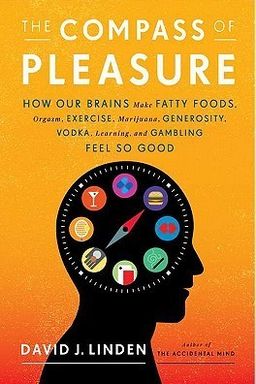
What makes something feel so good that you’d cross lines—moral, physical, or even legal—to experience it again? Why are we drawn, sometimes compulsively, to fat-laden foods, intoxicating substances, gambling tables, or even a good run? In The Compass of Pleasure, neuroscientist David J. Linden explores one of our brain’s most intriguing mysteries: the biological mechanics of pleasure. He argues that every joy and vice—from sex to selflessness—stems from a single neural system: the medial forebrain pleasure circuit. This system, fueled by the neurotransmitter dopamine, is not only the engine of ecstasy but also the root of addiction, learning, and the persistence of human desire.
Linden contends that our pursuit of pleasure is neither morally good nor bad—it’s biological inevitability. Whether you’re hitting the “pleasure button” through a substance or a virtuous act like giving to charity, the same set of neural pathways lights up. He writes that the brain doesn’t categorize experiences as sinful or saintly. Instead, it responds to them as chemical opportunities for reward.
From Vice to Virtue: The Unified Circuit
The central thesis of The Compass of Pleasure is that all pleasures converge on the same brain circuit—a loop of structures deep in the midbrain connecting the ventral tegmental area (VTA), the nucleus accumbens, and the prefrontal cortex. This was first uncovered through experiments in the 1950s when scientists James Olds and Peter Milner discovered that rats would press a lever thousands of times to self-stimulate this circuit, sacrificing food, water, and sleep in the process. In humans, direct stimulation of the pleasure circuit produced overwhelming euphoria—sometimes leading patients to “mash the button” until exhaustion. Linden skillfully links this early research to modern neurobiology, showing how dopamine release forms the foundation of rewards ranging from heroin highs to learning a new skill.
Pleasure’s Double Edge: The Path to Addiction
Linden emphasizes that the same circuitry that teaches us survival behaviors—like eating and bonding—can also entrap us in addiction. Drugs and certain behaviors hijack the pleasure system, producing dopamine surges far stronger than natural rewards. Over time, the brain adapts, requiring more stimulation to feel normal. This neural rewiring, which resembles the changes we see in memory formation (through processes like long-term potentiation), turns pleasure into compulsion. Linden’s insight is profound: addiction is a form of pathological learning, one that rewires the brain’s circuitry with the same tools it uses to remember joy.
Virtuous Highs and Moral Myths
But pleasure isn’t just about vice. Linden points out that prayer, meditation, exercise, and charity all activate the same dopamine circuits as drugs or gambling. He calls this the “neural unity of virtue and vice.” Acts of generosity and altruism light up the nucleus accumbens just like a line of cocaine would. This finding blurs long-standing cultural distinctions between moral and immoral forms of pleasure. The brain, it seems, doesn’t discriminate—it simply registers reward.
From Food to Faith: The Spectrum of Stimulation
Over seven chapters, Linden traces how this circuit responds to different stimuli:
- In "Mashing the Pleasure Button", he outlines the brain’s reward anatomy, from electrode experiments to the dopamine dynamics of drugs.
- In "Stoned Again", he explores how psychoactive substances like opiates, nicotine, and cannabis hijack the system, transforming pleasure into addiction through cellular learning mechanisms.
- In "Feed Me", he shows how food’s irresistible fats, sugars, and salts play drug-like tricks on our reward circuits, while leptin and genetic makeup influence appetite.
- Chapters on love, gambling, and exercise reveal that even romance or the “runner’s high” are chemically akin to addiction.
- Finally, Linden explores virtue itself—arguing that giving, learning, and curiosity spark dopamine just as potently as any vice.
Why It Matters
Linden’s book reframes pleasure not as a philosophical problem but as a biological constant central to being human. Understanding our pleasure circuitry helps explain everything from addiction epidemics to altruism. It also challenges how we think about control, morality, and free will: if both heroin and helping others activate the same neurons, then the distinction between sin and sanctity rests less in biology and more in meaning. Ultimately, The Compass of Pleasure invites you to see your brain’s cravings, vices, and curiosities not as faults—but as features of an extraordinary system designed to help you learn, survive, and feel alive.