
Idea 1
Escaping the Comfort Crisis: Why Discomfort Makes You Stronger, Happier, and More Human
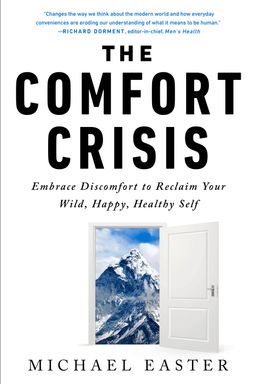
When was the last time you were truly uncomfortable? Not metaphorically — but physically cold, hungry, scared, or utterly exhausted? In The Comfort Crisis, journalist and adventurer Michael Easter argues that our love affair with comfort is silently destroying us. We live in climate-controlled environments, surrounded by endless food, entertainment, and distraction. It feels nice — but Easter contends this relentless pursuit of ease is eroding our health, resilience, and sense of purpose.
The book’s central premise is simple but radical: modern comfort is killing our potential. Humans evolved under wildly uncomfortable conditions — famine, cold, danger, and uncertainty. Our bodies and brains are built to adapt to hardship. Now, robbed of those stressors, we’ve become anxious, obese, disconnected, and chronically dissatisfied. Easter invites you to reintroduce discomfort into your life — deliberately but safely — as a way to reclaim your physical strength, mental toughness, and spiritual depth.
An Arctic Journey into Discomfort
To drive home his message, Easter chronicles a 33-day hunting expedition deep in the Alaskan Arctic with backcountry hunter and filmmaker Donnie Vincent. Cut off from civilization, the small crew faces grizzlies, subzero temperatures, and relentless hunger. For Easter — a Las Vegas-based writer immersed in modern comfort — the trip becomes a brutal initiation into nature’s indifference and his own rediscovered resilience. The wilderness doesn’t care about your deadlines or diet; it forces you to focus on survival, not screen time. That raw exposure, Easter realized, rekindled parts of himself long dulled by convenience.
The Core Thesis: Comfort Is the New Crisis
Easter builds on a broad base of evolutionary science, psychology, and philosophy to show why modern living has made us so fragile. He traces how humanity has spent 99.996% of its history fighting for survival and less than 0.004% living in the total safety of abundance. Our ancestors battled hunger, cold, and predators daily. These struggles sculpted a robust body and mind capable of endurance, creativity, and connection. In contrast, today’s constant comfort has left us overstimulated yet unfulfilled. We’ve traded purpose for pleasure, exposure for insulation, effort for ease.
In this context, comfort isn’t harmless — it’s a crisis. The data Easter presents are grim: obesity rates nearing 70%, chronic disease on the rise, mental illness spiking, anxiety epidemic, and a national loneliness crisis. Our protective environments — heated homes, endless screens, processed food — have made us biologically soft and spiritually malnourished. Yet the fix is hidden in the very hardships we’ve engineered out of existence. By strategically inviting discomfort back into our lives — through challenge, cold, hunger, boredom, solitude, and effort — we can reboot the systems that make us whole.
A Five-Part Blueprint for Reclaiming Humanity
Easter structures his book around five core practices drawn from both science and ancient wisdom. Each part explores a lost domain of discomfort and its corresponding lessons:
- Make it really hard. Inspired by the Japanese concept of misogi, Easter learns from Harvard-trained physician and sports scientist Dr. Marcus Elliott that true growth only happens when you tackle challenges that you have a 50% chance of failing at. These self-imposed missions — physical, mental, or spiritual — reveal your hidden potential.
- Rediscover boredom. Modern life has obliterated downtime, but Easter shows that mental rest periods — like his endless hours waiting for caribou — restore creativity, focus, and emotional balance.
- Feel hunger. Working with nutrition scientist Dr. Trevor Kashey, Easter explores fasting and caloric discomfort to rebuild a healthier relationship with food and self-control.
- Think about your death every day. In Bhutan — the world’s “happiest” country — Easter learns from Buddhist monks that meditating on mortality infuses life with gratitude and meaning.
- Carry the load. Through the story of Green Beret Jason McCarthy and the practice of “rucking,” Easter reintroduces the power of physically bearing weight — a literal and metaphorical prescription for strength, resilience, and confidence.
Why It Matters: The Case for Beneficial Stress
At its core, The Comfort Crisis is a manifesto for intentional struggle. Easter synthesizes cutting-edge research from neurobiology, anthropology, and psychology to redefine discomfort as beneficial stress. Just as muscles grow by tension and release, our minds and spirits require challenge and recovery to evolve. Discomfort sharpens focus, inspires connection, and reminds us that meaning grows from friction, not ease. In the end, Easter invites you to stop chasing a painless life and start cultivating an antifragile one — one built on effort, exposure, curiosity, and gratitude for the wild grace of being alive.