
Idea 1
The Global Cold War: Power, Fear, and Ideology
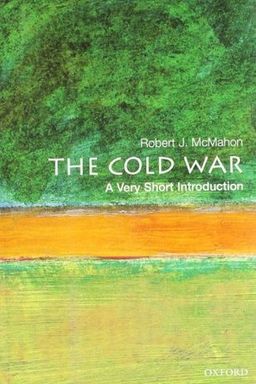
What happens when ideological belief meets military might on a global scale? In The Cold War: A Very Short Introduction, historian Robert McMahon explores one of the twentieth century’s defining dramas—the prolonged standoff between the United States and the Soviet Union that reshaped almost every corner of the world. He argues that the Cold War wasn’t simply a clash of armies or rival technologies; it was, above all, a moral and ideological conflict. Two superpowers envisioned radically different futures for humanity—capitalist freedom versus socialist equality—and fought to impose those visions everywhere from the streets of Berlin to the jungles of Vietnam.
McMahon contends that understanding the Cold War requires looking beyond famous crises and military operations. At its heart, the Cold War was a struggle over how to rebuild a shattered world after World War II. The old global order had collapsed under the weight of unprecedented destruction, leaving the United States and Soviet Union to define what would come next. One championed liberal democracy and open markets, while the other sought communist solidarity through state control and ideological conformity. When ideology fused with nuclear weaponry, fear became the new global currency.
The World in Ruins: Seeds of Rivalry
World War II killed over 60 million people and dissolved centuries of European dominance. McMahon opens with vivid images of postwar wreckage—from Berlin’s smoldering ruins to famine in China—arguing that such devastation made new systems inevitable. The U.S. emerged economically unscathed and spiritually confident, believing its prosperity could guarantee peace through democracy. The Soviet Union, by contrast, emerged traumatized by invasion and loss, determined never to be so vulnerable again. This contrast set the two powers on a collision course, each convinced their survival required reshaping global politics in their image.
Ideology as Destiny
Stalin’s Soviet Union operated from a belief in Marxist inevitability—the conviction that capitalist societies would eventually collapse under the weight of their contradictions. The U.S., embodying Rooseveltian idealism, insisted freedom and trade could prevent war. McMahon examines how this ideological divide magnified every diplomatic disagreement into existential conflict. Every revolution or election—whether in Italy, Korea, or Cuba—became a test of which idea governed history.
Why the Cold War Still Matters
The Cold War’s legacy lives on in how nations view security, ideology, and global cooperation today. McMahon shows its influence on modern diplomacy, technological races, cultural fears, and the persistent structure of international alliances. Whether you study global politics, analyze propaganda, or simply wonder how fear shapes public decision-making, the Cold War’s patterns—from containment to détente—reveal timeless principles about human ambition and anxiety.
Across its short chapters, McMahon traces the arc of this half-century-long conflict—from its birth in the ashes of World War II to its surprising collapse under Mikhail Gorbachev. You’ll learn how leaders like Truman, Stalin, Churchill, Kennedy, Mao, and Reagan turned competing visions into global upheaval. You’ll see how economics, ideology, and psychology created a world divided by an “Iron Curtain.” And you’ll grasp how, even in its nuclear brinkmanship, the Cold War inspired both terror and transformation. Ultimately, McMahon reminds you that the Cold War is not dead history—it is the blueprint for every modern struggle between power and principle.