
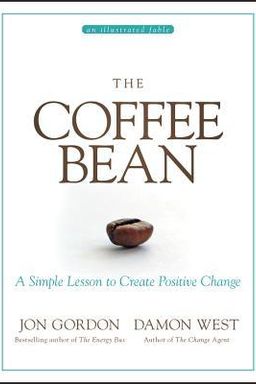
The Coffee Bean cover

The Coffee Bean

by Jon Gordon, Damon West

The Coffee Bean is a compelling fable about Abe, who learns a powerful lesson from his teacher, Mr. Jackson. This lesson transforms Abe''s life, helping him overcome adversity and inspire others. Discover how you too can unleash your inner potential and positively transform your environment.

Transforming Your World from the Inside Out

When life turns up the heat—pressure from work, stress at home, or self-doubt—how do you respond? Do you soften and lose your strength, harden and close yourself off, or transform the environment around you? In The Coffee Bean, Jon Gordon and Damon West offer a deceptively simple but deeply transformative answer through a timeless metaphor: you can be like a carrot, an egg, or a coffee bean. Each reacts differently to boiling water, and those reactions reveal the way humans deal with adversity.

The book builds around a single, powerful idea—your circumstances don’t define you; your internal power does. The authors argue that too many people let their environment dictate their state of mind, becoming weakened or hardened by stress and negativity. But what if, instead of reacting, you could transform the situation? That’s the difference between the coffee bean and everything else. When placed in hot water, the carrot becomes soft and weak. The egg hardens and closes off. The coffee bean, however, changes the water itself, turning it into coffee. It doesn’t just survive—it creates change from within.

The Power of the Metaphor

This metaphor comes alive in the book through the story of Abe, a high school student weighed down by stress—from academics, football, and family turmoil. His teacher, Mr. Jackson, teaches him the lesson of the carrot, egg, and coffee bean. It’s a simple science experiment that becomes a lifelong framework for resilience. Through Abe’s journey—from high school challenges to military leadership and corporate transformation—the lesson becomes both universal and deeply personal.

Gordon and West argue that when you take a coffee bean approach, you transform adversity into opportunity. You realize that life’s heat doesn’t destroy you—it reveals your power. The environment is not in control; you are. This is the same principle at the heart of many positive leadership philosophies (similar to Gordon’s The Energy Bus and Carol Dweck’s Mindset): our thoughts create our reality.

Inside-Out Transformation

The book’s central claim is that transformation happens from the inside out. You don’t wait for circumstances to improve to become positive—you use positivity, love, faith, and perseverance to improve the circumstances themselves. This theme echoes through Abe’s development. As he learns to live as a coffee bean, he faces obstacles—divorce, injury, failure, fear—but each time, he uses internal strength to lead change around him. His story illustrates how a single mindset shift can cascade through teams, families, and organizations.

Abe’s transformation begins with personal choice and ends with social impact. What starts as a private revelation becomes a contagious cultural movement: his football team, school, military units, and even his company begin to live by this inside-out philosophy. The ripple effect of one person choosing positivity over defeat transforms entire communities.

From Adversity to Purpose

Gordon and West frame adversity not as punishment but as invitation—a chance to reveal what’s inside you. Hot water doesn’t cause weakness or hardness; it exposes it. Through that exposure, you discover the potential to lead with love rather than fear. Abe’s later realization—that love casts out fear—is a spiritual and psychological turning point. Love, in this context, becomes the most catalytic energy: the ingredient that turns tension into transformation.

This message resonates well beyond self-help. It applies to leadership, education, parenting, and organizational culture. The authors cite sports teams (like Clemson under Coach Dabo Swinney) who use the coffee bean philosophy to build winning, positive environments. In each case, the shift begins when individuals stop waiting for their environment to change and start changing it from within.

Why This Lesson Matters

In an era overwhelmed by negativity, uncertainty, and burnout, the coffee bean metaphor offers clarity and agency. You don’t avoid the boiling water—it’s inevitable. Instead, you decide how to engage with it. Will you soften under pressure, harden in bitterness, or transform it into something better? The answer determines not just your resilience, but your impact on others.

Key Insight

The power inside you is greater than the forces outside you. When you remember that truth, you stop being defined by circumstances and start defining them. Being a coffee bean isn't about ignoring pain—it's about using it to release your best self.

This foundational idea sets the tone for every lesson that follows. The Coffee Bean is a parable about choice and transformation, filled with warmth and wisdom. It’s both a personal growth guide and a leadership philosophy—reminding you that in life’s boiling moments, you already hold the power to turn water into coffee.


Choosing Your Reaction: Carrot, Egg, or Coffee Bean

One of the most relatable and memorable parts of The Coffee Bean is Mr. Jackson’s lesson about how we respond to adversity. In a pot of boiling water—a metaphor for life’s pressures—each object reacts differently. This simple experiment becomes a lifelong toolkit for resilience and self-awareness.

The Carrot: Softened by Stress

When life heats up, some people become like carrots—starting strong but turning weak. In Abe’s case, stress about school, sports, and family made him anxious and emotionally fragile. The carrot symbolizes those who allow circumstances to erode their spirit. They lose focus, give up easily, and feel crushed by pressure. Many people today experience this under modern stress—burnout, anxiety, and overwhelm freeze them emotionally, even if they seem functional.

The Egg: Hardened by Pain

The egg responds in the opposite way. Heat hardens its shell and solidifies its interior. Some people, instead of weakening, become cold and defensive. The egg’s lesson warns against becoming bitter or numb under adversity. Abe’s teacher points out that many in difficult environments develop emotional armor: they lose empathy and love. Fear and anger take over, leading to cynicism. This reaction might feel strong, but it isolates you from joy and growth.

The Coffee Bean: Transforming Adversity

The coffee bean, however, does something radical—it uses heat to transform its surroundings. Instead of letting the boiling water change it, it changes the water. Abe’s teacher shows him that the true mark of strength is not resistance or avoidance, but transformation. The coffee bean doesn’t escape adversity—it works through it creatively, turning pain into positive energy.

This idea aligns with positive psychology principles (as seen in Viktor Frankl’s Man’s Search for Meaning): meaning and purpose arise through suffering, not by avoiding it. The book encourages you to see each challenge as an opportunity to change your environment rather than being changed by it.

Reflection

Are you a carrot, an egg, or a coffee bean in your current situation? This question acts as a mental check-in. When the world feels like boiling water, notice whether you’re softening, hardening, or changing the water itself. Your answer reveals how much of your happiness depends on external control versus internal strength.

By challenging you to choose your reaction deliberately, Gordon and West turn a simple cooking analogy into a profound philosophy. It’s not the heat that determines your destiny—it’s the way you respond to it.


Inside-Out Leadership

One of the most transformative applications of the coffee bean philosophy lies in leadership. As Abe grows older, he applies the principle to his roles as a football player, cadet, soldier, and executive. Wherever he goes, he faces boiling-water environments—chaos, competition, failure, and fear—but he learns that leadership begins inside yourself. You must embody positivity before expecting others to do the same.

From Personal to Collective Transformation

At the military academy, Abe realizes that failure is baked into the system. The cadets are intentionally pushed beyond their limits. Most quit not because they lack ability but because they let the pressure define them. By sharing the coffee bean lesson, Abe helps others see adversity differently. Soon, fewer cadets quit—the environment doesn’t change, but their mindset does. This is the hallmark of inside-out leadership: transforming culture by transforming perception.

Love Over Fear

Abe later refines this lesson during his time in the military. Under fire, he witnesses soldiers risking their lives out of love for one another. He realizes that fear weakens and hardens people, while love transforms and connects them. So he teaches his platoon that to lead as a coffee bean, one must replace fear with love. It’s not naive—it’s powerful. Love, when expressed as commitment, courage, and concern for others, eliminates the paralyzing effects of fear.

This perspective aligns with leadership experts like Simon Sinek (Leaders Eat Last), who argues that trust and empathy create resilient teams. Abe’s soldiers thrive not because conditions improve, but because connection replaces fear. The message is clear: effective leadership doesn’t suppress fear—it outgrows it through love and purpose.

Creating Positive Cultures

When Abe transitions to business leadership, he applies the same principle to his teams. Instead of fighting poor performance with blame or panic, he instills positivity and ownership. He reminds employees that the power isn’t in the marketplace—it’s in their mindset. Over time, they turn failing regions into high-performing ones because they stop reacting to external challenges and start shaping them internally. This pattern mirrors organizational transformation models found in The Power of Positive Leadership (Gordon’s earlier work): people create culture, and culture creates results.

Leadership Lesson

Your team becomes what you embody. If you lead with anxiety, fear spreads. If you lead with love and purpose, people transform. You can’t control every condition, but you can cultivate the coffee bean inside yourself—and watch the environment adapt.

Inside-out leadership isn’t a theory; it’s a daily choice. Gordon and West remind you that no matter how boiling the water gets, you always hold the power to release new flavor, warmth, and inspiration into the world around you.


Turning Failure into Fuel

Failure is often seen as defeat, but in the world of the coffee bean, it becomes fuel for growth. As Abe learns through his injury, setbacks aren’t signs that you’re doomed—they’re invitations to transform. When he tears his ACL in the championship game, his dream of playing college football seems over. But rather than letting the event define him, he uses it to start a movement.

He creates the Coffee Bean Club—a student-led initiative focused on positivity, kindness, and cultural change. The club’s ripple effect transforms the school climate. Negativity loses its grip because positivity becomes contagious. This is one of the most powerful examples in the book of turning failure into fuel: a personal setback evolves into social transformation.

Redefining Failure

At the U.S. Service Academy, Abe learns to redefine failure again. He’s told that every cadet will fail—it’s part of the design. Yet, failure isn’t personal; it’s situational. He learns that failing at a task doesn’t mean being a failure as a person. The distinction frees him from shame and helps others stay the course. Failure is reframed as training, not punishment. This perspective mirrors Carol Dweck’s growth mindset approach: success is iterative, built through resilience.

The Power of Perspective

Gordon and West emphasize that failure’s impact depends on how you interpret it. If you see it as defeat, you become a carrot—softened by frustration. If you see it as injustice, you become an egg—hardened by bitterness. But if you see it as opportunity, you become a coffee bean—changed but changing the world in return.

Reframing Failure

Failure is never final unless you stop transforming. Each setback holds the heat necessary for growth. When you treat it as raw material for progress, you gain wisdom and strength that success alone could never teach.

Abe’s story teaches that transformation requires friction. Without boiling water, no coffee can be made. The lesson is simple but profound: if you want to create positive change, don’t fear failure—brew with it.


Love as the Ultimate Catalyst

At the heart of The Coffee Bean lies a spiritual truth: love transforms more powerfully than any external force. Abe’s military experience crystallizes this understanding. He sees soldiers choose courage not because they’re fearless, but because their love for each other outweighs their fear. Through this, he learns that leading and living with love make fear impotent.

Fear Weakens and Hardens

Fear and worry are emotional versions of heat. If unmanaged, they weaken or harden you—making you a carrot or an egg. Fear shrinks your sense of possibility and isolates you from connection. It’s reactive energy, based on survival. Gordon and West argue that when your motivation comes from fear (losing a job, failing a test, disappointing others), your power stays external—you react instead of radiate.

Love Transforms

Love, in contrast, is creative energy—it grows and multiplies. Abe realizes that his soldiers’ love transforms their dangerous environment. By teaching that lesson, he builds better-performing, connected units. Love activates the coffee bean principle because, like coffee, it spreads warmth and change outward. It’s no coincidence that coffee itself symbolizes comfort, sharing, and connection—the sensory metaphor aligns beautifully with the book’s message.

When Abe later teaches this principle to his employees and family, love becomes both moral compass and performance enhancer. By leading with love—genuine care for people and belief in possibility—he creates environments that thrive emotionally and financially. (This echoes Brené Brown’s concept in Dare to Lead: vulnerability and love make true connection possible in leadership.)

Core Understanding

If fear is the heat that threatens you, love is the energy that redefines it. Love doesn’t cancel adversity—it transforms it. When you lead with love, you don’t avoid boiling water; you use it to bring out your best flavor.

The authors invite you to see love not as sentiment but as strategy—a radical force for transformation. Whether in business, family, or self-development, the coffee bean philosophy ultimately teaches one thing: true strength is not resistance but radiant compassion.


Creating a Ripple of Positivity

The brilliance of The Coffee Bean lies not just in personal change but in the ripple it creates. Abe’s transformation becomes contagious—from a school club to national leadership influence. The authors suggest that once you embrace the inside-out model, positivity naturally multiplies. This ripple effect is the social dimension of the coffee bean lesson.

Changing Culture Through Action

Abe doesn’t just talk about change—he embodies it through action. He gives coffee beans to teammates as reminders, encourages random acts of kindness, and turns social media into a force for good with #coffeebean posts. When chosen consistently, positivity becomes cultural currency. People start viewing optimism as strength, not naivety.

Transformation at Scale

Eventually, Abe’s influence reaches his company, which shifts from decline to innovation. By modeling transformation, he converts fear into collective creativity. This shows how one person’s mindset can spread exponentially. Leadership researchers call this “emotional contagion” (see Daniel Goleman’s work on emotional intelligence). The coffee bean amplifies this idea: emotions shape environments as much as systems do.

Living the Legacy

Late in his life, Abe becomes a symbol of lifelong transformation. He shares the message with anyone who will listen, from global audiences to one boy on a park bench. The story comes full circle as Abe passes the coffee bean to the next generation. His life proves that positivity, once embodied, doesn’t expire—it compounds.

Legacy Insight

You don’t need power to start a ripple—just purpose. When you choose to live like a coffee bean, your actions infuse every space you enter with warmth and transformation. The world changes not by grand gestures, but by daily choices to add flavor instead of bitterness.

The ripple effect is both inspiring and pragmatic. It means your positivity matters. Every perspective shift, kind word, and transformed reaction sends energy outward. And like coffee in boiling water, it continues spreading long after you’ve stirred the pot.

Dig Deeper

Get personalized prompts to apply these lessons to your life and deepen your understanding.

Go Deeper

Get the Full Experience

Download Insight Books for AI-powered reflections, quizzes, and more.