
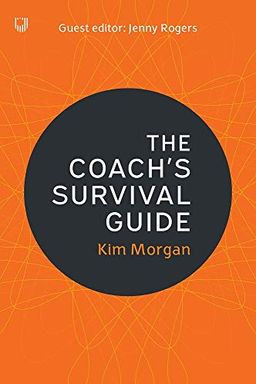
The Coach''s Survival Guide cover

The Coach''s Survival Guide

by Kim Morgan

The Coach’s Survival Guide by Kim Morgan delves into essential strategies for overcoming common challenges in coaching. Packed with real-life case studies and expert advice, this book empowers coaches to build credibility, manage client relationships, and grow their businesses successfully. Whether you''re a novice or seasoned professional, discover practical solutions to elevate your coaching career.

Illness, Advocacy, and the Birth of Long COVID

What happens when millions become sick yet medicine denies their experience? Long COVID and the patient-led movement argues that collective power can emerge precisely where institutions fail. Through intertwined memoir, guide, and manifesto, the book reveals that the modern understanding of Long COVID—its name, diagnostic categories, and first scientific data—was built by patients themselves. The central theme is that lived experience is expertise.

From one voice to a movement

The book opens with Fiona Lowenstein’s realization that all change starts with one person believing another. Her conversations with friends like Sabrina turned isolation into solidarity, birthing the Body Politic support group. From that small Slack channel came crowdsourced symptom lists, advocacy for ICD codes, and media visibility. When institutions dismissed persistent post-COVID symptoms, patients filled the vacuum—coining “Long COVID” and “long-hauler,” tracking over 200 symptoms, and demanding government recognition. Naming illness created legibility, which opened access to clinics and policy reform.

The system that failed and the knowledge that rose

Healthcare and policy infrastructures were unprepared for this scale of chronic illness. Diagnostic confusion, biases, and economic precarity amplified the suffering. Yet, instead of disintegrating, communities organized like historical activist networks—echoing HIV/AIDS and disability-rights movements. These sections bridge scientific insight with social strategy: from immunologist Akiko Iwasaki’s detailing of immune dysfunction to JD Davids and Naina Khanna’s call for disability justice centered on intersectionality and mutual care.

Understanding the illness itself

Chapters such as Heather Hogan’s on dysautonomia and Terri Wilder’s on brain fog make complex physiology accessible. They explain that many Long COVID symptoms—such as rapid heart rate, dizziness, and cognitive collapse—stem from measurable biological disruptions, not psychosomatic distress. You learn diagnostic strategies, from tilt tests to symptom journaling, and patient-tested management tools like hydration, compression, and pacing. Akiko Iwasaki’s scientific framing completes the circle: persistent virus, immune dysregulation, and microvascular damage are evidence-backed mechanisms, not mystery.

How survival became systemic critique

Stories like Karla Monterroso’s expose how race, gender, and body bias warp emergency care—doctors assuming obesity or anxiety while life-threatening dysautonomia went untreated. Chimére L. Smith expands this into cultural analysis: the myth of independence among Black women obscures real need for caregiving. Both remind you that survival often depends on social capital and advocacy allies rather than institutional compassion. Community mobilization—friends documenting vitals, posting updates, or calling hospitals—becomes a parallel medical system.

Turning lived data into public action

As the movement matured, contributors like Lisa McCorkell and Padma Priya DVL professionalized the community’s knowledge into research collaborations. They teach you how to read scientific studies critically, spot biased sampling, and even participate as compensated patient researchers. Importantly, patient-generated surveys (PLRC, Body Politic) directed formal labs toward real symptom clusters and validated conditions like PEM (post‑exertional malaise). Learning to navigate research responsibly becomes as vital as pacing your body.

A philosophy of pacing and interdependence

Pato Hebert’s “Stop. Rest. Pace.” reframes survival as creative resistance. Pacing is not laziness—it’s self‑protection and a political act against productivity culture. Combined with practical lessons from brain‑fog and dysautonomia chapters, you learn that gentleness and boundaries are medical skills. Peer support expands this ethic outward: through groups in India, Canada, and America, people share names of doctors, equipment advice, and emotional grounding. Mutual aid becomes a technology of care.

What long illness teaches society

Long COVID is not just pathology; it’s a mirror of inequity. The crisis exposes how health systems erase chronic illness, especially in marginalized bodies. It also revives a crucial political question: what does justice look like when recovery is uncertain? Davids and Khanna insist on disability justice—centering lived experience, compensating participation, and rejecting stigma. Iwasaki’s scientific conclusion echoes the same ethic at molecular scale: only inclusive, interdisciplinary approaches can solve complex conditions. From science to society, inclusion proves not just moral but methodologically essential.

A new template for medicine and activism

By the book’s end, your understanding of illness has transformed. Medicine becomes collaborative; advocacy becomes data-driven; recovery is replaced by recalibration. You see how one patient’s tweet (Elisa Perego) and one nurse’s insistence (Jacinda in Karla’s story) ripple into global systems of care. The takeaway is radical yet simple: your story, documented and shared, can change science and politics. Long COVID organizers didn’t just survive—they built a new model for participatory health, redefining who counts as a researcher, a caregiver, and an expert.


Diagnosis and Medical Navigation

Getting officially diagnosed with Long COVID is often the first major obstacle you face. Dona Kim Murphey, Rachel Robles, and David Putrino explain why diagnosis matters and how to navigate imperfect systems. A confirmed label can open doors to treatment, disability support, and validation—but you quickly learn that tests alone rarely tell the full story.

Understanding the diagnostic maze

Tests for viral remnants, antibodies, or inflammatory markers come with narrow windows and significant false-negative rates. Many long-haulers were never tested early enough, leaving them classified as “unconfirmed.” Putrino proposes a dual diagnostic frame: deal with person-facing symptoms immediately (like POTS management or sleep regulation) while pursuing physiology-facing research for long-term answers. The goal is parallel progress—relief now, exploration later.

Building your own evidence

You can strengthen your diagnostic case through documentation: daily vitals, symptom logs, and medical correspondence. If denied testing or insurance approval, request that your clinician documents differential diagnoses and rationale, which supports disability and legal claims. In the book, even physician-patients like Murphey relied on self-tracking to argue for care. (Note: this patient paperwork often becomes the foundation for research enrollment.)

Clinical diagnosis as validation

When laboratory tools fail, clinical diagnosis—a physician’s official acknowledgment based on history—becomes life-changing. It restores credibility, unlocks access, and reduces psychological harm from being dismissed. The authors remind you that diagnostic processes also reflect bias: women and people of color face higher rates of “psychologization.” Knowing that pattern helps you advocate strategically and find clinicians aligned with emerging Long COVID science.

The takeaway

Diagnosis is not a fixed endpoint but a negotiation between data and narrative. Your personal records, peer support, and persistence together become a medical dossier. In the new landscape of chronic post-viral illness, your evidence matters as much as any test result.


Intersectional Bias and Community Care

Illness rarely occurs in socially neutral spaces. Karla Monterroso and Chimére L. Smith expose how identity—race, size, gender—interacts with medical systems to determine whether you are believed or ignored. Their stories redefine care not just as treatment but as social resistance to bias.

When institutions fail

Karla’s near collapse in an ER highlights structural harm: despite dangerously low blood pressure and tachycardia, she was sent home because doctors assumed obesity and diet were the problem. Racism, fatphobia, and dismissal converged. Only her network—friends with medical expertise—intervened and saved her.

Redefining caregiving

Chimére’s chapter reframes help-seeking as empowerment. Raised in a culture of self-reliance, she initially hesitated to ask for assistance during repeated ER visits. Ultimately, caregivers—from her mother Pastor Paula to best friend Sequoia—formed a multidisciplinary team spanning meals, advocacy, and moral support. The narrative counters the stigma that dependence equals weakness.

Community as medicine

Both women show that care is a collective technology. Text threads, vitals tracking, and presence during hospital conflicts become therapeutic. Their stories reveal that social capital—who you can call—often predicts outcomes more than race-neutral protocols. (Note: similar principles appear in Black feminist health activism and HIV community histories.)

Actionable lessons

  • Document vitals regularly and bring advocacy allies via phone or in person.
  • Translate self-care tools—pulse oximeters, hydration guides—into accessible formats and languages.
  • Recognize caregiving as shared labor across family and community.

Bias cannot be fully removed overnight, but organizing collective care can mitigate its harm. Community advocacy literally saves lives where systemic equity remains an aspiration.


Autonomic and Cognitive Dysfunction

Many Long COVID patients discover that their dizziness, brain fog, and mood shifts aren’t psychological—they are manifestations of dysautonomia and neurological injury. Heather Hogan and Terri Wilder make invisible dysfunction visible through practical detail and empathy.

Understanding dysautonomia

The autonomic nervous system governs heart rate, blood pressure, digestion, and temperature. When disrupted, the body cannot regulate basic processes. Symptoms can include tachycardia upon standing (POTS), fainting spells, orthostatic intolerance, and brain fog. Hogan recommends a simple standing test: a rise of more than 30 BPM in heart rate within ten minutes suggests possible POTS.

Self-monitoring and adaptive tools

Tracking vitals teaches you your body’s limits. Cheap devices, from pulse oximeters to smartwatches, help you pace activity. Treatments center on salt and fluids, compression garments, gradual reconditioning, and medications like beta-blockers or ivabradine. Cognitive pacing parallels physical pacing: break mental tasks into small chunks, record meetings, and use reminders. Terri Wilder’s strategies—voice memos, alarms, and advocacy allies—transform disability into manageable routines.

Reframing brain fog

Cognitive impairment may wax and wane. Wilder emphasizes compassion with timing—avoid major decisions during flares, schedule demanding tasks during peak clarity. Neuropsych evaluation and therapy can validate deficits for workplace accommodations. Brain fog often correlates with post-exertional malaise, reinforcing Pato Hebert’s mantra: Stop, Rest, Pace.

Living with the new baseline

Hogan and Wilder conclude that adaptation—not despair—is key. Continuous measurement and small lifestyle adjustments create stability. Knowledge and patient solidarity replace isolation with agency: the body may be unreliable, but your data and community can anchor you through uncertainty.


Economic Survival and Disability Rights

Long COVID disables not just physical function but livelihoods. Letícia Soares, Karyn Bishof, and Alison Sbrana outline how disabled people navigate broken systems: applying for benefits, seeking legal protection, and pooling resources.

The financial fallout

Letícia’s move from Canada to Brazil and Karyn’s denied compensation underscore systemic failure: disability systems were designed for few, not mass illness. COVID overwhelmed them. As a result, many patients face loss of income, housing instability, and bureaucratic exhaustion. Your first line of defense is documentation—logs, physician letters, and employment communication records.

Navigating benefits and rights

Apply early for SSDI or local equivalents, expect delays, and prepare for appeals. Lawyers specializing in disability often work on contingency. Ask doctors to record functional limits in detail (“can stand only 15 minutes”). Long COVID can qualify as a disability under the ADA; resources like Ask JAN provide accommodation ideas.

Community resilience and policy change

Sbrana emphasizes finding local advocates—Centers for Independent Living and 2‑1‑1 referral systems—to save time and energy. Collective advocacy through patient groups pressures policymakers to reform outdated systems. As the book repeats, community replaces failing institutions until institutions catch up.

Individual preparation blends with collective action: record, apply, join, and mobilize. Economic survival becomes a shared political endeavor.


Community, Research, and Disability Justice

The closing chapters unite science, activism, and moral vision. Padma Priya DVL, Lisa McCorkell, JD Davids, Naina Khanna, and Akiko Iwasaki demonstrate how patients didn’t only describe their illness—they remade the system studying it.

Peer support as infrastructure

Platforms like Body Politic and the India Covid Survivors Group became rapid-response networks. Members exchange clinician names, shape research questionnaires, and offer emotional first aid. Peer communities bypassed medical bureaucracy, acting as diagnostic hubs and psychological rescue networks. (Comparable precedents include ACT UP and feminist health collectives.)

Building and reading research

McCorkell’s guidance teaches critical literacy: assess study design, participant selection, and funding bias before trusting conclusions. Patient-led surveys expanded epidemiological awareness when traditional institutions lagged. Learning to interpret and contribute responsibly turns you from subject into collaborator.

From rights to justice

Davids and Khanna invoke the lineage of HIV and disability organizing. They distinguish rights (legal access) from justice (intersectional equity). Their principles: center those most affected, pay patients for their input, and reject narratives of guilt or moral failure. Disability justice integrates social, racial, and economic contexts, ensuring chronic illness advocacy doesn’t replicate old hierarchies.

Science catches up

Iwasaki’s immunological framework connects these social truths to biological complexity. Long COVID may involve persistent viral particles, chronic inflammation, or autoantibodies, demanding cross-disciplinary research shaped by patient insight. Her call to remake medical education completes the book’s trajectory—from bedside despair to global study inclusion.

Together, these voices outline a blueprint for participatory science and social repair: listen to patients, pay them, learn from them, and rebuild health systems around lived expertise.

Dig Deeper

Get personalized prompts to apply these lessons to your life and deepen your understanding.

Go Deeper

Get the Full Experience

Download Insight Books for AI-powered reflections, quizzes, and more.