
Idea 1
The Human Age of Climate and Choices
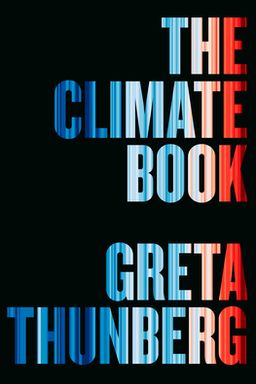
You live in a geological moment unlike any that came before: humanity has become a planetary-scale force. The book brings together scientists, historians and activists to show how carbon, land, and life are now intertwined by decisions of human origin. Its central argument is simple yet profound: physics sets boundaries, but politics and ethics decide whether humanity stays within them.
The narrative begins in deep time, reminding you that carbon has shaped Earth’s climate and extinctions long before human emergence. It moves through the Anthropocene — the era in which human activity defines planetary change — and forward to modern crises of inequality, consumption and denial. It ends by insisting that justice and people power are the real levers of transformation. Across its chapters, the book blends climate science, moral reasoning and practical action so that every reader can see where they stand within the global budget of carbon and responsibility.
Climate’s arithmetic and the carbon budget
You learn that the physical equations are no longer mysterious. The Intergovernmental Panel on Climate Change, analyzing work from hundreds of scientists, shows that human activity has warmed the planet by roughly 1.1–1.2°C since pre-industrial times. That number is not an abstraction but a cumulative record of combustion, agriculture and deforestation. The carbon budget frames how much CO2 can still be emitted while maintaining a likely chance of staying below 1.5°C — about 400 gigatonnes at the start of the decade. At current rates, that limit will be exhausted within years, not generations. The elegance of this concept is also its moral weight: carbon emissions are irreversible on human timescales, and the share of responsibility is radically unequal across societies.
The long memory of carbon
Carbon has been both a giver and a taker of life. Geological evidence, like the End-Permian extinction when volcanism released massive CO2 leading to ~90% species loss, is a warning written in stone. Today, humans release ancient, fossilized carbon faster than almost any natural event in Earth’s deep history. As Peter Brannen observes, the pace of change matters more than magnitude: rapid warming strains both ecosystems and societies beyond their adaptive capacity.
Unequal impacts and social consequences
Heatwaves, floods and fires make climate change immediate. Katharine Hayhoe calls it “global weirding,” where extremes multiply. Health studies link 37% of modern heat-related deaths to climate change, while nutrition science shows rising CO2 lowers food quality, threatening hundreds of millions with deficiencies. Yet these crises fall unevenly. Poorer regions face higher vulnerability although they contribute least to emissions, reinforcing global inequality, migration and health injustice.
The political and moral dimension
Science describes limits, but politics governs decisions. Naomi Oreskes and Kevin Anderson document denialism’s evolution — from deliberate misinformation to modern techno-optimism relying on unproven carbon removal schemes. Greta Thunberg’s activism and Sunita Narain’s justice framing remind you that climate action is not only about emissions reduction but about equity and reparation. Without fairness, even technically sound solutions fail socially.
A connective insight
The story intersects science, ethics and power. It exposes how every tonne of carbon reflects a decision — of extraction, distribution or inaction — and how collective change must now be pursued with speed and justice together.
From knowledge to agency
The book ends with hope rooted in realism. You cannot negotiate with physics, but you can change institutions and values. The authors call for transformations grounded in equity: rethinking land use and food systems, reducing demand alongside technology, and mobilizing public movements that reach critical participation thresholds. Collective agency — whether through rewilding, sustainable diets or civic protest — is presented as the decisive force bridging scientific clarity and practical change. The truth is clear: this century is defined by whether humanity chooses cooperation over consumption and precaution over denial.
With precise data and moral urgency, the book maps the science of warming onto the politics of survival. You finish not only understanding how the world warmed, but how individuals and societies must act — because every delay deepens the debt humanity owes to both the past and the future.