
Idea 1
Civilizations as the Core of Global Politics
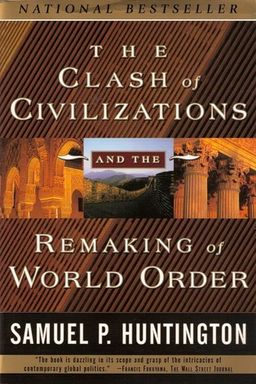
What defines global politics after the Cold War? In Samuel P. Huntington’s The Clash of Civilizations and the Remaking of World Order, the author argues that culture—especially civilizational identity—replaces ideology and power politics as the main organizing principle of international relations. Where once the world was divided by capitalism and communism, it is now divided by cultural civilizations rooted in religion, history, and identity. Huntington’s provocative claim is that future conflicts will arise not between states or classes, but along the fault lines separating civilizations.
You can imagine these civilizations as broad cultural families—Western, Islamic, Sinic, Hindu, Orthodox, Japanese, Latin American, and possibly African. Each possesses shared traditions, moral assumptions, and institutions that bind its members across borders. When political or military disputes occur between actors from different civilizations, they become not just territorial disputes but battles over identity, legitimacy, and meaning.
From Ideological Rivalry to Cultural Pluralism
Huntington organizes the post–Cold War transformation as a shift from a bipolar to a multipolar, multicivilizational world. During the Cold War, two superpowers imposed ideological coherence; afterward, a diverse set of major powers—each representing a different civilization—reshaped global politics. These include the United States (Western), China (Sinic), Japan (Japanese), India (Hindu), Russia (Orthodox), Europe (Western), and parts of the Islamic world. Balancing among these powers no longer reflects simple material interest but also shared cultural heritage.
When you look at real-world examples—Russia defending Orthodox Serbs during the Yugoslav wars or Muslim countries aiding Bosnian Muslims—what you see is what Huntington calls kin-country rallying: an instinctive civilizational solidarity that transcends borders. The new global order is less about alliances of convenience and more about alliances of identity.
Defining Civilization
A civilization, Huntington argues, is the highest level of shared cultural identity short of all humanity. It encompasses religion (the most crucial factor), language, institutions, and shared historical experience. Civilizations evolve slowly, borrow elements from one another, and occasionally fragment—but their deep continuity makes them durable actors in world affairs. Each typically coalesces around a core state—for example, China in the Sinic world or the United States and Western Europe in the West—which provides leadership and coherence.
Civilizations, then, act like extended families of nations. They may contain siblings who feud, but outsiders are treated with suspicion. Understanding this structure helps explain why the European Union (a culturally coherent Western bloc) works more efficiently than multi-civilizational organizations like ASEAN.
Modernization Without Westernization
One of Huntington’s most useful clarifications is that modernization does not equal Westernization. Industrialization, education, and technology spread globally, but they do not erase distinct cultures. Non-Western societies adapt modern techniques while reasserting their own values—a process Huntington calls indigenization. Thus, Japan’s Meiji reforms, China’s Ti-Yong philosophy (Chinese learning as essence, Western learning for application), or India’s hybrid institutions modernized their societies without Westernizing their souls.
By contrast, wholesale Westernizers like Turkey’s Ataturk created torn countries, where elites embrace the West but the masses retain older faiths and customs. Huntington advises policymakers to respect these cultural limits: to promote modernization without assuming that Western liberal democracy or secularism will follow automatically.
The Decline of Western Monopoly and the Rise of the Rest
While the West remains rich and influential, its demographic weight, territorial reach, and cultural dominance are shrinking. The twentieth century was, in Huntington’s phrase, a “brief Western blip.” As Asia industrializes and Islam demographically explodes, the world rebalances toward plural power centers. The resurgence of religion—a “revenge of God”—provides spiritual meaning amid disorienting modernization. Orthodox Christianity revived in Russia; Islam flourished in Central Asia; and Hindu or Buddhist renewals transformed South and Southeast Asia. Modernizers who once dismissed faith now face its political potency.
Identity Politics and Civilizational Alignments
As people and states ask “Who are we?” after the ideological era, they increasingly answer in cultural rather than political terms. States seek partners who share their civilization—Baltic states turn to Europe, China networks with overseas Chinese, and Muslim states cooperate under the Organization of Islamic Cooperation. Huntington offers helpful typologies: cleft countries like Ukraine contain multiple civilizations within their borders, while torn countries like Turkey attempt to change civilizational allegiance. These categories help you predict internal instability or policy ambiguity.
West versus the Rest
Civilizations rub most painfully at their borders. Huntington highlights three flashpoints where Western universalism meets non-Western resistance: weapons proliferation, human rights, and immigration. Non-Western societies seek nuclear deterrence against superior Western arsenals; Asian and Islamic diplomats resist moral lectures on democracy; and Western publics, beset by immigration and multicultural anxieties, harden their cultural boundaries. The same cultural identity that unites civilizations globally can divide them internally.
Toward a Multicivilizational Order
Huntington ends with sober realism. He urges the West to renew its internal cohesion—anchoring North America and Europe around shared heritage—and to accept that coexistence, not domination, is the path to peace. His three “rules for peace” are abstention (no interfering in other civilizations’ internal affairs), joint mediation (core states co-manage conflicts at civilization frontiers), and commonality (build a thin consensus of basic moral norms). The alternative—pursuing universalism as cultural imperialism—would make civilizational conflict self-fulfilling. In a world of many civilizations, peace depends on cultural humility as much as deterrent power.