
Idea 1
The Paradox of the Modern CIO
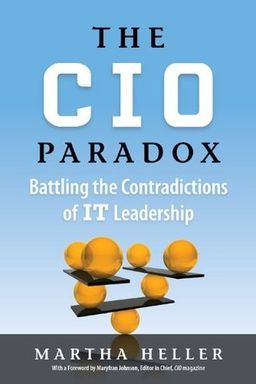
Why do so many technology leaders inherit chaos instead of clarity? In The CIO Paradox, Martha Heller asks this question and sets out to uncover why Chief Information Officers, despite being smart, capable, and experienced, walk into organizations where IT is broken, projects are delayed, and trust has evaporated. Heller argues that the CIO role itself is riddled with contradictions—what she calls paradoxes—that make success extraordinarily hard. You are hired to be strategic, yet you spend your time fighting operational fires. You’re told to innovate while being measured on cost containment. You’re deeply involved in every business function, yet considered separate from the business itself.
Heller contends that these contradictions are not due to incompetent CIOs but are baked into the nature of modern technology leadership. IT sits at the crossroads of complex systems, human relationships, financial constraints, and constant innovation. The paradox arises because technology moves faster than the organizations it serves, and the CIO, caught between business needs and technical realities, becomes a professional paradox manager.
Understanding the CIO Paradox
The CIO Paradox, Heller explains, stems from five deep roots: our reliance on technology, executive discomfort with technical subjects, conflicting timelines between business change and technological deployment, conflicting imperatives between innovation and risk prevention, and technology’s inherent complexity. These forces create tension between what CIOs are asked to do and what they are empowered to do. For example, while the CEO wants innovation, the board demands stability; while employees love technology in their personal lives, they complain about IT at work.
This paradox extends to nearly every facet of the CIO’s world—how CIOs define their role, interact with stakeholders, grow their team, and plan their careers. Heller organizes her book around four major domains where these paradoxes surface: your role, your stakeholders, your staff, and your future.
Your Role: Damned If You Do, Damned If You Don’t
In Part I, Heller explores how CIOs must balance cost and innovation, operations and strategy, and manage across time zones in global enterprises. Here, leaders like Geir Ramleth at Bechtel and Kim Hammonds at Boeing share how they simplify and innovate simultaneously, emphasizing the mantra “Speed = Innovation × Simplicity.” They show that operational excellence is not separate from strategy—it is its foundation. For Ramleth, simplification enables agility; for Hammonds, embedding IT into customer relationships turns operations into revenue.
Your Stakeholders: Will the Business Ever Love IT?
Part II tackles one of the oldest challenges—why IT remains a stepchild in the business family. CIOs like Leslie Jones of Motorola Solutions and Doug Myers of Pepco Holdings dismantle the “IT and the business” divide through better communication, inclusive language, and symbolic actions that change perception. The chapter shows how changing words—such as replacing “governance” with “assurance”—can change outcomes, echoing Daniel Goleman’s insights on emotional intelligence: the best CIOs translate technology into human terms.
Your Staff: They Just Don’t Make Them Like That
Part III dives into talent. Heller, drawing on her recruiting experience, reveals that great leadership comes from growing hybrid professionals who speak both tech and business. The paradox? The traits that make great engineers—precision, introversion, logic—often conflict with the interpersonal skills required for leadership. CIOs like Lynden Tennison at Union Pacific demonstrate how to nurture enterprise architects by combining patience, cross-training, and structured talent reviews. These examples parallel Jim Collins’s “right people on the bus” principle in Good to Great.
Your Future: What’s Next for the CIO?
Finally, Part IV explores the emerging frontier—the evolving CIO career path. Leaders like Doreen Wright, Kevin Hart, and Mike Kistner illustrate how CIOs expand into COO, CEO, and board roles. Some become Chief Innovation Officers; others reposition IT as a business driver. Heller concludes that the paradox will never vanish, but successful CIOs break it through leadership, transparency, and courage. She offers a “Breaking the Paradox Checklist”—a pragmatic guide showing that blended talent, simplification, accountability, and communication define the modern CIO’s survival toolkit.
“Technology has never been so central to business—and yet the people leading it have never worked harder to prove their value.”
Ultimately, The CIO Paradox is both diagnosis and cure. It shows that your success does not lie in erasing contradictions but mastering them: being strategic and operational, innovative and cautious, technical and human. Martha Heller’s message is clear—you cannot end the paradox, but you can learn to dance with it.