
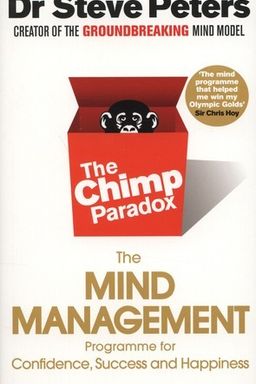
The Chimp Paradox cover

The Chimp Paradox

by Prof Steve Peters

The Chimp Paradox by Prof Steve Peters delves into the intricacies of the human brain, explaining how our rational and emotional selves often clash. Learn effective strategies to manage this inner conflict, enhance communication, and foster a positive mindset to achieve confidence, success, and happiness.

Mastering Your Mind: The Battle Between Human and Chimp

Why do you sometimes do things you instantly regret? Why can you feel calm and logical one moment, then anxious, angry, or impulsive the next? In The Chimp Paradox, psychiatrist Dr. Steve Peters offers a surprisingly simple but powerful answer: two separate minds live within you. One is rational, reflective, and grounded—the Human. The other is emotional, instinctive, and erratic—the inner Chimp. The lifelong challenge, Peters argues, is learning not to fight these two sides but to manage them. That is the essence of mind management.

Drawing from neuroscience, sports psychology, and decades of clinical practice, Peters shows how understanding and managing your inner Chimp can dramatically improve your happiness and success. He originally developed this model while coaching elite athletes such as Sir Chris Hoy and Victoria Pendleton, helping them perform under immense pressure. Yet Peters insists this isn’t just for Olympians—the Chimp Model applies to anyone who wants to be calmer, more confident, and more effective.

The Psychological Universe

At the heart of Peters’s metaphorical “psychological universe” is the Divided Planet—your inner battlefield where the Human and Chimp coexist. Around it orbit stabilizing moons representing different parts of your mind, such as the Computer (where habits and values are stored). He describes your entire psyche as a planetary system, each planet representing aspects like relationships, success, happiness, and health. When these planets align—when your Human, Chimp, and Computer work harmoniously—the Sun at the center (your purpose and fulfillment) shines brightly.

The Chimp And The Human Explained

The Chimp, located in the brain’s limbic system, interprets everything emotionally. It's fast, powerful, impulsive, and childlike. If someone cuts you off while driving, your Chimp screeches in outrage—it wants to fight, flee, or freeze. It thinks catastrophically (“This always happens!”) and irrationally (“They disrespected me!”). The Human, residing in the frontal lobe, is slower and logical. It sees the same event, gathers facts, and responds calmly (“This isn’t important; just let it go”). Both have their place—the Chimp can be intuitive and protective—but the issue is dominance. Peters warns that if you don’t manage this inner animal, it will run your life.

Your Computer: The Third Brain

Alongside these two minds is your Computer, the brain’s automatic pilot. It stores learned patterns and beliefs—some helpful (called Autopilots), others destructive (called Gremlins or Goblins). The key to stability is programming the Computer with truths and values that support your Human, not your Chimp. Peters calls this the Stone of Life, engraved with your core beliefs: what you think life is about, and how you want to live. That “Stone” anchors your psyche and prevents your emotional Chimp from hijacking you during stress.

Why It Matters

This internal model matters because much of human frustration, conflict, and regret come from battling our own emotional machinery. You aren’t irrational, angry, or lazy, Peters says—it’s your Chimp acting up. You’re responsible for managing it, just as a dog owner must train, feed, and control their dog. “You are not responsible for the nature of your Chimp,” he explains, “but you are responsible for managing it.” Learning this skill is life-changing: relationships deepen, careers flourish, and self-esteem grows.

The Journey Across Your Mind

Over the course of the book, Peters guides you planet by planet—from the Divided Planet (understanding yourself and managing your emotions), through The Guiding Moon (reprogramming thoughts), to the Planet of Success and Planet of Happiness. You’ll learn how to talk to your Chimp, how to replace toxic mental patterns with healthy ones, how to build supportive “troops” of people, and how to create a secure environment where your Chimp feels safe. In later chapters, you’ll discover how to plan for success using the “Dream Machine” and how happiness and confidence arise when you trust your Human to lead.

Ultimately, The Chimp Paradox teaches you to live harmoniously with the animal inside you. You’ll never eliminate emotion, fear, or impulse—but by understanding them, you can tame chaos into calm, move from survival to fulfillment, and let the Sun in your psychological universe truly shine.


How the Chimp Hijacks You

Imagine losing your temper in traffic, or worrying yourself sick about an exam result—it isn’t you thinking, it’s your Chimp hijacking your mind. In detailed examples, Peters explains how emotions take over before logic can intervene, showing both subtle and dramatic takeovers. His story of John and Pauline illustrates this clearly: when Pauline casually says her husband was making too much fuss about a parking dispute, John’s Human thinks calmly, but his Chimp instantly interprets it as criticism. Suddenly, he’s shouting, “Why do you never support me?” The Chimp has seized control before the Human can act.

Recognizing a Chimp Hijack

You can spot a Chimp hijack whenever you feel emotions or behaviors that you don’t want. Peters’s golden diagnostic question—“Do I want this feeling, thought, or behavior?”—reveals who’s driving. If you wouldn’t consciously choose anger, worry, or guilt, then your Chimp is in control. Emotional hijackings happen frequently because all information in your brain reaches the Chimp first. It acts instantly based on feeling and self-protection, while your slower Human must wait its turn. “The Chimp is five times stronger than you,” Peters reminds us. “Don’t arm-wrestle it. Learn to manage it.”

The Fixed Rules of the Brain

Every input goes first to the Chimp, then—if no threat is sensed—to the Human. Peters demonstrates this through Amy’s road rage: cut off by another driver, Amy’s Human wants to let it go, but her Chimp screams for vengeance. Unless she recognizes this internal reaction and calms the Chimp, anger dominates. Later, she feels shame—not for acting poorly, but because she doesn’t realize it was her Chimp acting out. Understanding that the Chimp’s emotions are natural helps prevent self-blame.

Emotional Hijacks in Daily Life

The hijack appears in ordinary moments too—like choosing cake despite dieting or feeling rejected after a harsh email. In both cases, emotion overrides reason. Peters compares it to owning a dog: if it bites someone, you can’t say “sorry, it wasn’t me.” You’re responsible for managing its instincts. The Chimp will never change its nature—it will always feel first, think in black and white, and act impulsively. But you can learn to manage it by talking it down, exercising it safely, and reassuring it when threatened.

Arm Wrestling the Chimp Doesn’t Work

When emotions rise, most people try to suppress them through willpower—what Peters calls “arm wrestling the Chimp.” It fails because emotion is faster and stronger. Instead, he teaches Chimp Management: recognize emotional triggers, let your Chimp express feelings safely (exercise it), then calm it with truth and logic (boxing it). Managing these hijacks transforms chaotic reactions into controlled responses. Over time, your Chimp learns that your Human is the leader—not an enemy.

(This approach mirrors Daniel Goleman’s Emotional Intelligence, which also emphasizes naming and managing emotional states rather than suppressing them.)


Logical vs. Emotional Thinking

Your Human and Chimp see the world through radically different lenses. Understanding these two modes—logical thinking versus emotional thinking—is essential to mastering your mind. Peters compares John’s rational response to Pauline with his Chimp’s emotional tirade. The Human thinks factually: “She must be tired; I’ll drop it.” The Chimp interprets emotionally: “She disrespects me!” and lashes out. Recognizing these divergent interpretations reveals the mechanism behind every irrational reaction.

The Chimp’s Emotional Thinking

Emotional thinking runs on impressions and assumptions. It’s quick, intuitive, and often paranoid. Peters lists its classic traits: it jumps to conclusions, thinks in black-or-white extremes, catastrophizes, and misreads context. His example of Rob waiting for Sally captures this perfectly—she’s late, so his Chimp invents stories (“She’s ignoring me!” “She’s humiliating me!”). When she arrives explaining she helped an injured stranger, Rob’s Chimp flips from anger to guilt. Emotional thinking is reactive, childlike, and unstable.

The Human’s Logical Thinking

Logical thinking relies on facts, truth, and perspective. It’s evidence-based, rational, and balanced. The Human collects information before forming opinions, appreciates shades of gray, and keeps events in context. Peters notes that adults often think with both: intuition (the Chimp’s gift) can trigger logic, but reason must lead. Logical mindset means you can challenge assumptions (“Is this true?”) and act only after checking facts. That’s why the Human represents maturity, self-control, and morality.

Switching Between Modes

You can’t silence emotion, but you can shift blood flow from the limbic Chimp to the frontal Human. Peters calls this “moving the blood supply.” Pause, breathe, and ask factual questions—this activates logic. The Chimp may resist, but repetition trains it to defer. Over time, emotional thinking becomes less destructive and more intuitive. Logical thinking takes practice, but it’s your gateway to maturity and peace.

Why This Matters

Understanding these modes allows you to identify when your emotions distort reality. It explains why relationships crumble over misunderstandings and why anxiety spirals without evidence. By seeing the Chimp’s mental habits as natural but unreliable, you can intervene before chaos sets in. Emotional thinking may respond first, but logical thinking must decide the final action—that’s how you reclaim sanity and self-control.


Programming the Computer

If the Chimp reacts emotionally and the Human thinks rationally, then who keeps peace between them? The answer is your Computer—the brain’s autopilot that stores habits, beliefs, and behavioral scripts. Peters likens it to a guidance system that both the Chimp and Human consult before acting. Whatever is programmed inside determines how you behave under pressure.

Gremlins, Goblins, and Autopilots

Your Computer contains three kinds of programs: helpful Autopilots (constructive beliefs and behaviors), removable Gremlins (unhelpful but learned habits), and deeply ingrained Goblins (harmful beliefs formed in early childhood). The goal is to delete Gremlins and replace them with Autopilots. For example, believing “I must please everyone” is a Gremlin; replacing it with “Not everyone will like me, and that’s okay” creates peace. Goblins, like childhood fears of rejection, may remain—but you can contain them with awareness.

Finding and Replacing Gremlins

Peters teaches a systematic method to uncover Gremlins: recall moments when you felt frustration, guilt, or sadness, then ask what belief triggered it. Was it true? Was it helpful? Common patterns emerge—immense pressure from “should” statements (“I should always be successful”) that generate guilt. His technique of swapping “should” for “could” transforms harsh judgment into possibility (“I could be successful if I prepare”). This linguistic shift rewires emotion from guilt to empowerment.

The Stone of Life

At the core of your Computer sits the Stone of Life—your guiding truths, values, and life force. These are beliefs you can prove by experience (“Life isn’t fair,” “Everything passes,” “Happiness is a choice”). Engraving them mentally grounds your Human when crises arise. Peters encourages displaying your Stone reminders daily to reassure both your Human and your Chimp that life has meaning and direction.

Reprogramming Takes Time

Like any computer, your mind needs regular updates. Reviewing beliefs weekly—especially those tied to emotions—prevents Gremlins from returning. If your Computer runs smooth Autopilots, your Chimp feels safe and your Human stays calm. As Peters writes, “The Computer is twenty times faster than the Human and four times faster than the Chimp—program it well, and it will rescue you before panic begins.”


Managing Others Through the Chimp Lens

One of Peters’s most practical contributions is applying the Chimp Model to relationships. Once you understand your own Chimp, you can read others’. He explains that interactions between people are often Chimp-to-Chimp exchanges — emotional, defensive, and irrational — rather than Human-to-Human discussions. Recognizing this helps you respond rather than react.

Understanding Others’ Chimps

When someone snaps or criticizes, you’re not always dealing with their true self but with their Chimp. For example, Peters describes a husband and wife who stop arguing once they perceive that the wife’s hurtful comments stem from her emotional Chimp. By addressing the real person behind the emotion, they restore empathy. This insight can transform relationships: it removes blame and adds compassion.

The Troop Drive

Every Chimp craves belonging to a troop—a supportive group for safety. This drive explains why people seek approval and fear rejection. But when the Chimp’s troop drive spins out of control, it tries to please everyone, leading to exhaustion and insecurity. Peters advises redefining your troop: a handful of trusted, loyal Humans who provide reassurance. Everyone else, he says, is outside your troop—you can be polite but needn’t seek validation. This protects your emotional energy and keeps your inner Chimp secure.

Realistic Expectations of People

Humans must also remember that some people never change or understand. Peters counsels adopting realistic expectations—“Life isn’t fair, and not everyone will like you”—to prevent stress. He illustrates this through a friend frustrated by his girlfriend’s lateness; her behavior wasn’t wrong—it simply didn’t match his expectations. Accepting individuality rather than demanding conformity leads to harmony. You can’t make a cat bark; you can only understand cats.

Building a Supportive Troop

Choosing the right people—those honest, compassionate, and reliable—is vital. These troop members can calm your Chimp, offer perspective, and share energy. Investing time in nurturing these relationships gives emotional security, one of the cornerstones of happiness. In a world full of Chimps, build your troop wisely.


Managing Stress and Emotional Resilience

Stress is inevitable, but Peters shows how to manage it intelligently before it spirals. Since the Chimp reacts first to perceived threat, stress always begins emotionally. The remedy lies in activating the Computer’s Autopilots to guide your Human response. He proposes a seven-step blueprint for instant stress management that combines awareness, calm, and perspective.

The Seven Steps to Calm

1. Recognition and Change — Notice stress and declare “Change” to interrupt automatic reactions.
2. Pause Button — Visualize pressing a mental 'pause' to slow thoughts.
3. Escape — Step away physically or mentally to cool emotions.
4. Helicopter View — See the situation from above; ask how important this will be in ten years.
5. Plan — Focus on controllable factors; reject victimhood.
6. Reflection and Activation — Choose whether your Human or Chimp will act.
7. Smile — Humor physically relaxes your mind; laughter defuses stress.

AMP: Accept, Move On, Plan

For deeper crises, Peters introduces AMP—Accept what happened, Move on emotionally, and Plan a constructive path forward. This framework mirrors Viktor Frankl’s emphasis on choosing perspective even in suffering (Man’s Search for Meaning). AMP stops people from clinging to worthless 'stones'—old pain or grudges that imprison the mind. Sometimes, letting go is freedom.

Starting at the Right Place

Peters warns against comparing your current state to your ideal state—it breeds disappointment. Start from where you are and celebrate small progress. His analogy of recovery from a broken leg makes it clear: focusing on healing each day feels empowering, while obsessing over total recovery creates frustration. Stress decreases when progress replaces perfection.

Decision-Making and Perspective

Indecision is another stressor. The Chimp avoids choices for fear of mistakes, while the Human accepts imperfection and acts calmly. Train your Human to decide with limited information, deal with consequences, and refuse catastrophic thinking. Life is always in flux—expect change, reject unrealistic expectations, and manage both yours and others’ Chimps with empathy. That is emotional resilience in action.


Confidence, Success, and Happiness

Peters ends his psychological journey with three interconnected goals: confidence, success, and happiness. Each relies on aligning your Chimp, Human, and Computer. You can’t be happy without security, confident without discipline, or successful without cooperation. These are not abstract ideals—they’re practical skills.

True Confidence

Most people build confidence on ability (“I’ll feel confident if I can win”). Peters challenges this, arguing that genuine confidence stems from effort, not outcome. If your goal is “doing your best,” confidence remains at 100 percent because effort is always controllable. When Liz prepares for a speech, she calms her Chimp by focusing on doing her best, not impressing others. Adam taking his driving test does the same. Effort replaces fear of failure with pride in integrity. The Human always wins because it can cope with consequences.

Success and the Dream Machine

Success isn’t luck—it’s planning. Peters’s Dream Machine has seven “cogs” guiding you from dream to achievement. You start by defining dreams versus goals (you control goals, not dreams), build Foundation Stones like skill and discipline, and turn the wheels through commitment, planning, motivation, and auditing progress. His mountain-climbing metaphor encourages celebrating every camp along the way—each small victory oils motivation. Failures are reframed as learning points; the Human treats setbacks with perspective, the Chimp sees catastrophe. Managing your Chimp means staying focused even when emotional turbulence hits.

Happiness as a Lifestyle

Finally, happiness is not luck or constant pleasure—it’s a choice rooted in effort and perspective. Peters defines three states: negative (stress and dissatisfaction), neutral (contentment), and positive (fulfillment). To transition upward, add “extras”—fun, gratitude, meaningful relationships, laughter, and altruism. Both Chimp and Human have needs: the Chimp for security and excitement, the Human for purpose and compassion. Balance these drives, nurture your troop, and engrave your Stone of Life daily. Happiness, like confidence, is sustained by aligning effort and truth rather than chasing perfection.

As Peters concludes, “Your Chimp will always be alive and kicking.” It’s not your enemy—it’s your energy source. The paradox is that when you accept and manage your Chimp, you don’t lose emotion; you gain peace. That’s the triumph of mind management—the art of living in harmony with yourself.

Dig Deeper

Get personalized prompts to apply these lessons to your life and deepen your understanding.

Go Deeper

Get the Full Experience

Download Insight Books for AI-powered reflections, quizzes, and more.