
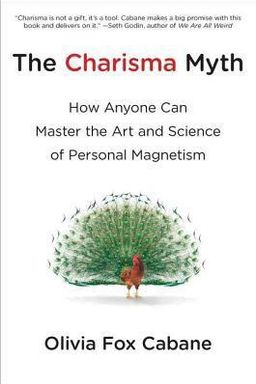
The Charisma Myth cover

The Charisma Myth

by Olivia Fox Cabane

The Charisma Myth uncovers the secrets of charisma, revealing it''s a learnable skill. By mastering body language, presence, and unique charisma styles, readers can transform their personal and professional interactions, leading to greater success and fulfillment.

The Science of Charisma: Presence, Power, and Warmth

Have you ever met someone who could walk into a room and, without saying a word, instantly command everyone’s attention? In The Charisma Myth, Olivia Fox Cabane argues that this magnetic quality we call charisma is not an innate gift granted to a lucky few—it’s a set of learnable behaviors and mental states that anyone can master. Cabane dismantles the myth that charisma is something you’re either born with or without, revealing instead that it stems from the deliberate combination of three key elements: presence, power, and warmth.

Charisma, according to Cabane, is a science as much as an art. Modern psychology, neuroscience, and behavioral research all show that our body language, our focus, and even our internal thoughts can be consciously trained to project a magnetic presence. The book isn’t about superficial charm or manipulative tricks—it’s about tuning your mental and physical state in ways that make others feel seen, valued, and inspired. As Cabane puts it, “Charisma is a skill. Like playing the piano or speaking French, it can be learned and mastered with practice.”

Demystifying the Myth

Cabane begins with the story of Marilyn Monroe, who could switch from being invisible to magnetic on command. Riding a New York subway, she was entirely unnoticed as ordinary Norma Jean Baker. Yet with a quick shift in posture and energy, she transformed into radiant Marilyn Monroe, and the crowd instantly turned her way. The story illustrates the book’s central claim: charisma is not about innate beauty or extroversion—it’s about specific mental states and body signals that anyone can learn to project.

These signals—largely nonverbal—combine to project two crucial judgments people make about you instantly: power and warmth. Power communicates your ability to influence the world around you, while warmth tells others that you’ll use that power for their benefit, not against them. Together they create the magnetic tension that defines charisma. Yet there’s a third, often-overlooked element holding it all together: presence, the ability to be wholly in the moment with others. Without presence, Cabane argues, power and warmth come across as hollow or fake.

Why Charisma Matters

Charisma, as Cabane describes, is far more than a professional asset—it’s a life skill that changes how people respond to you in virtually every situation. In business, research shows that charismatic leaders outperform their peers, attract top talent, and inspire stronger loyalty (psychologist Robert House’s research at Wharton confirms that charisma fosters superior team performance and morale). Yet the same advantages apply to teachers in classrooms, doctors with patients, or parents guiding children. The charismatic nurse or teacher isn’t born with “something special”—they have simply learned how to transmit confidence, empathy, and presence through small signals that others subconsciously register.

Cabane calls charisma “practical magic” because it works at the intersection of psychology and neurobiology. People react primarily to nonverbal cues—tone, posture, microexpressions—rather than words. This means that charisma can be taught as a science: by changing what’s happening inside your mind and body, you automatically send out signals that others perceive as confidence and connection. As the author explains, “What your mind believes, your body manifests.”

The Roadmap of the Book

Cabane structures her method around three pillars: mastering the behaviors of charisma, overcoming obstacles that weaken it, and cultivating mental states that anchor it. She begins by showing readers the mechanics of body language that project presence, power, and warmth. She then explores the hidden saboteurs of charisma—like self-doubt, physical discomfort, and negative mental chatter—and teaches tools to neutralize them. Finally, she introduces practices drawn from mindfulness, method acting, and neuroscience to create mental states that activate charisma on demand.

Throughout the book, Cabane reinforces that inner state precedes outer behavior. Trying to fake confident body language when you feel anxious or self-critical rarely works; those emotions leak through microexpressions your audience picks up in milliseconds. Instead, you start by adjusting your inner reality—your posture, your breath, your focus, and even your imagination—until the right signals emerge naturally. By aligning mind and body, she says, “the right body language will flow forth effortlessly.”

Why It Works

The most intriguing part of Cabane’s argument lies in neuroscience. Because the brain struggles to distinguish between imagination and reality, mental practices like visualization have genuine physical effects. Imagine a triumphant achievement—feeling applause, hearing your name announced—and your body floods with the same chemicals as if it were real. These internal shifts then transform how others perceive you. This mind-body loop, validated by research on placebo effects and body language (notably by Harvard’s Amy Cuddy on power poses), is the foundation of Cabane’s method.

Ultimately, The Charisma Myth is both a science manual and a practical guide to personal transformation. It reframes charisma from something mystical to something measurable and actionable. The message is empowering: anyone can learn to walk through the world with the confident, calming, and compelling presence of a leader. By the end, you’ll know how to radiate presence in conversations, project power without arrogance, show warmth without weakness, and even stay charismatic under pressure. What Monroe demonstrated intuitively, Cabane teaches systematically: charisma isn’t magic—it’s mastery.


Presence: The Foundation of Charisma

Imagine talking to someone whose eyes dart toward their phone every few seconds. You can feel the difference instantly: they’re not really with you. That sensation—the absence of full attention—is the opposite of presence, which Olivia Fox Cabane defines as the cornerstone of charisma. Presence means giving another person your complete attention, body and mind, so they feel that at this moment, they are the most important person in your world.

Why Presence Matters

Presence is the foundation upon which power and warmth rest. Without it, warmth seems inauthentic and power feels detached. When you’re not present, people notice. Your facial expressions respond a fraction too late, your gaze softens, your energy dissipates. Studies show that humans can read tiny emotional cues in under 20 milliseconds. As Cabane notes, “You may think you can fake attention—but people will feel the difference.”

Presence also connects directly to authenticity. When you’re distracted, people instinctively distrust you, even if your words sound polite. In contrast, being fully in the moment—listening, observing, reacting organically—creates rapport faster than any scripted charm. It’s what made leaders like Bill Clinton famous for making others feel that “you’re the only person in the room.”

Training the Mind to Stay Present

Cabane borrows from mindfulness practice to teach presence. Start small: take one minute, close your eyes, and focus on a single sensory input. You can tune into the sounds around you (“let your ears be satellite dishes”), the sensation of your breath, or even your toes. If your thoughts wander—which they will—gently bring your focus back. Over time, these micro-meditations strengthen mental muscles that anchor you in the present.

Our brains, she explains, evolved to stay alert for novelty—a survival mechanism that helped our ancestors spot predators. Modern life, flooded with stimuli and screens, hijacks this wiring, leading to what psychologist Linda Stone calls “continuous partial attention.” The problem: charisma requires full attention. Even small moments of complete presence—a minute of pure listening, eye contact, or focus—can create a “wow” effect because they’ve become so rare.

Practical Techniques

  • Check your attention during conversations. Ask yourself: “Where is my mind right now?” If it’s elsewhere, bring it back by focusing briefly on your breath or a physical sensation like your feet on the ground.
  • Use sensory grounding. When anxious, concentrate on something tactile—your toes, a cup in your hands—to pull yourself back into the physical moment.
  • Respect micro-moments. Only a few seconds of true presence can profoundly shift how others perceive you, because full attention is emotionally powerful.

Presence and Enjoyment

What might surprise you is that presence doesn’t just make others feel better—it also enhances your own experience of life. Meditation teacher Tara Brach (whose work Cabane recommends) notes that our minds are constantly running commentary on every moment. Presence quiets this inner chatter, allowing us to “drink in” good moments fully instead of rushing past them.

“Being present enables you to notice and savor the good moments. It’s what transforms a routine conversation into a connection.”

Cabane frames presence not as a mystical state but as a practical skill that builds connection, credibility, and even enjoyment. By learning to fully inhabit each moment, you automatically exude charisma—not because you’re performing, but because you’re truly there.


Power and Warmth: The Charismatic Equation

When people meet you, they unconsciously ask two questions: “Can this person affect my world?” and “Will they use that power to help or harm me?” These questions—about power and warmth—form the neurological foundation of charisma. Olivia Fox Cabane calls them the “fight or flight” (power) and “friend or foe” (warmth) questions. True charisma arises when both signals combine in balance.

Understanding Power

Power is your ability to influence the world. It doesn’t necessarily mean dominance; it can stem from expertise, intelligence, money, or even social status. We communicate power primarily through confidence and posture. A grounded stance, steady voice, and composed demeanor trigger subconscious respect. This is why actors or executives rehearsing a “power pose” truly feel bolder—research by Harvard’s Amy Cuddy shows such poses raise testosterone and lower cortisol within minutes.

However, power without warmth comes off as arrogance or intimidation. Think of a CEO who commands a room but leaves people shrinking in their chairs. Impressive, yes—but not charismatic.

Understanding Warmth

Warmth communicates goodwill—your intent to use your abilities for others’ benefit. It shows up through tone, facial expression, and behavior. A genuine smile, nod, or open posture signals empathy. Yet warmth without power slides into eagerness or neediness. People may like you, but they won’t follow you.

Cabane uses contrasting examples to illustrate: Winston Churchill projected immense power through conviction, but paired it with patriotic warmth that rallied Britain. Benjamin Disraeli won elections not by dazzling intellect alone but by making others feel “like they were the cleverest person in the room.”

Presence as the Equalizer

Presence ties power and warmth together. It keeps power grounded in humility and warmth anchored in confidence. Without presence, charisma collapses into either aloofness or desperation. That’s why Cabane trains readers to cultivate internal states that express all three qualities seamlessly. Once your internal emotion aligns with your intent—to help, lead, or inspire—your body language will reflect balance effortlessly.

In essence, charisma is dynamic equilibrium: if one component dominates, you distort it. The goal is calm strength—confidence plus care. Or as Cabane puts it, “Being seen as both able and willing.”


What Blocks Charisma: The Enemies Within

Even when you know the techniques of charisma, internal barriers can derail your efforts. Olivia Fox Cabane compares developing charisma to sculpting marble: “You’re not adding something fake—you’re chipping away the obstacles hiding your true self.” Those obstacles take physical and psychological forms—discomfort, anxiety, self-doubt, and self-criticism.

Physical Discomfort

Something as small as a bright light in your eyes can make you appear tense or disapproving, even when you’re not. Cabane recounts a story of a $4 million business deal nearly lost because the negotiator’s tight collar and hot wool suit made his expression strained. His prospect misread discomfort as disapproval. The lesson: your body broadcasts your internal state. Plan ahead—choose comfortable clothing, manage temperature, and maintain good posture so your body isn’t sabotaging your presence.

Mental Discomfort

Psychological discomfort stems from anxiety, uncertainty, dissatisfaction, self-criticism, and self-doubt. Anxiety cripples presence and lowers confidence. To combat it, Cabane teaches the “responsibility transfer”—mentally handing your worries to a benevolent force (God, Fate, or the Universe). This visualization reduces your brain’s need for control, which neuroscience shows is what fuels anxiety.

Equally toxic is the “negativity bias.” Our minds obsess over one criticism amid ten compliments. The fix? Assume thoughts are graffiti, not truth. You can acknowledge them without accepting their validity. Cabane advises visualizing negative thoughts as flickering electrical signals—fleeting data your brain produces, not verdicts on your worth. She draws here on cognitive science methods similar to those of Steven C. Hayes’s Acceptance Commitment Therapy.

The Inner Critic and the Impostor

The inner critic triggers fight-or-flight responses, flooding your body with adrenaline and cortisol, impairing thinking and charisma. Cabane likens this to a zebra running from a lion—useful for survival, disastrous in an office meeting. Many high achievers suffer “impostor syndrome,” feeling like frauds even when successful. She cites that in one Stanford MBA class, two-thirds of students admitted they felt like admissions mistakes. Her key insight: nearly everyone feels this way at times. Recognizing universality destigmatizes the feeling, stripping it of power.

By noticing discomfort, neutralizing negativity, and rewriting reality, you remove layers of self-imposed static. What emerges isn’t a new persona—it’s your authentic, unblocked self.


Rewriting Reality: The Three-Step Method

When anxiety or self-criticism takes hold, Olivia Fox Cabane offers a three-part process to restore your internal balance: destigmatize, neutralize, and rewrite. Together, these steps reshape how you experience reality and return you to a charismatic state.

1. Destigmatize Discomfort

First, recognize that discomfort is part of being human. Cabane reminds readers that feelings like anxiety, doubt, or shame are survival mechanisms—evolution’s way of keeping us safe. The problem arises when we layer self-judgment on top. By realizing that everyone feels this way—even Buddhist monks or top executives—you remove shame from the equation. One client pictured millions of people worldwide feeling the same emotion simultaneously, which made his own feelings seem normal and manageable.

2. Neutralize Negative Thoughts

Next, detach from distorted thinking. Cabane cites a Harvard study where viewers counting basketball passes failed to see a person in a gorilla suit—proof that focused attention distorts perception. Likewise, your mind filters reality through fear and bias. Label thoughts as “data,” not truth: “There is criticism arising” rather than “I am a failure.” By zooming out mentally—imagine your little self on planet Earth—you regain perspective. This aligns with mindfulness techniques that cultivate observational distance from thoughts.

3. Rewrite Reality

Finally, reframe challenges as constructive. Cabane recounts how, anxious before a major speech in Bogotá, she consciously asked: “In what way could this unfortunate situation be perfect?” Writing possible positive outcomes shifted her mindset—and the talk became a triumph. This reframing leverages the brain’s inability to distinguish imagination from fact: once you imagine success vividly, your physiology aligns with it. Cabane even suggests writing apology letters to difficult people and then writing their ideal responses—an exercise that provides internal closure and rewires resentment.

“What if this experience—however unpleasant—was exactly the one you needed to grow into your most powerful self?”

This method isn’t denial; it’s selective attention. By choosing interpretations that empower rather than drain you, you reclaim control over how external events shape your internal state—and, consequently, how others perceive your charisma.


Creating Mental States of Confidence and Warmth

Once you’ve cleared internal obstacles, charisma blossoms by cultivating deliberate emotional states. Cabane’s technique for creating charisma on demand draws from sports psychology, mindfulness, and acting. Her three primary tools are visualization, gratitude, and compassion.

Visualization: Commanding Confidence

Athletes like Jack Nicklaus or performers like Meryl Streep use visualization to prime success. Cabane instructs readers to vividly recall a triumphant moment—feel the sounds, sights, and sensations—until your body reacts as if it’s happening. This anchors confidence physiologically. Music, posture, and gestures reinforce the effect. Imagine doing a “victory pose” or fist pump as you visualize success; your body locks the feeling in.

Gratitude: Cultivating Warmth

Where confidence projects power, gratitude radiates warmth. Gratitude redirects your focus from scarcity to abundance, dissolving desperation. Cabane suggests subtle exercises: notice three small things you appreciate in the moment—the light, your breath, your shoes. For deeper practice, write a short narrative about your life as seen through a third person’s admiring eyes. This perspective can spark compassion for yourself, softening edges that might otherwise seem cold.

Compassion: Expanding Connection

Compassion, Cabane argues, combines empathy (understanding others’ feelings) with goodwill (wishing them well). To develop it, imagine people with “invisible angel wings.” This simple visualization reframes interactions: the rude customer becomes a stressed soul doing their best. It not only changes your body language—softer eyes, relaxed tone—but also generates true connection. Science backs this: compassion floods your body with oxytocin, reducing stress and amplifying trust.

Through practices like Metta (“loving-kindness meditation”), Cabane teaches self-compassion as a cornerstone of charisma. Research by Kristin Neff shows that self-compassion—treating yourself kindly in failure—fosters greater resilience and authenticity than self-esteem. It’s what turns confidence from arrogance into approachability.

Combining confidence with gratitude and compassion produces what Cabane calls “calm authority.” It’s the quiet magnetism of people who feel solid within themselves and generous toward others—a mental and emotional sweet spot at the heart of charisma.


Four Styles of Charisma

Charisma isn’t one-size-fits-all. Just as there are different leadership styles, Olivia Fox Cabane identifies four distinct charisma types: Focus, Visionary, Kindness, and Authority. Each relies on a different balance of power, presence, and warmth—and each fits different personalities and contexts.

Focus Charisma

Embodied by figures like Bill Gates and Elon Musk, focus charisma stems from deep presence and intellect. When you’re fully attuned to others—listening without distraction—you project confidence and respect. It’s ideal for one-on-one interactions or negotiations because it makes people feel valued and safe.

Visionary Charisma

Visionary charisma inspires belief. Think Steve Jobs rallying crowds with his conviction about Apple’s potential or Martin Luther King Jr. painting a world of justice. It relies on passion, certainty, and purpose—what psychologist Robert House calls “articulating a compelling vision of the future.” It’s perfect when people crave direction or meaning, especially in uncertain times.

Kindness Charisma

Kindness charisma radiates warmth and acceptance, making people feel loved just as they are. The Dalai Lama epitomizes it—his gaze conveys pure empathy. This style excels in coaching, counseling, or leadership that requires emotional safety. But Cabane warns: without power, it can slide into over-eagerness or people-pleasing, so combining it with subtle confidence is key.

Authority Charisma

Authority charisma commands immediate respect. Figures like Colin Powell or Margaret Thatcher exuded it through posture, voice, and contained stillness. It’s based on power and status—people assume you can “move mountains.” Authority charisma is invaluable in crises but risky if untempered by warmth, which can soften its edge.

Cabane advises rotating styles. An introvert might gravitate toward Focus Charisma, while extroverts thrive on Visionary energy. Choose what aligns with your personality, goals, and situation. The more styles you master, the more adaptable—and magnetic—you become.


Communicating Charisma: Speaking and Listening

Charisma lives as much in how you speak as in what you say. Olivia Fox Cabane shows that communication—verbal and nonverbal—is how presence, power, and warmth reach the world. Charismatic communication has two arts: listening with full presence and speaking with emotional precision.

Listening Charismatically

Cabane calls listening an underrated superpower. True listening means being fully present—no mental rehearsals, no waiting to speak. In fact, one of her golden rules is: never interrupt. Even enthusiastic interruptions make people feel dismissed. Great listeners pause before responding—letting their face react first, then speaking after two seconds. This pause shows consideration and gives your words more weight.

The best listeners, she says, make speakers feel intelligent and valued. That’s what set leaders like John F. Kennedy apart—people felt truly seen by his focused attention. It’s the essence of charisma: making others feel special.

Speaking with Emotional Precision

Words are secondary to tone and presence. Studies from MIT’s Media Lab found call outcomes could be predicted 87% of the time just from tone and body rhythm—not words. Cabane trains speakers to use vocal variation (pitch, tempo, volume) to keep listeners engaged. Speak slowly, drop intonation at the end of sentences, and pause deliberately; these signal authority. To project warmth, smile—literally or mentally—because the sound changes (a concept echoed by Dale Carnegie’s classic advice).

Positive Associations

Because people associate you with the emotions they feel around you, your goal is to create positive emotional conditioning (like Ivan Pavlov’s famous dogs). Make people feel good about themselves by appreciating, complimenting, and redirecting attention toward them. Use stories, metaphors, and vivid imagery—these evoke emotion and are remembered longer. Avoid negative words (“no problem” still primes the word “problem”). Instead, say, “We’ll take care of it.”

In conversations, apply Cabane’s bounce back technique: briefly answer a question, add a personal note, then redirect the spotlight to the listener with an open-ended follow-up. This combination of presence, positivity, and clarity makes your interactions unforgettable.


Charisma Under Pressure: Dealing with Difficulty

Charisma isn’t tested during easy moments—it’s forged in challenges. Cabane devotes large portions of the book to using charisma in difficult situations: dealing with hostile people, delivering bad news, giving criticism, or apologizing. The key is managing your internal state so you project calm, empathy, and confidence even under stress.

Handling Difficult People

When facing difficult personalities, Cabane recommends shifting from adversarial to empathetic mindset. Instead of matching negativity, imagine that the person just experienced tragedy—this compassionate reframe instantly softens your body language. Her client Peter, a global chairman, used tailored charisma styles to win over each resistant board member—Focus for those who needed listening, Visionary for those who needed hope. “Divide and personalize,” she says. One charisma style does not fit all.

Delivering Bad News and Criticism

Before difficult conversations, choose your timing and environment to maximize comfort. Avoid sterile or stressful settings; soft light, music, or even giving the person something small to hold helps ease tension. When breaking bad news, project kindness charisma: slow voice, soft eye contact, genuine empathy. When offering feedback, depersonalize—criticize behaviors, not character. Frame corrections in terms of future improvement (“Next time, let’s prepare earlier”) rather than personal failure.

Apologies Done Right

True apologies require presence, warmth, and accountability. Listen fully before speaking (“hear them out completely”), then express regret succinctly and sincerely. “I’m sorry” carries more weight than “Sorry.” Avoid justifying; focus on understanding impact and prevention. Sincere humility, Cabane notes, transforms conflict into connection—often strengthening relationships.

Whether it’s boardroom conflict or emotional repair, crisis charisma depends on one thing: your ability to regulate yourself first. As Cabane puts it, “You can’t lead others out of chaos if you’re still lost inside your own.”


Living a Charismatic Life

Charisma changes how the world sees you—but also how you see yourself. In her final chapters, Olivia Fox Cabane explores the paradoxes and responsibilities that come with powerful presence. Like any form of influence, charisma has side effects: admiration, envy, isolation, and misuse.

The Double-Edged Sword of Admiration

As you become more magnetic, people shower you with praise—but also jealousy. To temper resentment, Cabane offers the JALIR method: Justify the contact (“I was thinking about you”), Appreciate the person, Lay out the Impact they had, and create Responsibility by crediting them for your success. Sharing glory transforms envy into pride. Bill Clinton famously did this by asking everyone—including janitors—for policy advice, giving them ownership of his success.

The Problem of Oversharing

Kindness or focus charisma can create such safety that people open up too much and later regret it. To prevent this “charisma hangover,” gently interrupt with a relatable “me too” story or reframe their vulnerability in a broader, positive light. The goal is to moderate intimacy without breaking trust.

Showing Humanity

One antidote to unrealistic expectations is vulnerability. Leaders like Michael Jordan and Bill Clinton regained likability by exposing flaws and sharing struggles. In business, this humanizes authority and invites trust. Practicing small vulnerability—“I’m a bit nervous about this”—makes others comfortable and helps you feel authentic.

The Ethics of Charisma

Charisma is a power tool—it amplifies whatever direction you take. Peter Drucker warned that history’s most charismatic leaders—Hitler, Stalin, Mao—used magnetism destructively. Cabane echoes this caution: “Charisma is neither good nor bad; it’s power. Use it wisely.” She quotes Marshall Goldsmith’s reminder that charisma, like intelligence, accelerates both success and mistakes.

In the end, living a charismatic life means combining influence with integrity. When balanced by empathy and ethics, charisma becomes not manipulation but inspiration—the art of making others feel capable, valued, and awake in your presence.

Dig Deeper

Get personalized prompts to apply these lessons to your life and deepen your understanding.

Go Deeper

Get the Full Experience

Download Insight Books for AI-powered reflections, quizzes, and more.