
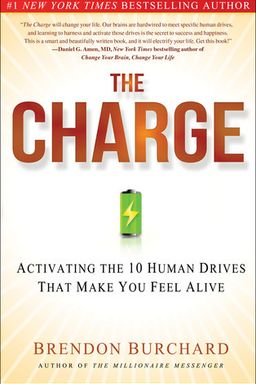
The Charge cover

The Charge

by Brendon Burchard

The Charge reveals how to awaken the ten human drives essential for a fulfilling life. With actionable insights, it empowers you to feel confident, energized, and ready to tackle life''s challenges, fostering happiness and fulfillment.

The Declaration of Personal Power and the Pursuit of Freedom

When was the last time you felt truly free—not just politically, but spiritually, emotionally, and creatively? Brendon Burchard’s The Motivation Manifesto is a rallying cry to reclaim that freedom. He argues that every human being is born with immense personal power and vitality, yet most of us live small, fearful lives, shackled by social conformity and inner doubt. The book is written in an unusually passionate style, resembling a revolutionary manifesto. Its opening declaration sets the stage: we are lions living as mice, full of divine potential but trapped by our own timidity.

Burchard’s core argument is that Personal Freedom—the ability to express our true selves and pursue meaningful aims without fear or constraint—is the ultimate human drive. Freedom, however, is not given; it must be consciously claimed through disciplined will, self-mastery, and courage. He urges readers to recognize the forces that oppress this freedom, both external (social conditioning, others’ judgments) and internal (fear, doubt, laziness). The book frames motivation not as a fleeting emotion but as a moral imperative—to rise, act, and live consciously.

The Structure of Liberation

The book unfolds in two major sections: first, Burchard analyzes human nature, explaining how our desire for freedom battles against fear and oppression. Second, he lays out nine bold declarations—practical and philosophical principles for reclaiming our power, integrity, joy, and love. Each declaration represents a crucial dimension of a free and motivated life.

  • Meet life with full presence and power
  • Reclaim your agenda
  • Defeat your demons
  • Advance with abandon
  • Practice joy and gratitude
  • Do not break integrity
  • Amplify love
  • Inspire greatness
  • Slow time

Each declaration is both vow and lesson, a call to awaken our awareness and channel our energy toward meaningful action. Burchard insists that motivation arises not from luck or circumstance but from deliberate choices—what he calls “the discipline of freedom.”

Why This Manifesto Matters

Written with poetic intensity, the book resonates deeply in today’s world of distraction and fear. Burchard’s plea echoes the wisdom of philosophical and spiritual traditions—from Stoic self-mastery (Epictetus) to transcendentalist independence (Emerson). His message is both timeless and urgent: in a society obsessed with speed, comfort, and conformity, we have forgotten how to live with vigor and purpose. We trade ambition for distraction, integrity for popularity, and freedom for false security.

"Fear wins or freedom wins."

This line captures Burchard’s central thesis: every choice we make either strengthens our freedom or deepens our fear. To live motivated is to act from freedom rather than from fear.

Freedom as a Daily Discipline

In practical terms, Burchard calls on you to reclaim presence, design meaningful days, defeat inner doubts, and advance joyfully despite difficulty. He compares freedom to fire—something that must be fed daily through conscious effort. Power, joy, gratitude, integrity, love, and courage aren’t accidental moods; they are choices that can be cultivated through reflection, action, and noble struggle.

The journey he outlines is demanding but liberating. It requires you to watch your thoughts, set a clear agenda, pursue difficult ambitions, practice patience and love, and slow down to fully experience life. The Manifesto insists that only through awareness and will can we rise from mediocrity into mastery.

The Promise

The Motivation Manifesto ultimately offers hope—a path back to vitality and meaning. By embracing its declarations, you transform motivation from a temporary spark into a lifelong flame. You cease waiting for permission or inspiration and begin creating both. You become the author of your destiny rather than a victim of circumstance.

In this way, Burchard joins a lineage of modern motivators—alongside Viktor Frankl, Wayne Dyer, and Tony Robbins—who remind us that self-mastery is the foundation of freedom. Life will always be challenging, but suffering is optional if you meet it with consciousness, courage, and joy. As Burchard himself writes, “There is more feeling. There is more power. There is more love and abundance. But gaining access rests on our shoulders.”

The Motivation Manifesto is less a self-help manual and more a spiritual awakening—a thunderous call to stop living small and start living fully, boldly, and freely. It's not about chasing success; it’s about reclaiming your soul’s natural power to choose, act, and rise.


Meeting Life with Full Presence and Power

One of Burchard’s first declarations poses a simple but transformative challenge: Meet Life with Full Presence and Power. Most people, he argues, sleepwalk through existence. Their eyes are open, but their minds are elsewhere—trapped in regrets of the past or anxieties about the future. The result is a global epidemic of distraction and detachment. He calls this the “half-experienced life.”

Living Beyond the Half-Experienced Life

To be fully present means reclaiming your awareness: noticing your breath, your environment, your emotions, and your relationships. It’s about engaging with this moment—not tomorrow’s worry or yesterday’s memory. Presence unlocks power because attention is energy. The more conscious you become, the more vitality and control you gain.

Burchard lists six roles that awaken presence: the Observer, Director, Guardian, Warrior, Lover, and Leader. Each invites a different level of awareness:

  • As an Observer, you watch your reactions and emotions, asking “Is this how my best self would respond?”
  • As a Director, you intentionally shape the scenes of your life, deciding who you’ll be and what story you’ll tell.
  • As a Guardian, you protect your body, mind, and soul from negative influences.
  • As a Warrior, you battle laziness, fear, and mediocrity in defense of your dreams.
  • As a Lover, you open your heart and cultivate empathy and connection.
  • As a Leader, you model integrity, vision, and service to others.

Confronting Avoidance

Avoidance, he warns, is the most common enemy of presence. You check out when reality gets uncomfortable—avoiding conflict, procrastinating on hard tasks, denying emotional truths. Every act of avoidance is an act of self-abandonment. By facing your fears head-on—having the conversation, doing the work, taking the risk—you reenter the present moment and regain strength.

“Avoidance may be the best short-term strategy to avoid pain and conflict, but it is also the best long-term strategy to ensure suffering.”

Attention as the Gateway to Power

Presence leads naturally to power. Power, in Burchard’s philosophy, isn’t dominance—it’s the capacity to meet the demands of life with awareness and grace. Every distraction, every rushed day, every forgotten conversation drains that power. He offers simple practices: breathe deeply, pause often, reflect on your roles, and choose responses that align with who you want to become. These decisions transform ordinary moments into arenas of mastery.

Presence is not passive mindfulness; it’s an active discipline. It means standing in the full light of reality and saying, “I am here. I am ready.” When you live that way, you reclaim your vitality and stop merely surviving—you start creating.


Reclaim Your Agenda

In one of the book’s most practical and urgent chapters, Burchard declares: We Shall Reclaim Our Agenda. He warns that modern humanity has surrendered control of its days. Between digital distractions, endless obligations, and others’ demands, we’ve lost ownership of our time. Freedom, he argues, is experienced in how we spend each day.

Taking Back the Day

Most people wake up and immediately react to the world—the messages, meetings, and fires others start. The truly free person designs their day intentionally. If your agenda doesn’t reflect your passions and priorities, your life becomes a record of other people’s plans. Burchard urges you to write a personal manifesto—a written declaration of what your life is about and what each day will serve.

He encourages morning reflection: Who will I be today? What dreams will I chase? What contribution will make this day feel meaningful? This ritual transforms your schedule from a cage into a canvas.

The Power of Saying No

Reclaiming your agenda requires courage—the courage to say no. So many suffer because they cannot refuse others’ requests. They fear guilt, rejection, or conflict. Yet every yes to distraction is a no to your destiny. Burchard counsels firmness: “No, I cannot help right now. I have plans that cannot wait.” He insists that setting boundaries isn’t selfish—it’s necessary for sanity and service.

“Our only choice is to say no—and to say it often, to say it more than we like or anyone else likes.”

Freedom through Focus

To live intentionally, you must separate meaningful work from meaningless busywork. Meaningful activities align with your purpose and enliven your spirit. Nonmeaningful tasks drain energy but add nothing to the soul. Every great life, Burchard argues, is built by saying yes only to what matters most and ruthlessly discarding the rest. This distinction echoes other thinkers like Cal Newport in Deep Work—focus, not frenzy, creates fulfillment.

Reclaiming your agenda is reclaiming your life. When you own your hours, you own your destiny.


Defeat Your Demons

Burchard describes the inner battle between fear and courage as a literal war. The enemy within, which he names Defiance, is a serpent with three heads: Doubt, Delay, and Division. These demons distort your thinking, freeze your actions, and corrupt your relationships. To live freely, you must slay them daily.

The First Head: Doubt

Doubt whispers “I’m not good enough.” It arises whenever you aim for something higher. The antidote, Burchard says, is Faith—a calm, persistent belief in your ability to learn and figure things out. Faith isn’t blind optimism; it’s trust in your capacity to grow. He recommends journaling reasons to believe in yourself and visualizing victories from your past as reminders of competence.

The Second Head: Delay

Delay shouts, “Wait!” It paralyzes through overplanning and endless hesitation. Delay masquerades as logic but it’s fear in disguise. The cure is Action. Courageous people move even when uncertain. Decisions—especially imperfect ones—generate momentum and confidence. History’s heroes didn’t wait for clarity; they acted.

The Third Head: Division

Division poisons connection. It convinces you that others are inferior or unworthy, breeding contempt and isolation. Burchard’s antidote is Love, the ultimate weapon against separation. Love, he insists, is divine energy that flows through all beings. To sense this, you must forgive past hurts and approach others with empathy rather than judgment.

“Love is always the final and most complete cure to our inner demons.”

Wielding the Sword of Courage

Faith, Action, and Love form the Sword of Courage—your weapon for defeating doubt, delay, and division. Courage, in this philosophy, isn’t lack of fear but conscious resistance to it. Every time you act with conviction, your power grows and your demons shrink. Like all mastery, this battle never ends—but over time, courage becomes your nature, not your effort.

Defeating your demons is not a mystical event; it’s a daily discipline—choosing inner strength over survival instinct, love over fear. In doing so, you liberate the divine power within.


Advance with Abandon

After overcoming fear and self-doubt, Burchard challenges you to stop waiting for permission and Advance with Abandon. The world, he says, is full of potential but paralyzed by caution. Real growth demands a certain amount of recklessness—the willingness to start before you’re ready and to act even when the conditions aren’t perfect.

Action over Intention

Most people confuse good intentions with real progress. They think about goals endlessly but rarely take decisive action. Burchard calls action “the yardstick of character.” Only what you do expresses who you truly are. Thinking about courage isn’t courage—acting despite fear is.

He urges you to stop seeking total certainty before acting. In any leap toward greatness—starting a business, changing careers, confessing love—no one ever has all the answers. Progress belongs to those who begin. (Carol Dweck’s Mindset echoes this idea: growth arises from experimentation and struggle, not perfection.)

Rejecting Permission and Scarcity

Most people wait for other people’s approval before they move. Burchard dismantles this dependency: “Great men and women don’t give a damn if anyone approves.” Society only grants permission for conformity. If you wait for validation, you’ll wait forever. Freedom begins when you give yourself permission to pursue the extraordinary.

He also rejects the mindset of scarcity—the false belief that there isn’t enough time, money, or opportunity. Those who act discover that abundance appears after commitment, not before it. Action attracts resources; hesitation repels them.

Honoring Struggle

Progress is never painless, and that’s the point. Struggle reveals character and breeds mastery. “Struggle was once a virtue,” Burchard reminds us; it’s how humans and heroes have always grown. Pain is not punishment—it’s passage. By accepting difficulty, you shape your destiny rather than suffer it.

To advance with abandon is to surrender hesitation, embrace unpredictability, and trust that boldness itself is bliss. Whether you're starting a movement, reinventing your career, or pursuing love, leap into the unknown—the treasure lies there.


Practice Joy and Gratitude

In Declaration V, Burchard announces: We Shall Practice Joy and Gratitude. He laments that humanity’s emotional energy has “flatlined”—people smile less, laugh rarely, and speak in weary tones. To him, joy is not a luxury but a discipline, and gratitude its daily practice.

Choosing Your Emotional Sky

He calls joy “the jewel of life” and gratitude “the gold.” We alone choose the palette of our emotional sky. It’s not circumstances but consciousness that paints it. You can retrain yourself to feel joy even when life is difficult by deliberately noticing blessings and engaging with the world through appreciation.

Overcoming Emotional Contagion

Negativity spreads like wildfire. Humans are wired to mirror others’ anxiety—a survival instinct that once protected us from predators but now fuels social pessimism. When you sync to the energy of cynics, you become one. Joy requires resisting “energetic conformity” by choosing enthusiasm even when others despair. Joy is rebellion against cultural gloom.

Becoming a Joyous Master

The truly happy aren’t lucky; they’re disciplined. “The joyous are simply more conscious and consistent,” Burchard says. They practice positivity like a craft—attending to small pleasures, releasing perfectionism, and expecting good things. Like children, they engage the moment with curiosity and delight.

The Path of Gratitude

Gratitude reframes perception. Instead of staring at shadows, grateful people notice the light that created them. Burchard suggests listing blessings—from your body and breath to mentors and even “traitors who taught you lessons.” Gratitude expands awareness of abundance and transforms hardship into growth.

“As a power plant does not have energy but generates energy, we do not have happiness—we create it.”

Joy and gratitude are the fuel for freedom. They don’t erase problems; they elevate your power to face them.


Integrity as an Unbreakable Virtue

To sustain freedom and happiness, Burchard insists on this vow: We Shall Not Break Integrity. Modern life tempts compromise—lying, quitting, cutting corners. But the measure of greatness, he says, is how often you stay true to what’s right despite pressure.

Defining Integrity

Integrity means alignment between thoughts, words, and actions. When you break integrity, you fragment yourself—creating inner conflict, frustration, and regret. Living congruently produces peace and strength. Burchard suggests clarifying three areas of integrity: character (who you choose to be), connection (how you treat others), and contribution (what you give to the world).

Practices of Integrity

He outlines six practices that form the backbone of honor:

  • Think before you act, weighing the impact on your well-being and relationships.
  • Commit only to passions—not obligations born of guilt.
  • Keep your word, no matter how small the promise.
  • Treat others with respect and empathy.
  • Tell the truth, regardless of convenience.
  • Favor action over delay, courage over comfort.

Resisting Temptation

He warns of seven temptations that commonly break integrity: impatience, disappointment, desperation, aggression, hurt, loyalty, and power. Each tempts you to violate your values. Patience, perspective, and compassion are antidotes. For instance, loyalty may seduce you into lying for others, but truth liberates both parties.

Ultimately, integrity is the defense against mediocrity. It’s easy to drift or blame; it’s harder—but nobler—to act consistently from principle. When you do, freedom and respect follow.


Amplify Love

Love, writes Burchard, is the ultimate act of courage and freedom. In We Shall Amplify Love, he redefines love not as emotion but as divine energy that flows through the universe. You don’t possess it; you transmit it. Pain and betrayal have made humanity afraid of love, building walls that protect nothing but loneliness.

The Closing of the Heart

From childhood, we learn to guard our hearts after rejection and ridicule. We mistakenly believe hurt diminishes love. But, Burchard argues, love itself is unaffected by pain—it is infinite, ever-present, and divine. By confusing love with attachment and ego, we imprison our capacity to feel and give.

Love as Divine Energy

Love is not limited to romance or relationship; it exists everywhere, flowing through all beings “as the cosmic thread.” Recognizing this transforms bitterness into compassion. You can love someone and still reject their behavior. Forgiveness, then, isn’t weakness—it’s liberation. (This concept mirrors the universal love taught by Thich Nhat Hanh and Deepak Chopra.)

Living from Love

He urges you to choose love as default—seeing every person as divine, deserving of empathy regardless of merit. Love can coexist with boundaries and accountability. You may discipline, disagree, or depart—but always from compassion. Love is action: kindness, patience, and connection in motion.

“To open oneself to and release love is the highest act of courage.”

Amplifying love means broadcasting divinity through every gesture and gaze. It’s how you transmute fear into freedom, turning your daily interactions into miracles of humanity.


Inspire Greatness

Declaration VIII—We Shall Inspire Greatness—calls for moral leadership. Burchard believes society is collapsing under apathy and mediocrity. True leaders are those who dare to elevate humanity by example, holding themselves and others to higher standards.

Rising Above Mediocrity

The world, he laments, is mesmerized by speed, greed, and vanity. Yet history’s greatness came from people who stood apart—those who worked hard, led boldly, and demanded virtue. He challenges you to begin that process at home: fix your own life, nurture your family, then extend your influence outward.

Leadership by Example

A leader’s first duty is integrity. Then comes courage, empathy, and accountability. Burchard contrasts modern leaders—timid, reactive, and self-serving—with the spirited few willing to be bold, passionate, and moral. He insists leadership means forming movements, not manipulating masses; fostering virtue, not popularity.

The Nine Virtues of Greatness

Burchard outlines nine virtues that define greatness: honesty, responsibility, intelligence, excellence, courage, respect, vigilance, service, and unity. Leaders must model and demand these virtues from those around them. In their absence, societies decay.

  • Honesty builds trust.
  • Responsibility empowers action.
  • Courage defeats complacency.
  • Service uplifts humanity.

“A society that lacks good people willing to speak against evil or low standards can only devolve into darkness.”

To inspire greatness is to demand virtue—not through domination, but through unwavering example. When you become noble and luminous, others find their way by your light.


Slow Time and Savor Life

The final declaration, We Shall Slow Time, brings Burchard’s philosophy full circle. Energy without awareness leads to burnout; ambition without appreciation leads to emptiness. Slowing time means heightening your senses and savoring life fully.

Becoming a Sensory Being

You slow time by activating your senses: sight, sound, touch, taste, smell, and breath. Each becomes a gateway to presence. Breathing deeply before speaking or observing details—a tree branch swaying, a lover’s expression—anchors you in the moment. Awareness transforms ordinary minutes into eternity.

Releasing Yesterday and Tomorrow

Too many people live like ghosts—haunted by the past or obsessed with the future. Burchard reminds you that there is “nothing but newness.” Yesterday is gone; tomorrow is imagined. Only now is real. When you reenter the present, regrets fade and anxiety dissolves.

Savoring the Two Extra Beats

One of Burchard’s most poetic exercises: hold each moment for “two beats longer.” Look a little longer, breathe a little deeper, feel a little more. Those two beats stretch experience into memory and magnify life’s texture. Whether it’s a kiss, a meal, or a smile, presence turns fleeting seconds into eternity.

Slowing time doesn’t mean moving less; it means sensing more. Awareness stops time, allowing joy and awe to fill its stillness. In slowing down, you find the infinite freedom of now—the summit of motivation and meaning.

Dig Deeper

Get personalized prompts to apply these lessons to your life and deepen your understanding.

Go Deeper

Get the Full Experience

Download Insight Books for AI-powered reflections, quizzes, and more.