
Idea 1
Catching Innocence in a Corrupt World
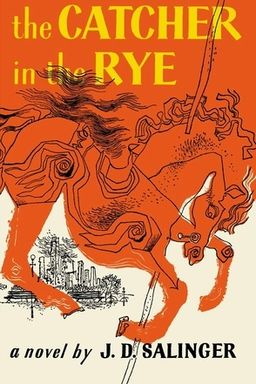
Have you ever felt like the entire world around you was faking it—pretending to care, pretending to act decent, pretending to be real? J.D. Salinger’s The Catcher in the Rye captures that feeling in one of the most iconic voices in American literature: Holden Caulfield, a disaffected teenager living through pain, loss, and confusion in postwar America. Through Holden’s wandering, profanity-laced, deceptively simple story, Salinger explores what it means to grow up in a world that feels cynical and hollow, and what it takes to preserve innocence—your own and others’—in the face of inevitable corruption.
Holden's World: The Fall from Innocence
At the heart of the book’s argument is a paradox: you cannot grow up without losing part of your innocence, but resisting that loss leads to pain. Holden is sixteen when we meet him, disillusioned and expelled from Pencey Prep, wandering New York City in a self-created exile. He rails against “phonies”—a word that becomes his mantra for the hypocrisy of adults—but his rebellion is laced with tenderness. His critique isn’t born of smug superiority; it’s born of heartbreak. He mourns the death of his brother Allie, a perfect symbol of purity and sensitivity, and repeatedly interacts with children in ways that reveal his deepest longing: he wants to protect something uncontaminated by lies.
When Holden fantasizes about being “the catcher in the rye,” a guardian who saves innocent children from falling off a cliff—that metaphor encapsulates Salinger’s central thesis. The “cliff” represents adulthood, compromise, and moral decay. The “catcher” embodies an impossible dream: stopping people from maturing, from falling. But we all fall eventually. The question the book asks is not how to prevent that fall—it’s how to fall without losing your humanity.
Youth in Postwar America
Written in the early 1950s, The Catcher in the Rye reflects a growing postwar malaise. America’s prosperity masked deep alienation among young people facing rigid institutions, conformity, and the pressure of material success. Holden’s voice—raw, restless, cynical—embodied a generation’s disenchantment. Like Huck Finn before him or Esther Greenwood in Sylvia Plath’s The Bell Jar after him, Holden becomes a symbol of youth that resists assimilation. He understands the falseness of politeness, the emptiness of superficial success, and the hollowness of “playing by the rules.” But his rebellion, Salinger reminds us, is directionless. Without meaning, rebellion becomes alienation.
Holden’s wandering through New York is a pilgrimage of sorts: every encounter forces him to test his ideals against the world’s realities. He meets the cynical Mr. Spencer, the shallow girls in the Lavender Room, the pretentious theater-goers, the exploitative pimp Maurice—all mirroring the forms of phoniness he rejects. Yet, ironically, he can’t escape engaging with them. Every disappointment deepens his despair, but it also sharpens his understanding: the adult world is built on contradictions, and moral clarity is a luxury lost to experience.
Pain, Compassion, and the Human Condition
Salinger’s gift lies in showing Holden’s vulnerability behind his cynicism. He’s not just angry—he’s grieving, frightened, and lonely. His encounters with characters like Phoebe, his little sister, or the nuns at breakfast reveal glimpses of grace. With Phoebe he finds love untainted by phoniness; with the nuns, he finds humility and goodness. These moments puncture his despair and reassert a timeless truth: compassion, though fragile, survives even in a corrupt world. (Unlike existentialists such as Camus, who argued for stoic moral endurance, Salinger argues for spiritual tenderness.)
Holden’s final scene with Phoebe at the carousel—watching her reach for the gold ring as rain falls on them—is one of literature’s most poignant realizations of acceptance. He understands that you can’t “catch” everyone before they fall; children must reach for life, even if they risk pain. His tears at that moment are tears of recognition: innocence cannot be preserved by force. It must be allowed to grow, to fail, to choose.
Why It Still Matters
Salinger’s timeless story remains powerful because Holden’s struggle is universal. We all face disillusionment—the moment we realize the world isn’t what we imagined. And we all search, in our own way, for meaning amid hypocrisy. The Catcher in the Rye endures not because it solves that crisis but because it humanizes it. Holden’s voice, raw and unfiltered, reminds us that truth often lies in the refusal to pretend. The book doesn’t sentimentalize rebellion; instead, it shows that growing up means learning how to live in a flawed world without becoming one of its phonies. That lesson makes Holden both maddening and profoundly human—and makes Salinger’s work a quiet manifesto for everyone who has ever struggled to hold onto their best self while growing up.