
Idea 1
How Great Companies Win with Good Jobs
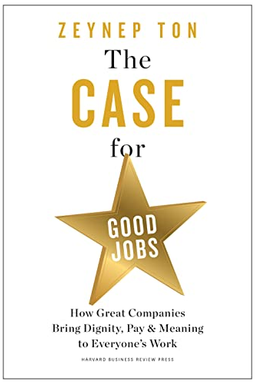
What if the best way to cut costs was actually to pay people more? In The Case for Good Jobs, MIT Sloan professor Zeynep Ton makes a bold argument: companies that invest deeply in their frontline employees—providing higher wages, more stable schedules, and meaningful work—outperform those that treat labor as a cost to minimize. Her core claim challenges decades of conventional wisdom in business: good jobs aren’t just morally right—they’re strategically smart.
Drawing on years of research with companies like Costco, Trader Joe’s, and Mercadona, along with hands-on experience through the Good Jobs Institute, Ton illuminates a hidden truth of modern capitalism: most companies are stuck in what she calls a “vicious cycle” of low pay, high turnover, poor performance, and disengaged workers. But a small set operate in a “virtuous cycle,” where investing in people drives higher productivity, better service, and sustainable profits. Those choices, Ton insists, are not inevitable—they’re management decisions.
The Two Worlds of Work
Ton contrasts two competing mindsets. In the first, common among low-cost retailers, employees are treated as replaceable cogs. Leaders pay as little as the market allows, push for lean staffing, and rely on rigid rules and control. Predictably, turnover soars and operations crumble. In the second mindset—the Good Jobs System—employees are seen as value creators. Companies deliberately design operations to amplify workers’ contribution. This means simplifying decisions, giving people autonomy, cross-training them to be flexible, and staffing with sufficient “slack” so they can serve customers well instead of constantly firefighting.
As Ton puts it, bad jobs and good jobs are both business strategies—each made up of interlocking choices. What determines your company’s destiny isn’t industry economics, she argues, but management imagination and courage.
Why the Case Is Urgent
The timing couldn’t be more critical. Nearly half of American workers earn less than $18,000 a year; many hold multiple part-time jobs just to keep food on the table. Pandemic-era resignations, employee burnout, and rising unionization reflect a moral reckoning: work itself is broken. But Ton warns that leaders make a grave mistake by assuming these conditions are unavoidable. Companies can transform low-wage sectors into engines of dignity and prosperity—without sacrificing competitiveness. The evidence is in: Costco thrives with industry-leading pay; QuikTrip’s convenience stores operate profitably with turnover a fraction of its rivals; and Spanish grocer Mercadona dominates its market with a well-trained, loyal workforce.
She frames this movement not just as corporate reform but as an antidote to capitalism’s trust crisis. When employees see their employers act ethically and customers experience genuine care, markets regain legitimacy and society heals some of its divisions. “We need more good jobs now,” Ton insists, because a strong economy—and democracy—depends on them.
From Awareness to Action
To help companies make this shift, the book is structured in three phases: Awareness, Courage, and Implementation. First comes understanding the full cost of mediocrity: high turnover isn’t just an irritant—it sabotages quality, innovation, and morale. Second comes confronting the fears that prevent leaders from change: doubts about ROI, short-term investor expectations, or distrust of frontline workers. Finally comes learning how to rewrite the system itself—adjusting pay, simplifying operations, and building momentum toward a self-reinforcing virtuous cycle.
Behind Ton’s academic rigor is deep empathy. She humanizes capitalism through the eyes of a PayPal employee struggling to afford healthcare, an Aetna call-center worker on food stamps, and a Walmart executive realizing profitability isn’t worth moral compromise. Yet her tone remains pragmatic: you don’t need altruism to create good jobs; you need operational excellence and moral discipline.
Why It Matters to You
Whether you lead a team of five or fifty thousand, Ton’s lesson applies: your competitive advantage lives or dies with your people. If you treat jobs as costs, you’ll harvest mediocrity; if you design systems that enable dignity and contribution, you’ll unleash potential. This book bridges strategy, leadership, and ethics—offering a playbook for those who want to run companies that are both profitable and principled. It’s a manifesto for anyone tired of being trapped in a “vicious cycle” of reactive management—and ready to build an organization their employees, customers, and shareholders can all be proud of.