
Idea 1
The Case Against Schooling
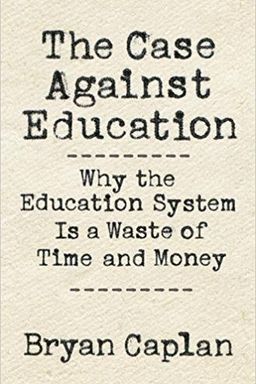
Why do you spend years studying subjects you never use yet get paid more afterward? Bryan Caplan’s The Case Against Education answers this puzzle with bold simplicity: much of education is not about learning but about signaling. A diploma tells employers who you are—intelligent, conscientious, and conformist—even if the knowledge itself fades. The book dismantles the comforting belief that school mostly builds useful skills, showing that its true payoff lies in certification rather than transformation.
The core argument
Caplan’s thesis fuses economics and psychology. Education performs two functions: it creates human capital (if it adds useful knowledge) and sends signals (if it certifies your traits). Decades of data from economists like Michael Spence and Kenneth Arrow reveal how signals work: costly credentials help separate high-productivity workers from low-productivity ones, even if coursework itself has little relevance. Employers reward schooling because it reliably correlates with traits they need—ability, discipline, and conformity.
Why knowledge doesn’t explain the payoff
Caplan surveys learning-retention research, from the National Assessment of Adult Literacy to civic and science quizzes. The evidence is grim: adults forget most school content. Only 13% of Americans score 'proficient' in basic literacy tasks; most can’t identify the branches of government or interpret simple quantitative problems. Even in college, reasoning gains are minimal. If school built true job skill, these results would contradict reality—but they confirm signaling. Employers hire based on the record of education more than the retained substance.
How signaling shapes the labor market
Credentials dominate hiring because testing applicants directly is costly and fraught. Degrees compress an immense range of information into a single, socially recognized badge. This produces the sheepskin effect: completing a credential year (getting the actual diploma) yields a large wage jump, while partial completion yields little. Studies across decades—from Jaeger and Page to Caplan’s own calculations—detect this pattern repeatedly. Crossing the finish line changes employer perception far more than the learning acquired.
The mismatch between school and work
Modern school curricula teach massive amounts of low-utility material. Caplan categorizes subjects: high-use fields like literacy and math; medium-use vocational subjects; low-use liberal arts. Surveys of high-school and college syllabi reveal that most learning—foreign languages, high-level math, art—is never applied. And yet, these subjects are still rewarded by employers. This paradox makes sense once you see education as a costly test of perseverance rather than a workshop for skill development.
Private vs. social incentives
Individually, education pays because your signal rises relative to competitors. Society, however, gains little. When everyone earns more credentials, the bar simply rises—creating credential inflation. Caplan’s calculations show that while a 'Good Student' may earn strong private returns (a bachelor’s degree yielding ~7% annual gain), the social return shrinks to near zero once signaling is accounted for. Taxpayers fund credentials that redistribute job status without raising productivity.
Policy and reform trajectory
Because signaling explains much of education’s value, Caplan calls for cutting subsidies and pruning curricula. He recommends shifting funds from wasteful general learning toward vocational paths and adult voluntary education. The Internet, he argues, is the new 'Merit Machine'—a space for genuine enlightenment, unlike compulsory schooling. Real reform, however, faces Social Desirability Bias: people adore the idea of education even when evidence says it is inefficient. Politicians must therefore confront the gap between personal virtue and social waste.
The moral and cultural dimension
Caplan doesn’t dismiss learning for its own sake. He celebrates education that enriches the soul—great teachers, inspiring content, and voluntary pursuit. His criticism targets compulsory schooling that fails this test. True enlightenment comes, he suggests, when students seek knowledge freely (as Malcolm X did through self-study or modern learners do online). In the end, the book asks a radical but humane question: if education mostly signals status, why force people to buy signals instead of skills or meaning?
Caplan’s challenge
Once you recognize how little schooling builds competence, you must rethink both personal and social strategy: pursue learning that matters and stop funding one of the world’s biggest signaling games.
Across its chapters, The Case Against Education merges empirical evidence, economic theory, and provocative policy. Whether you agree or not, Caplan forces you to confront uncomfortable arithmetic: when education yields signals instead of skills, society’s trillion-dollar investment may be largely wasteful prestige.