
Idea 1
Reclaiming the Wonder of Childhood through Homeschooling
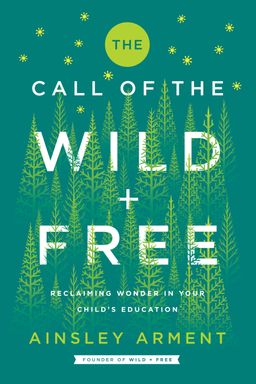
When was the last time you watched your child look at the world with pure, unfiltered wonder? In The Call of the Wild and Free, Ainsley Arment invites you to rediscover that spark — both in your children and within yourself. She argues that modern education, with its obsession over achievement, testing, and conformity, has slowly extinguished the light of curiosity and joy that defines childhood. Her mission is to reclaim that wonder by redefining what real learning looks like — through homeschooling that is not about control, but about freedom, nature, connection, and purpose.
Arment contends that the traditional schooling model — born from industrial-age efficiency and standardized thinking — has stolen time, creativity, and individuality from our children. The book offers a radically hopeful alternative: an education that centers on relationships, curiosity, and slow living. It's not just about teaching at home, but about cultivating a life where learning and living blend seamlessly. Rooted in her work with the Wild + Free community, Arment offers a vision that has attracted tens of thousands of mothers craving a gentler, truer, and freer way to raise and educate their children.
The Heart of the Wild + Free Movement
At its heart, Wild + Free is both a philosophy and a community that celebrates two core values: the wildness of childhood and the freedom of homeschooling. For Arment, being wild doesn’t mean chaotic or unstructured — it means alive, connected to nature, and unafraid to explore. Being free doesn’t mean doing whatever you want; it means being released from conventions that don’t honor your family’s rhythms or values.
Arment’s vision pushes past homeschool stereotypes. Instead of seeing homeschooling as a retreat from the world, she frames it as a return — a return to simplicity, family, nature, and meaning. As she writes through stories of her own five children, homeschooling becomes less about academics and more about cultivating curiosity and responsibility, finding purpose, and rediscovering joy in learning together.
Why This Message Matters Now
Arment’s call comes at a cultural crossroads. She argues that today’s children are overstressed, overscheduled, and under-inspired — the product of a system that values test scores over curiosity and compliance over creativity. She cites studies like those from the American Psychological Association showing that children now report more stress than adults during the school year. The result is a loss not just of joy, but of identity. Arment believes homeschooling can heal this wound by reconnecting learning with freedom, belonging, and wonder.
The Wild + Free approach isn’t prescriptive — it allows for any child, any parent, any rhythm. Whether you lean toward classical education, Montessori, Charlotte Mason, or unschooling, Arment encourages you to find your “own meadow,” your unique way of nurturing learning through exploration and love. As she notes, the Wild + Free philosophy is about values, not methods — centering on nature, story, play, curiosity, and wonder as the foundation for lifelong learning.
From Burnout to Belief
Much of the book is written directly to mothers who feel overwhelmed, unqualified, or caught between societal expectations and maternal instincts. Arment reassures them that they are enough — that the most important qualification for homeschooling is not a degree, but love, consistency, and curiosity. She reminds readers that parents are already their children’s greatest teachers. From the moment we soothe a crying baby or answer a toddler’s endless “whys,” we are doing the work of education: guiding, modeling, and connecting knowledge to experience.
Through relatable stories — her son’s light “going out” after entering school, her family’s messy first homeschool year, and her own evolution as an educator — Arment reveals how homeschooling can transform both children and parents. She shows that what often begins as an act of courage soon becomes an act of grace. You don’t have to master every subject before you begin. You simply have to begin — and believe that learning is a lifelong journey you walk together.
What You'll Learn from This Book
Throughout the chapters, Arment dismantles the myths that keep many parents from homeschooling — myths about socialization, qualification, rigor, and college readiness. She outlines a spectrum of homeschooling philosophies, from classical to Montessori, and explores how families can discover their own style. She examines the seasons of homeschooling, from finding rhythm and creating family culture to cultivating nature-based education and using story and play as tools for growth. Finally, she lays out the five pillars of the Wild + Free philosophy — Nature, Story, Play, Curiosity, and Wonder — as the natural curriculum of a well-lived, well-loved childhood.
In the end, The Call of the Wild and Free is not just a homeschooling manifesto — it’s a vision for a new way of seeing education, motherhood, and childhood itself. It’s an invitation to anyone who believes that freedom and learning can coexist, that connection is more powerful than curriculum, and that the world is still full of wonder — if we’ll only let our children (and ourselves) rediscover it.