
Idea 1
Community as the New Competitive Advantage
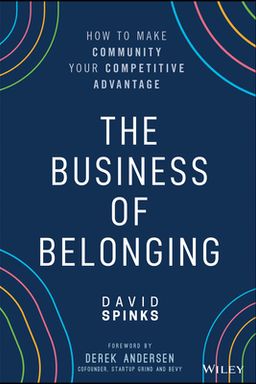
When was the last time you truly felt belonging—not just being part of something, but being seen for who you are? The Business of Belonging by David Spinks begins here, arguing that in a world where businesses compete not only for attention but trust, community has become the ultimate competitive advantage. Spinks contends that success in the modern marketplace is no longer about having the fastest product or the biggest advertising budget, but about offering customers a space where they belong.
Throughout the book, Spinks maps out a detailed, science-backed journey that shows how communities evolve, how they drive real business results, and how they nurture the timeless human need for belonging. His core argument is simple but transformative: community building isn’t an auxiliary marketing tactic—it’s a core business strategy. When people identify with a group, actively participate, and receive validation for their contributions, they don’t just stay customers; they become collaborators, evangelists, and lifelong advocates.
Why Community Now?
Spinks frames his theory in a cultural and technological moment—an age of social isolation, distrust in institutions, and overwhelming digital noise. As traditional marketing loses effectiveness and consumers gain power through social networks, community transforms from a nice-to-have into a necessity. Apple’s early online user groups, Salesforce’s Trailblazer ecosystem, and Duolingo’s volunteer-driven learning programs exemplify how companies that treat customers as stakeholders create resilience others can’t replicate.
But community isn’t just good for business—it’s good for humanity. Spinks reminds us that humans evolved to belong, cooperate, and share. Businesses that ignore this evolutionary truth operate in a transactional vacuum where loyalty falters. By contrast, those investing in belonging find themselves surrounded by motivated individuals who want to contribute to a collective mission. That’s what he calls the rise of the community-driven business.
Three Levels of Community Strategy
To turn this vision into practice, Spinks introduces his three-level framework for community strategy: the business level, where community goals align directly with revenue outcomes; the community level, which tracks engagement and health; and the tactical level, which identifies day-to-day initiatives. Each level interlinks, creating a feedback loop between member experience and measurable impact. (Comparable theories exist in Measure What Matters by John Doerr, which uses Objectives and Key Results to align actions to outcomes.)
This structure allows companies to measure community not by vague engagement but by tangible contribution—whether reducing support costs, generating leads, crowdsourcing innovations, or increasing retention. Spinks urges leaders to rediscover a core truth: when your users help each other succeed, your company succeeds faster.
The Human Architecture Behind Belonging
Underpinning Spinks’s model is psychology. Drawing on the Sense of Community Theory by McMillan and Chavis, he breaks belonging into four dimensions: Membership (safe inclusion), Influence (two-way impact), Integration and Fulfillment of Needs (mutual benefit), and Shared Emotional Connection (stories and history). These aren’t abstract; they’re the mechanics of community. If people don’t feel seen and safe, they won’t engage. If their ideas don’t matter, they won’t stay. If their participation isn’t rewarding, they won’t contribute.
Businesses, he argues, can apply these same principles. A software company might build a forum to let users answer each other’s questions (influence). A creator platform might feature member success stories (shared emotional connection). Each act strengthens the social glue that translates directly into customer equity.
Community as an Ecosystem
Spinks compares a thriving community to an ecosystem: leaders, power users, active members, and passive participants all play roles. The system sustains itself only when these parts coexist in balance. A small company might focus on building one core group of passionate advocates; a mature business might enable chapters worldwide. The best communities scale by distributing ownership—empowering local chapters, moderators, and facilitators in the same way that Wikipedia or Duolingo distribute power to contributors. True scale, he insists, is only possible through trust.
Case studies drive home this point. Airbnb’s Superhost program turns high-performing hosts into ambassadors who teach others and reinforce standards. Lyft’s Driver Advisory Council reflects how sharing ownership creates sustained engagement. These aren’t marketing add-ons—they are strategic engines of growth supported by belonging.
A Practical Playbook for Connection
The book’s later chapters turn theory into action, guiding you through mapping participation journeys with the Commitment Curve, designing onboarding experiences, activating leaders, and structuring events using the 7Ps of Community Design (People, Purpose, Place, Participation, Policy, Promotion, and Performance). Every model connects back to a single insight: belonging isn’t spontaneous—it’s intentionally engineered through design, repetition, and empathy.
Ultimately, Spinks’s message is both strategic and soulful. Businesses can no longer afford to view customers as transactions; they must view them as participants in an ongoing story. Community, far from a buzzword, becomes the medium through which people understand themselves, connect to others, and align with brands that share their values. In a world of fleeting attention, authentic belonging might just be the most sustainable advantage there is.