
Idea 1
The Age of Burnout and Excess Positivity
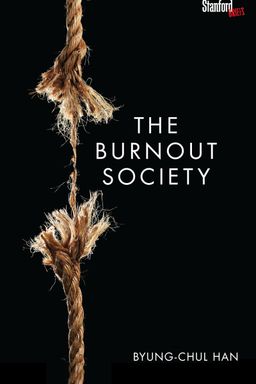
Have you ever felt that your exhaustion comes not from someone else’s demands, but from your own? Byung-Chul Han’s The Burnout Society poses this unsettling question, arguing that our age is not one of external oppression, but one of internal overexertion. We are no longer subjects who obey; we are subjects who perform. Han contends that the twenty-first century’s defining illnesses—depression, ADHD, burnout—don’t spring from traditional forms of repression or conflict. Instead, they arise from an excess of positivity: too many possibilities, too much performance, too much "yes."
Han traces the historical shift from what Michel Foucault called the disciplinary society—structured around rules, prohibitions, and the power of "no"—to a new regime defined by freedom, possibility, and achievement. In this new world, you are told that you can do anything, become anyone, achieve endlessly. But this freedom paradoxically becomes its own prison, as self-exploitation replaces external domination. We work harder than ever, not because we are forced to, but because we feel we must in order to validate ourselves.
The Shift from Negativity to Positivity
According to Han, every era has a defining pathology. The nineteenth century was bacterial, the twentieth was viral, and the twenty-first is neuronal. Instead of infections, we suffer from infarctions—internal collapses of psychic and cognitive power. Depression and burnout are diseases of the neuron, not the virus; they are not caused by what is foreign, but by an excess of sameness. This transformation reflects a deeper societal change: the triumph of positivity over negativity.
Negativity was once the organizing principle of life—boundaries, enemies, prohibitions, and oppositions shaped identity and community. In the Cold War’s immunological society, everything foreign was combated. Today, boundaries dissolve under the logic of globalization and digital connectivity. The Other becomes merely different, not truly foreign, and difference is consumed as exotic novelty rather than resisted as threat. This disappearance of the Other produces a world of sameness—a smooth, frictionless reality where confrontation and distance vanish. And in this world, violence becomes invisible precisely because it comes from within.
Achievement, Auto-Exploitation, and the “Yes We Can” Era
Han reformulates Foucault’s disciplinary model by contrasting the obedience-subject—constrained by “must” and “should”—with the achievement-subject, guided by “can.” In disciplinary society, people were compelled by rules and punishment; in achievement society, they compel themselves through endless self-optimization. The shift from “may not” to “can” abolishes negativity, producing what Han calls compulsive freedom. You feel free while achieving, yet this freedom carries the logic of coercion. You exploit yourself, and because it feels voluntary, it is more efficient—and more destructive—than external exploitation.
Depression and burnout are therefore symptoms not of prohibition, but of exhaustion. The achievement-subject fights only itself. Han calls this the internalization of war—a conflict waged within the self. When the individual reaches the point of “no longer being able to be able,” the affirmation collapses. “Nothing is possible” becomes the cry of a society that believes “nothing is impossible.”
Contemplation versus Hyperactivity
Han argues that the flight from negativity has also destroyed our capacity for contemplation. Borrowing from philosophers like Nietzsche, Heidegger, and Walter Benjamin, he laments the loss of deep attention and boredom—conditions necessary for creativity and culture. Instead, hyperactivity and multitasking dominate, making us resemble animals in the wild, constantly vigilant and distracted. Profound boredom, Benjamin wrote, is the “dream bird that hatches the egg of experience.” Without it, genuine creativity and reflection vanish.
The pedagogy of seeing, which Han discusses later, builds upon this idea: learning to resist stimuli, to linger, and to contemplate deeply. Such an education, Han insists, is essential to spiritual renewal. Hyperactivity disguises itself as freedom, but it is a form of passivity—it surrenders fully to external stimuli. Real freedom comes from the ability to pause, to say no, to dwell in the interval. Without interruption, without negativity, we lose our capacity to act freely.
Tiredness as Salvation
In one of the book’s most poetic chapters, Han draws on Peter Handke’s “Essay on Tiredness” to describe two kinds of tiredness: solitary tiredness, which isolates and destroys, and communal tiredness, which reconnects and heals. The first is the exhaustion of the achievement-subject—the fatigue of isolation and endless self-reference. The second, fundamental tiredness, opens us to the world and to others. It represents serenity, calm, and the capacity for not-doing—the Sabbath of the soul. In tiredness that “trusts the world,” Han glimpses a way out of the burnout crisis: a return to the contemplative rhythm of “not-to” rather than “to-do.”
Why This Matters
Han’s diagnosis matters because it reframes the problem of modern anxiety and fatigue. It’s not that we’re overcontrolled—it’s that we’re overfree. We have mistaken performance for liberation, positivity for fulfillment. In a world that celebrates activity, innovation, and constant engagement, Han offers a radical corrective: perhaps the path to sanity lies not in doing more, but in reclaiming the art of rest, pause, and refusal. This book invites you to ask: What if freedom requires saying “no”? What if salvation begins with tiredness?