
Idea 1
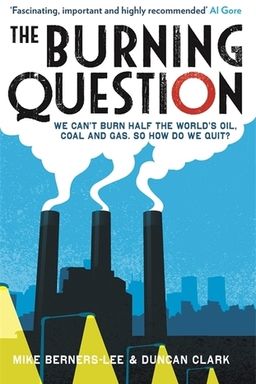
The Burning Question: Why Humanity Must Leave Fossil Fuels Behind
What if the greatest threat to your future wasn’t scarcity—but abundance? In The Burning Question, Mike Berners-Lee and Duncan Clark argue that humanity’s most urgent challenge isn’t running out of fossil fuels, but having far too much. Unless we deliberately choose to leave huge reserves of oil, coal, and gas in the ground, they warn, the planet will heat far beyond safe limits. The book’s central claim is both simple and unnerving: we can’t burn more than a fraction of current fossil fuel reserves without risking catastrophic climate change, and so far, every effort to slow carbon emissions has failed to change the global curve of fossil fuel use.
To understand this immense problem, Berners-Lee and Clark take readers through the interplay of physics, economics, politics, and psychology that keeps the world locked into its fossil fuel addiction. They highlight the “carbon curve”—a long-term exponential rise in global emissions that has shrugged off every disruption, from world wars to oil shocks. No matter how much we talk about efficiency, green energy, or recycling, fossil fuel use continues to climb because of the powerful feedbacks within the global energy system. Like pushing on a balloon, reducing carbon in one place simply causes it to bulge elsewhere.
The Science Behind the Target
The book begins by revisiting a deceptively simple number: 2°C. For decades, global leaders have accepted two degrees Celsius of warming above preindustrial levels as the safety threshold for climate stability. But as the authors show, science now suggests that even this target may be perilous. The Earth has already warmed by nearly one degree, enough to unleash droughts, floods, and Arctic melt. Hitting two degrees could trigger tipping points—from permafrost thaw to collapsing rainforests—that would make further warming unstoppable. The authors translate that temperature target into a global carbon budget: to stay within safe limits, humanity can emit no more than around one trillion tonnes of carbon. We’ve already burned more than half of it.
An Age of Abundance—and Denial
Ironically, the problem is not scarcity but surplus. Geological studies show that the world’s proven reserves of fossil fuels, let alone possible or unconventional ones like tar sands and shale gas, contain several times more carbon than we can safely burn. We are awash in potential energy—far too much. Yet the global economy, financial markets, and political systems are deeply intertwined with these reserves. Entire national budgets—from Saudi Arabia to Russia—depend on selling fossil fuels. The world’s stock exchanges are inflated by what the authors call the “carbon bubble”: the illusion that these reserves can be safely burned when, in truth, most must never be used.
In this light, global climate talks appear radically out of touch. Despite decades of summits—from Kyoto to Copenhagen—emissions continue to rise exponentially. Political half-measures, the authors argue, have been paralyzed by vested interests, short-termism, and a tragedy-of-the-commons dynamic: every nation wants others to cut first, while fossil fuel companies invest billions to maintain the status quo. Berners-Lee and Clark spotlight the perverse incentives at play when governments try simultaneously to reduce domestic consumption and maximize fossil fuel exports. They note, for instance, how Australia introduced a carbon tax at home while expanding coal exports abroad—a perfect example of the balloon-squeezing effect writ large.
Why Efficiency Isn’t Enough
You might think the solution is simply to use energy more efficiently or invest in renewable sources. But the authors dismantle this comforting assumption. Efficiency gains often rebound—they make energy cheaper, which leads to more use, not less. Globally, energy use has remained locked to economic growth: when GDP rises, so do emissions. Even as nations shift toward services or digital economies, the underlying physical infrastructure of cars, factories, and power plants keeps expanding. Renewables are growing rapidly but mostly in addition to fossil fuels, not instead of them. Without a cap that constrains the total flow of carbon into the economy, new energy sources simply add to the supply.
Capping Carbon and Deflating the Bubble
Ultimately, The Burning Question argues that nothing short of deliberate fossil fuel restraint—through a global carbon cap or equivalent regulation—can solve the problem. This means limiting extraction itself, not just consumption, and rethinking financial and political systems that treat fossil reserves as assets rather than liabilities. The authors propose mechanisms like global cap-and-trade schemes, transparency rules for listed energy companies, and the SAFE Carbon idea that fossil fuel producers must bury an increasing proportion of the carbon they extract. They also highlight the growing moral movement around divestment, comparing it to past social campaigns against tobacco or apartheid.
Facing the Human Challenge
Yet the biggest obstacles aren’t technological—they’re psychological and political. Berners-Lee and Clark explore why societies remain asleep to the danger. We’re wired for optimism, short-term thinking, and social conformity; abstract threats like greenhouse gases don’t trigger our survival instincts. Meanwhile, the fossil fuel lobby spends millions sowing doubt and confusion. To awaken collective action, the authors call for moral clarity, leadership, and cultural change—a recognition that climate change isn’t a distant environmental issue but a present moral and economic crisis. The book’s stark conclusion: the future depends on whether humanity can break its inertia and deliberately leave most of its known wealth—its fuel—unburned.