
Idea 1
Moral Leadership, Media, and the Progressive Presidency
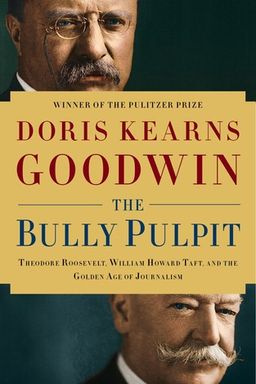
How do moral vision, personal character, and the press together change the meaning of government? The book examines that question through the intertwined stories of Theodore Roosevelt, William Howard Taft, and the era’s investigative journalists. It shows how reformers and reporters invented a modern politics based not merely on law or party machinery, but on public persuasion—a conversation between citizens, facts, and leadership that transformed both democracy and media.
At the center stands Roosevelt’s “bully pulpit”: a model of the presidency as moral megaphone. He saw executive authority as a platform for shaping conscience, not commanding obedience. Roosevelt galvanizes journalists, lawmakers, and ordinary Americans into what becomes the Progressive movement—a response to the runaway industrial capitalism of the early 20th century.
Roosevelt and the Birth of Public Leadership
Roosevelt redefines leadership through communication. Where earlier presidents avoided direct press contact, he rides trains, opens the West Wing press room, and treats reporters as allies. His physical vitality and theatrical gestures—riding horses, parading down Broadway, speaking from train platforms—make reform feel personal and visible. His speeches on conservation, fairness, and corporate accountability demonstrate how charisma can translate private frustration into civic purpose. (Note: “Bully” in Roosevelt’s time meant “splendid,” not aggressive; the term captured optimism rather than coercion.)
Journalists amplify that energy. Roosevelt’s friendship with Lincoln Steffens and Jacob Riis during his police commissioner years in New York City shows how reportage and administration can cooperate. Together they expose corruption along Mulberry Street and enforce moral pressure through publicity. The same pattern scales up when Roosevelt becomes governor and later president: problems revealed by journalists meet solutions crafted by reformers.
The Muckraking Ecosystem
Around Roosevelt rises a new information ecosystem anchored by McClure’s Magazine. Sam McClure’s entrepreneurial genius—cheap illustrated publication, salaried writers, and months of investigative support—creates a platform for sustained national inquiry. Writers like Ida Tarbell, Lincoln Steffens, and Ray Stannard Baker form a collaborative newsroom devoted to facts, fairness, and narrative skill. They expose structural corruption: Tarbell with Standard Oil, Steffens with city machines, and Baker with railroads and labor exploitation. McClure’s January 1903 issue, carrying articles by all three, becomes journalism’s shot heard ’round the nation and helps define the term “muckraking.”
Their work provides Roosevelt’s presidency with the factual ammunition needed for reform—showing that press and policy can be complementary weapons. The Bureau of Corporations, created under his watch, institutionalizes that collaboration, turning journalism’s revelations into official investigation. (Parenthetical note: Richard Hofstadter later remarked that the Progressive mind was essentially journalistic—a sentiment proven true by McClure’s operation.)
Two Presidents, Two Temperaments
Contrasting Roosevelt’s dynamism is William Howard Taft’s steady judicial temperament. Raised in a legal household and trained to weigh evidence, Taft prefers rule of law to rhetorical crusades. His rational, deliberative mindset makes him an outstanding administrator but a reluctant political performer. In the Philippines, he governs with fairness and order, building institutions and infrastructure. As Roosevelt’s Secretary of War, he becomes an indispensable problem solver—from the Panama Canal to Cuban stabilization. Yet when he becomes president, his reticence to use the bully pulpit or court the press erodes popular confidence. His reliance on legal reasoning, exemplified by the Payne-Aldrich Tariff debacle and the Ballinger-Pinchot scandal, alienates progressives who crave moral drama as well as administrative order.
Roosevelt and Taft thus represent two models of reform: one grounded in spectacle and moral narrative, the other in process and legal craftsmanship. Their friendship turns into rivalry as each pursues the nation’s transformation through incompatible languages of power—Roosevelt’s public crusade versus Taft’s meticulously constitutional path.
From Journalism to Law
The partnership between journalism and politics brings tangible results. McClure’s exposés, Upton Sinclair’s The Jungle, and public advocacy feed Roosevelt’s legislative successes: the Hepburn Act regulating railroads, the Pure Food and Drug Act, and antitrust suits like Northern Securities. The investigative process forms a model—facts unearthed, public awareness amplified, executive inquiry launched, and new laws enacted. That feedback loop becomes the machinery of the Progressive state.
Yet exposure also breeds instability. McClure’s manic expansion schemes fracture his staff; Steffens, Baker, and Tarbell leave to found The American Magazine. Similar strains appear within reform politics as Roosevelt’s activism clashes with Taft’s constitutional caution. The pattern is psychological as well as political: the same moral passion that fuels innovation also risks collapse when unchecked by institutional boundaries.
Crises, Splits, and Endings
Taft’s presidency spirals through public disillusionment: tariff backlash, conservation disputes, financial panic, and finally the rupture with Roosevelt over antitrust enforcement and arbitration treaties. By 1912, Roosevelt challenges Taft for the Republican nomination, invoking direct primaries and popular sovereignty against convention bosses. When party regulars hold firm, he leads the Progressive (Bull Moose) Party, and their split hands the election to Woodrow Wilson. The contest crystallizes the choice between law, activism, and democratic experimentation—and redefines political communication for generations.
The final chapters follow reconciliation and legacy: Roosevelt’s death in 1919, Taft’s fulfillment as Chief Justice in 1921, and the enduring impact of their partnership. Together they show that moral persuasion and legal institution-building—voice and reason—must coexist for reform to last. What begins as a story about journalism and politics becomes a meditation on how individuals with contrasting temperaments can together build a democratic conscience strong enough to challenge power yet disciplined enough to sustain it.