
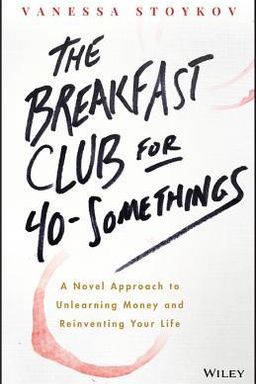
The Breakfast Club for 40-Somethings cover

The Breakfast Club for 40-Somethings

by Vanessa Stoykov

The Breakfast Club for 40-Somethings uses engaging fictional narratives to reveal how unlearning false money beliefs can lead to financial freedom. Through relatable characters, it provides practical life lessons and strategies for reinventing your financial future.

Unlearning Money and Reinventing Life After Forty

Have you ever looked at your life in your forties and wondered how you got here — with the mortgage, the stress, and the sense that time is running faster than you can adapt? In The Breakfast Club for 40-Somethings, Vanessa Stoykov asks exactly this question, weaving finance education into the relatable, messy, humorous lives of six old school friends who meet again at their twenty-fifth reunion. Through their stories — Karen and Russ, Josie, Jasper, Jayne, Brad, and Ben — Stoykov argues that true financial freedom and happiness begin not with earning more, but with unlearning what we’ve always been taught about money, success, and time.

The author contends that most of us live out beliefs we inherited from our parents and culture — about what work means, what money signals, and what success should look like — and that these unquestioned habits keep us trapped. These characters, each in their forties, become case studies in how careers, family expectations, and money anxieties collide. Their stories offer a mirror for readers who are juggling similar realities.

A Story About Second Chances

The book opens with Karen Douglas, a full-time mother of three who feels invisible. She and her husband Russ have what seems a perfect middle-class life: good jobs, private school fees, a lovely Sydney home, and a mountain of debt. When Russ considers quitting his job, Karen panics. Their financial security teeters on her endless ability to juggle bills. Their reunion with high school friends — Josie, now a glamorous but overworked entrepreneur; Brad, a billionaire tech founder; Jayne, a hardworking single mum; Jasper, the fading jock living with his mother; and Ben, a thoughtful financial planner — becomes the turning point for all. Over one wild night of tequila, confessions, and truth-or-dare, they uncover the costs of the lives they’ve built.

The Five Pillars of Unlearning

Ben’s role in the story is pivotal. He introduces the group to what he calls the five pillars of unlearning money and life: Desire, Focus, Time, Belief, and Action. These ideas echo Stoykov’s financial education philosophy — that the key to prosperity isn’t just mastering cash flows but rewiring the stories we tell ourselves about money.

  • Desire exposes how consumerism traps us in a constant chase for more — bigger homes, designer clothes, and exotic holidays — all at the cost of our freedom.
  • Focus invites readers to rediscover long-term clarity beyond the next crisis or holiday.
  • Time reminds us that we can’t buy or slow down aging — we must prepare wisely.
  • Belief challenges inherited money narratives that shape our self-worth.
  • Action demands realistic steps to implement change, from saving buffers to securing retirement plans.

These concepts transform what began as nostalgia into empowerment. Ben’s advice helps the group reframe their crises as opportunities — from Karen’s fear of debt to Josie’s burnout, Jayne’s single-mother stress, Jasper’s failure, and Brad’s loneliness. They learn that money decisions are never neutral; they reflect how we see ourselves and our future.

Why Unlearning Matters

Stoykov builds on a central idea familiar to behavioral economics (as explored by thinkers like Daniel Kahneman and Morgan Housel): that our psychology, not income, determines financial success. Her storytelling approach takes abstract financial advice — the kind found in self-help or investment guides — and makes it human through relatable conversation and emotional turning points. The reunion becomes therapy; friendship becomes financial awakening.

The book also highlights time, community, and emotional honesty as priceless assets. In their forties, the characters realize how little time is left to reinvent themselves. Russ decides to support Karen’s business idea, giving her agency outside motherhood. Josie learns to delegate and sell parts of her company. Jayne faces her fears and increases her value professionally. Jasper begins studying to become a coach, finally confronting his wasted years. Brad reconciles with his dying mother and refocuses his energy on philanthropy. Over time, their financial plans become metaphors for their emotional maturity — they learn not just how to budget but how to live deliberately.

Key Lesson:

The Breakfast Club for 40-Somethings teaches that real wealth is not found in possessions but in consciousness — the ability to make decisions based on clarity rather than fear. You must unlearn what success once meant and redefine it for the next half of life.

By mixing humor, emotion, and practical advice, Stoykov transforms money talk into life talk. This book isn’t only about superannuation and mortgages; it’s about courage, self-belief, and the art of reinventing yourself when you realize life is halfway over. As we follow these six friends from debt and burnout to purpose and prosperity, we’re asked to imagine what our own reunion story might look like — and what we’re ready to unlearn before it’s too late.


The Desire Trap: Escaping Lifestyle Inflation

Desire, as Ben tells the group, is our most seductive trap. It’s not greed — it’s the constant itch for the next purchase that promises happiness. In the modern world, our ‘church’ has become the shopping mall, and our prayers are written on credit card statements. Both Josie and Karen illustrate how desire warps everyday choices, turning good lives into silent stress tests.

Karen and Russ: The Debt of Keeping Up

Karen believes a beautiful family must have beautiful things — private schools, holidays to Fiji, and dinners out together. She tells herself that these luxuries are investments in family unity. Yet, with over $28,000 on credit cards and a $700,000 mortgage, her sense of security depends entirely on Russ’s job. When he hints at quitting, her world tilts. This is lifestyle inflation at its purest: comfort that feels necessary but is propped on debt. Her story reminds you how easily “desire” hides behind responsibility. She doesn’t buy jewelry — she buys validation.

Russ, for his part, is trapped by a masculine version of desire: earning enough to prove he’s a good provider. His father’s old lessons — that a man must carry his family’s financial weight — push Russ to exhaustion. When Ben later helps them assess their insurance and long-term financial risks, the couple finally sees how unsustainable their situation is. Desire had disguised itself as love.

Josie: The Glamour That Costs Freedom

Josie’s empire is built on desire — corporate prestige, designer clothes, and multimillion-dollar properties. Yet her glamor comes at an invisible price: burnout and loneliness. She spends lavishly because her image is her currency. In business terms, she’s leveraged to the hilt, owning properties across Bowral, Chatswood, and the Gold Coast, but dependent on continuous income streams. Her “need to look the part” shows how desire turns ambition into dependency. As Ben later tells her, wealth without rest is a trap disguised as success.

Josie’s story parallels the warning in Your Money or Your Life (Vicki Robin), which argues that consumer satisfaction steals our life energy. Josie must decide whether her designer wardrobe is worth her breath. The turning point comes when she realizes she wants to sell part of her company, downsize her property portfolio, and invest in her peace instead of possessions.

Takeaway:

To unlearn desire, you must question not just what you buy, but why you crave it. Every purchase should buy freedom, not obligation.

Josie’s and Karen’s realization mirrors what financial coaches call the “enough” moment: the instant you stop chasing appearance and start designing sustainability. When the friends gather, their laughter is laced with pain — they’ve all mistaken desire for purpose. Stoykov wants you to recognize this familiar trap and replace it with conscious consumption. Spend on what nourishes connection, not comparison.


Focus: Rediscovering Purpose Beyond Survival

Ben’s second pillar, focus, is about clarity — knowing what you truly want in life and why. Most adults, he says, live in reaction mode: chasing deadlines, bills, or weekend plans. They confuse busyness with progress. In their forties, his friends must move from surviving to designing.

Jayne’s Narrow Focus

Jayne’s life after divorce revolves around her twin daughters and her job at a law firm. Her focus is noble — protecting and providing for her girls — but it’s also narrow. Her identity as a caregiver leaves no space for self-expansion. When Jasper asks about her dreams, she realizes she doesn’t have any outside the context of motherhood. Ben later helps her broaden that focus, encouraging her to imagine financial independence. Through his planning, Jayne sees she doesn’t have to wait for inheritance to feel secure; she can shape her own future now. This reframe mirrors Sheryl Sandberg’s call in Lean In: women shouldn’t shrink into roles of responsibility; they can claim leadership even after setbacks.

Jasper’s Lost Focus

Jasper, once a sports golden boy, now drifts through life. His focus evaporated when he failed to become a professional athlete. Now he smokes, drinks, and lives off his aging mother. His reunion confession — “I’m a 43-year-old loser living in my teenage bedroom” — is heartbreaking. Ben tells him that focus lost to disappointment can be recovered through direction. Later, Jasper decides to study part-time to become a PE teacher. His story conveys that failure only ends you if you stop aiming. By refocusing on contribution rather than ego, Jasper reclaims self-respect.

From Short-Term Goals to Vision

Ben reminds everyone that “what you focus on is what you get.” Life’s next holiday or crisis isn’t a plan — it’s distraction. Decades in finance have shown him that clients without long-term vision drift into debt regardless of income. Focus means visualizing your desired future: where you’ll live, work, rest, and give. For Karen and Russ, focus becomes their shared mission — her website, his flexibility. For Jayne and Jasper, it’s career renewal. For Josie and Brad, it’s legacy. By the book’s end, all six have shifted from reacting to creating.

Lesson:

Without focus, time and money scatter. With purpose, every choice becomes an investment in your story.

For readers, the lesson is deeply personal. Reclaim your focus by defining what success means in your own voice, not through expectations handed down by family or culture. In midlife, clarity is not optional — it’s survival for the self.


Time: The Currency You Can’t Buy Back

The third pillar, time, confronts the illusion that we have all the time in the world. At their reunion, the group realizes that their youth — the era of infinite possibilities — has been replaced by midlife urgency. Brad’s story embodies this realization most powerfully.

Brad’s Reckoning

Brad Malone, the billionaire, has mastered every external measure of success but mismanaged his internal one: connection. His conversation with Ben reveals that he’s traded years for wealth, losing contact with family and friends. When he learns that his mother is dying of stomach cancer — news told to him by Ben, not his parents — his understanding of time collapses. Suddenly, his billions cannot buy him a day more with his mother. He grasps what Seneca wrote about long ago: “It is not that we have a short time to live, but that we waste much of it.” Brad’s reconciliation with his parents and his choice to stay in Sydney mark his spiritual correction. Time, not money, becomes his true wealth.

Russ and Karen’s Time Investment

Ben’s meeting with Russ and Karen reveals how fragile time is for families when work swallows every day. They realize that without planning, retirement will steal their freedom. Ben walks them through insurance, wills, and ‘buffer funds,’ calculating that Russ’s $1 million life insurance would only sustain the family for two years — proof that good intentions without time awareness equal disaster. They create an emergency savings plan and agree that Russ will spend more time helping Karen grow her new business. For them, time spent together becomes an active investment — in happiness and security.

A Universal Wake-Up Call

Stoykov’s portrayal of time aligns with ideas from Die With Zero (Bill Perkins): maximize meaningful experiences, not delayed gratification. The forties are pivotal because the window of possibility narrows even as wisdom expands. Her characters use time awareness to reconsider everything — parenting, career, and health — before it’s too late.

Reflection:

You can renegotiate money contracts, but not time. Every hour you spend distracted is stolen from the life you could create deliberately.

In midlife, time becomes your most valuable currency. The book turns mortality into motivation: plan intentionally today so you can use future years for meaning, not survival. Brad’s ability to channel his wealth into philanthropy later on shows how reclaiming time can become the grandest investment of all.


Belief: The Stories That Shape Our Money

Our beliefs determine our ceiling. Ben teaches the group that what we believe about money — consciously or not — defines our outcomes. Childhood lessons become invisible scripts that steer adulthood. Each character’s background reveals how belief molds destiny.

Inherited Assumptions

Karen was raised by a stay-at-home mother, so she inherited the belief that women don’t earn; they support. She channels all her belief into Russ’s success and sees herself as secondary. When Ben helps her frame a business that values her experience as a mother — creating her parenting advice website — she rewrites that belief. Her success later proves that financial confidence isn’t innate; it’s learned. Similarly, Russ’s father taught him that “real men work trades,” making Russ obsessive about proving himself through income. His belief in overwork becomes his identity until Ben helps him see contribution as a broader measure.

Limiting Beliefs in Practice

Jasper learned from his father that work equals drudgery, so he avoided effort altogether. Jayne’s parents drilled responsibility but never self-worth, making her feel undeserving of wealth. Josie grew up believing she had to compete, which turned ambition into armor. Brad’s beliefs around achievement came from parental pressure, shaping him into a machine incapable of rest. These conflicting myths reveal why belief reprogramming is crucial before any financial plan works.

Replacing Old Beliefs

Ben’s session parallels approaches in mindset psychology (Carol Dweck’s Mindset): seeing abilities and wealth as flexible, not fixed. By surfacing unconscious ideas, the characters unlock growth. Karen begins to believe she can earn; Jasper accepts he can change careers; Josie learns to trust others; Brad accepts vulnerability; Jayne learns she deserves stability. Belief becomes the hinge between awareness and transformation.

Core Message:

Before you can manage money, you must manage the story you tell yourself about what’s possible. If you believe scarcity, you’ll recreate it.

Stoykov’s insight is that personal finance is emotional finance. Every spreadsheet hides a family story. Changing belief changes legacy — and that’s what her characters ultimately achieve twenty years later.


Action: Turning Awareness Into Change

The fifth pillar, action, transforms insight into reality. It’s the moment where financial education stops being theoretical. Ben assures his friends that even small actions compound into lasting freedom. This section shows how each character moves from reflection to reinvention.

Karen and Russ: Building the Plan

Their sessions with Ben mark the book’s practical turning point. They draft wills, assess insurance, and build a three-month emergency fund. Then Karen launches her website, writing daily tips for busy parents while Russ helps with logistics. Together, they represent partnership in action — couples exchanging resentment for collaboration.

Jayne: Making Career Moves

By acting on Ben’s suggestion, Jayne introduces her parents to the idea of downsizing. They decide to sell their large home, freeing funds to boost Jayne’s super and help her daughters. Her courage to ask this question reshapes her future. Later, when she changes jobs and earns more money, we see how small inquiries lead to generational impact. Jayne goes from guilt to strategy.

Josie: Strategic Exit

Josie converts theory into action by restructuring her company and selling equity to key staff. This act reduces stress, fosters loyalty, and prepares for succession — a crucial move many entrepreneurs avoid. Her willingness to act turns ambition into sustainability.

Jasper and Brad: Redemption Through Doing

Jasper enrolls in university, later coaching kids and rediscovering joy. Brad channels his wealth into philanthropy, creating educational programs with Josie. Both illustrate that action completes transformation: it’s proof that insight has stuck.

Takeaway:

Awareness without action is just entertainment. Reinvention requires movement — emails sent, accounts checked, boundaries redrawn.

Stoykov reminds readers that every financial revolution starts small. No character becomes rich overnight, but each acts on knowledge to build autonomy. Twenty years later, their choices compound into peace, purpose, and prosperity. The action pillar transforms ideas into legacy.


Friendship and Financial Healing

The emotional thread holding the book together is friendship. The title’s reference to the classic 1980s film The Breakfast Club is deliberate: five ordinary people and one counselor locked together, revealing their hidden truths. Stoykov’s adult version replaces teenage detention with midlife reflection, yet the lesson is the same — we heal through connection.

The Group Dynamic

When Karen, Russ, Josie, Brad, Jayne, Jasper, and Ben converge at the reunion, each carries silent burdens. The tequila-fueled night dissolves masks and sparks empathy. Jayne’s admission of shame over domestic violence, Jasper’s confession of failure, Brad’s loneliness, and Karen’s exhaustion remind the reader that vulnerability precedes growth. Ben’s support acts as bridge — friendship meets financial advice.

Collective Reinvention

By sharing their stories, they create accountability. Across the later chapters, each consults Ben and pursues change. Twenty years later, the group continues annual reunions, moving from the Daintree to Uluru, celebrating progress. Josie runs a philanthropy, Brad remains generous, Jayne and her daughters thrive, Karen and Russ retire comfortable, Jasper stays honest, and Ben mentors thousands. Their friendship becomes the proof that advice plus empathy equals transformation.

Community as Asset

Stoykov teaches that the best investment isn’t in property or shares, but in people. Relationships build resilience against crisis. In behavioural terms, community multiplies courage — what one friend can’t face alone, the group can. Their annual message reads, “If you’re in your forties wondering if this is it, know there’s more. Make deliberate choices and seek great advice. We did.” It functions as the book’s manifesto.

Insight:

Money may measure transactions, but friendship measures transformation. Surround yourself with people who reflect courage, not competition.

The Breakfast Club ultimately proves that financial literacy and emotional literacy must grow together. Stoykov’s characters learn to audit not just their budgets but their relationships — because wealth, like love, multiplies through shared intention.

Dig Deeper

Get personalized prompts to apply these lessons to your life and deepen your understanding.

Go Deeper

Get the Full Experience

Download Insight Books for AI-powered reflections, quizzes, and more.