
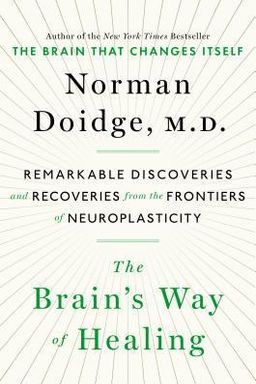
Idea 1
Rewiring the Brain for Healing
Why do some people recover from devastating brain or body injuries while others remain trapped in pain or loss? The central argument of this book is that the brain is inherently self-rewiring—a dynamic organ that can heal, re-map, and reconfigure itself when given the right inputs. But healing requires knowing how to work with the brain’s own rules of change: neuroplasticity, attention, repetition, and the balance between excitation and rest.
Across a series of remarkable stories—Michael Moskowitz unlearning chronic pain, John Pepper retraining his Parkinsonian gait, Cheryl Schiltz regaining balance after near-total vestibular loss, David Webber recovering vision after blindness—you see a pattern emerge. The brain’s circuits fail not only from structural injury but from learned nonuse, maladaptive plasticity, and persistent noise. Recovery, therefore, means teaching the brain to learn again.
The Core Framework of Plastic Healing
Healing follows predictable stages. First, fix the cellular environment—mitochondrial energy, inflammation, and oxygenation. Next, neurostimulate (via light, vibration, exercise, or focused attention) to awaken dormant circuits. Then, neuromodulate to calm noisy networks, balancing excitation with inhibition. Once quieted, the brain can enter neurorelaxation (deep rest and sleep-based restoration), setting the stage for neurodifferentiation—learning fine distinctions through movement, sound, and sensory experience. (Clinicians summarize this as Correct–Stimulate–Modulate–Relax–Differentiate.)
You learn that timing matters: the brain’s responsiveness unfolds through four plastic layers—functional (minutes to hours), synaptic (days to weeks), neuronal (month+), and systemic (years of consolidation). Early improvements excite hope; long practice cements cure. Cheryl Schiltz’s progress—minutes of balance turning into lifelong control after years—exemplifies systemic plasticity.
From Noisy to Organized
A recurring motif is the “noisy brain”: damaged or inflamed circuits firing erratically, drowning out meaningful signals. Whether in chronic pain, Parkinson’s slowness, or autism’s sensory overload, the brain’s challenge is not loss of neurons but loss of coordination. Techniques such as the tongue-stimulating PoNS device, listening therapy, light therapy, and targeted exercises all quiet noise and restore coherence, priming the cortex for focused learning. Only once brain rhythms synchronize can sustained rehabilitation take root.
Competition and Use-Dependent Change
Michael Merzenich and Edward Taub revealed the same law at work: use it or lose it. Maps in the cortex compete for real estate. When pain or immobility dominate, their circuits pirate neighboring brain regions; when attention and movement reclaim space, normal functions return. Moskowitz reclaimed cortical ground by visualizing pain maps shrinking. Taub forced recovery in stroke by binding the good arm. Pepper recaptured gait by purposeful walking. Across cases, repetition plus attention determines who wins the cortical competition.
The Power of Attention and Imagination
Attention is the electric current of neuroplasticity. When you visualize a brain map changing, repeat a movement mindfully, or listen actively to high-pitched frequencies, your brain reorganizes itself. These acts demand consistency—Moskowitz’s MIRROR principle (Motivation, Intention, Relentlessness, Reliability, Opportunity, Restoration) captures the perseverance required. Healing unfolds not from a single technique but from sustained engagement with awareness.
A Unified Vision of Plastic Healing
By the book’s end, neuroplastic recovery appears as a multidimensional craft. Light therapy renews cellular energy. PoNS and sound therapies tune brainstem homeostasis. Feldenkrais and movement awareness refine cortical maps. Exercise floods dopamine and neurotrophic factors. Neurofeedback stabilizes rhythms. Together, they demonstrate that modern neurorehabilitation is not about symptom management—it’s about building a brain that learns to heal itself.
Core Insight
Healing is not the reversal of damage but the creation of new function. When you align energy, focus, stimulation, and rest, the brain’s natural plasticity becomes a precise, powerful tool for recovery.
Across chronic pain, Parkinson’s, sensory loss, and trauma, the same principle holds: you can teach the brain to change its own wiring. This synthesis of science and lived experiment redefines what “cure” means—not an external fix, but an internal education of your brain.