
Idea 1
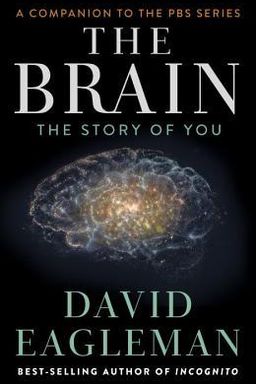
The Brain: The Story of You
What makes you, well, you? Is your personality, memory, or sense of reality purely a product of your brain’s biology—or something deeper? In The Brain: The Story of You, neuroscientist David Eagleman takes you on a captivating journey inside the three-pound mass of tissue that defines everything about your existence. He argues that understanding the human brain is not just a scientific quest but a profoundly personal one, because everything from your emotions and decisions to your moral compass and your idea of the future arises from that living network of cells firing below your awareness.
Eagleman contends that the self is not static. Your identity is continuously rewritten as experiences reshape connections among billions of neurons. His guiding idea is brain plasticity—the brain’s ability to rewire itself in response to experience. Across the book, he shows how your neurons craft reality, construct moral judgment, make decisions, and even extend beyond the limits of your biology through technology. You become, quite literally, what your brain allows you to perceive, remember, and feel.
A Journey to Understand Who We Are
From the moment you are born, your brain begins building the person you’ll become. Unlike most animals—who enter the world hardwired and ready to survive—humans arrive incomplete. That unfinished wiring enables adaptation to any environment, turning our species into the most flexible on Earth. Throughout life, this adaptability defines your uniqueness: no one has ever existed with the same neural map as you.
Eagleman frames his narrative around six questions: Who am I? What is reality? Who’s in control? How do I decide? Do I need you? And who will we be? Each chapter dives deeper into the mechanics of thought, emotion, and interaction. The overarching message is that the brain shapes not just what we think, but what we can think. It is constantly editing, predicting, and adapting, weaving the movie of consciousness you watch every moment.
Why This Matters to Your Life
Understanding your brain isn’t merely academic—it’s transformative. The way your neurons process sensory data determines your perception of reality. When you grasp how decisions are made in competing networks below conscious awareness, you start seeing that the idea of rational control is partly a myth. Knowing that emotions drive moral behavior helps explain everything from kindness to genocide. And realizing how technology can merge with our brain’s plastic wiring invites you to consider the future of human evolution itself.
Eagleman mixes approachable storytelling with real neuroscience experiments—from recording single neurons firing pops in a surgical patient’s brain to testing whether volunteers falling from a 150-foot drop perceive time differently under fear. Each story pulls you from abstract science into personal revelation. You learn that even the simplest action, like lifting a coffee cup, requires trillions of coordinated impulses—mostly hidden from your awareness.
The Threads That Tie It All Together
The book weaves together several major themes:
- Plasticity and Livewiring: Your brain molds itself based on experience, pruning and fortifying connections throughout life.
- Illusions of Reality: What you perceive is not the world itself but your brain’s best guess—constructed from limited sensory data.
- Unconscious Control: Most of your actions and choices occur below the surface of consciousness.
- Social Brains: Human survival depends on empathy and social connection, wired deeply into our nervous system.
- Technological Evolution: Our future lies in merging brain and machine, expanding sensory possibilities and even contemplating digital immortality.
By the end, Eagleman leaves you with a daring conclusion: your brain is more than a biological machine—it’s a living, evolving system that continuously redefines who you are. If you could understand it fully, you wouldn’t just grasp the story of your brain; you’d grasp the story of humanity’s future.