
Idea 1
The Pursuit of Perfection in Motion
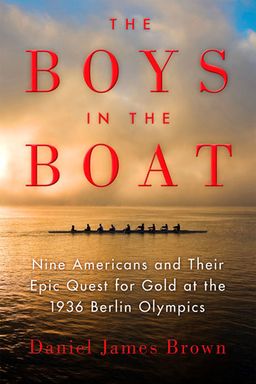
What does it mean for physical labor to become art? In The Boys in the Boat, Daniel James Brown answers that question through the story of nine working-class Americans who rowed to glory at the 1936 Berlin Olympics. He argues that rowing at its best fuses mechanics, moral character, and collective spirit into something transcendent. You are not just reading a sports chronicle; you are stepping into a meditation on unity, beauty, survival, and resilience against impossible odds.
At the heart of Brown’s argument is the idea that striving together toward perfect motion becomes a spiritual act. Through characters like Joe Rantz, George Yeoman Pocock, and coach Al Ulbrickson, you see how art, work, and moral character intersect. The book invites you to see rowing as a metaphor for democratic cooperation and personal redemption—an act of synchrony that echoes the ethical and social hopes of the Depression era.
From hardship to grace
Set in the 1930s, the story opens in a nation mired in economic despair. Seattle’s Hoovervilles and soup kitchens frame the backdrop, while Joe Rantz—a poor student left to fend for himself—embodies the hardships of the time. Rowing becomes Joe’s lifeline, offering both financial aid and belonging. His journey from abandonment to interdependence mirrors the larger theme: humanity’s ability to transform pain into purpose through cooperation. Brown’s Seattle is not just a city; it’s a crucible where desperation refines character.
The craft of transcendence
You then meet George Yeoman Pocock, the English boatbuilder whose cedar shells and philosophies sustain the entire narrative. Pocock elevates craftsmanship to ritual. When he planes wood, he listens to its grain, teaching rowers that reverence and precision lead to grace. His boats are not mere machines but vessels of moral and spiritual energy. Pocock reminds you that to touch the divine in sport—or life—you must master patience, humility, and perfect discipline. These lessons transform a mechanical team sport into an aesthetic and ethical practice.
As you watch the crews practice on Lake Washington, you realize rowing’s paradox: maximum strength must yield to perfect synchronization. Brown calls this moment of total unity swing—the elusive instant when the boat glides effortlessly, nine men breathing and moving as one. It is both technical and mystical, and Brown treats it as the ultimate form of human cooperation.
Discipline, teamwork, and faith
Coach Al Ulbrickson presides over this ritual with near-religious intensity. A stoic perfectionist, he demands purity of form and grit in subzero practices. His assistant, Tom Bolles, preaches psychological steadiness and moral fiber. Under them, the shell house becomes a monastery of movement—a place where repetition and ritual forge talent into unity. Daily weigh-ins, the M-I-B (mind-in-boat) chant, and punishing races mold individual egos into collective rhythm.
All of this happens under economic scarcity. The team lacks Cal’s steak tables and gleaming facilities, relying instead on Knox gelatin and cold endurance. Yet out of adversity, they produce resilience. Ulbrickson’s methods and Pocock’s craftsmanship cultivate not privilege, but perseverance—the kind that teaches character through constraint. (Note: Brown frequently contrasts this pragmatic austerity with Cal’s opulence to show virtue born of necessity.)
From the local to the global stage
Brown broadens the story beyond the boathouse. The Great Depression and the New Deal mirror the team’s ethos—individuals pulling together for a common goal. The construction of the Grand Coulee Dam, where Joe labors one summer, becomes a national metaphor for human cooperation on a monumental scale. Across the ocean, however, a different collective is forming: Nazi Germany, where sport serves as propaganda. The Berlin Olympics become a collision site between two systems—one built on humility and shared striving, the other on spectacle and control.
When the Washington boys row at Grünau in 1936, they do more than win gold; they affirm a different vision of what unity means. Against the backdrop of Riefenstahl’s cameras and Nazi pageantry, their synchronization becomes a counter-spectacle—human grace opposing political manipulation. Brown ends not with jingoism but a quiet reverence: the men rowed beyond themselves, touched something sacred, and left the rest for history to interpret.
What the story teaches you
Through these intersecting lives—Joe’s endurance, Pocock’s wisdom, Ulbrickson’s precision, and Moch’s intelligence—you glean the book’s central lesson: excellence depends on surrender. The paradox is that you find individual glory only when you stop seeking it and lose yourself in service to a collective rhythm. Brown shows this truth unfolding amid cedar shavings, Olympic strains, and a nation’s uncertain future. Rowing, like art, demands both solitary devotion and communal trust.
(In short: Brown’s narrative is about more than a race. It’s about how integrity, craft, and unity—expressed through wood, water, and motion—can redeem both individuals and the society they represent.)