
Idea 1
Climbing the Ladder of Causation
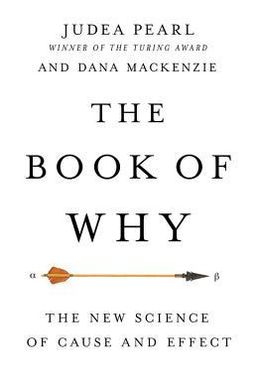
Why can machines predict but not explain? Judea Pearl’s The Book of Why argues that answering such questions requires a new language—the language of causality. For decades, science and statistics treated correlation as sufficient, assuming that cause was philosophically suspect. Pearl restores cause and effect to the center of reasoning. He organizes the journey through what he calls the Ladder of Causation, a three-level hierarchy describing how humans and intelligent systems can reason: seeing (association), doing (intervention), and imagining (counterfactuals).
The book’s core argument
Pearl’s thesis is that data alone are “dumb” about cause and effect. Observations tell you what correlates, but not what would happen if you acted differently. To climb the Ladder—from passive observation to active planning—you need models that express causal assumptions. These models let you answer questions like “What if we ban smoking?” or “Would this patient have recovered without treatment?” That leap from association to intervention is the defining move of causal reasoning.
Preview of concepts
Across the book, you learn how the history of science lost causality (Galton and Pearson’s correlation obsession), how Sewall Wright reintroduced it through path diagrams, and how modern causal diagrams formalize those ideas. Pearl constructs a causal inference engine that combines assumptions, queries, and data to yield clear answers. He introduces algorithms like do-calculus to convert intervention questions into estimable formulas. Along the way, he uses paradoxes (Simpson, Lord, Monty Hall) to show how only causal diagrams dissolve confusion where statistics alone fail.
Why it matters
The Ladder doesn’t just reshape statistics—it reshapes how you think about explanation, accountability, and fairness. Counterfactual reasoning underlies your moral intuitions (“Would Joe have survived if…?”) and guides decisions in law, medicine, and public policy. Pearl shows that these everyday questions are not mystical but computable once you encode the right causal diagram. He extends this logic to artificial intelligence, arguing that current neural networks live on the lowest rung—associating pixels with labels—and must climb higher rungs to achieve understanding and ethical reasoning.
From association to imagination
The book’s progression mirrors human learning. You start with association: seeing regularities, as Galton did with heights and Pearson did with correlation. Next comes intervention: understanding that forcing an event changes outcomes differently than merely observing correlations. Finally, you reach counterfactuals: imagining alternatives to what happened and reasoning about necessary causes. Pearl expresses these as computable formulas using the “do-operator,” structural causal models (SCMs), and the rules of do-calculus. Each rung demands a deeper conceptual shift, moving from statistical to causal language.
A new scientific language
This language allows you to answer questions once thought impossible: how to deconfound observational studies without randomized trials, how to test mediation, and how to transport causal knowledge across different populations. Pearl and collaborators like Elias Bareinboim unify these methods under graphical and algebraic principles, replacing hand-waving with systematic calculation. Historical case studies—from the smoking-cancer debate to cholera to Big Data—show how causal diagrams reveal hidden colliders and confounders that mislead pure data analysis.
Central insight
To understand “why,” you must climb from data to model, from statistical association to causal imagination. Each rung up the Ladder expands the kind of questions both humans and machines can answer.
By the end, you grasp not only the structure of causal thought but also the computational machinery that makes it precise. The Book of Why is both manifesto and manual: it teaches you to ask better questions and offers algorithms to answer them, bringing “why” back to the scientific table.