
Idea 1
The Transformative Power of Joy in the Face of Suffering
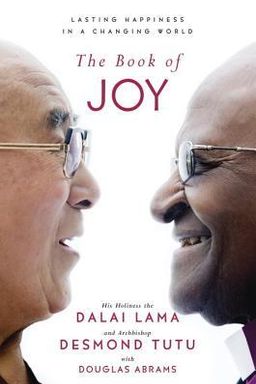
How can you experience authentic joy when life feels heavy with stress, loss, and injustice? In The Book of Joy: Lasting Happiness in a Changing World, His Holiness the Dalai Lama and Archbishop Desmond Tutu, guided by writer Douglas Abrams, grapple with this question during a week of intimate, laughter-filled conversations in Dharamsala, India. These two Nobel Peace Prize laureates—spiritual titans from Buddhism and Christianity—explore how we can cultivate deep, resilient joy even when confronted by life's inevitable suffering.
They contend that true joy is not an ephemeral burst of happiness but a way of being, a profound orientation toward life grounded in compassion, gratitude, and perspective. As the Dalai Lama says, we create most of our suffering ourselves through our responses and expectations; therefore, we also hold the power to create our joy. The Archbishop adds that joy blossoms when we turn our focus outward—when we love, forgive, and serve others. This shared insight underpins the central message: Joy and suffering are not opposites but companions; we can learn to face pain with open hearts and discover meaning that uplifts rather than destroys us.
The Context and Collaboration
In April 2015, the Dalai Lama invited Archbishop Tutu to celebrate his 80th birthday in Dharamsala after years of being denied visas due to political pressure from China. Their week together became a testament to friendship that transcends religious, racial, and national divides. Abrams captures their laughter, teasing, and profound reflections on humanity’s shared longing for happiness. This cross-cultural meeting becomes an act of spiritual unity, demonstrating that joy is a universal capacity rather than a privilege of faith.
Throughout the dialogues, the two spiritual masters confront the full human experience—loneliness, fear, anger, illness, and eventually death—and respond not with denial but with curiosity, compassion, and humor. As they break bread, meditate together, and discuss neuroscience, their teaching emerges as both a contemplative philosophy and a practical psychology for modern life. Their conversation blends Buddhist mindfulness and Christian grace into a vivid tapestry of wisdom for a weary world.
The Eight Pillars of Joy
The book revolves around what they call the “Eight Pillars of Joy,” four qualities of the mind (perspective, humility, humor, acceptance) and four of the heart (forgiveness, gratitude, compassion, generosity). These pillars form the foundation for joy that can withstand life’s turbulence. They are not spiritual abstractions but trainable habits of heart and mind, accessible through daily practices such as meditation, gratitude journaling, and compassionate actions. The result is not transient happiness but a deep ‘mental immunity’—an inner resilience that cushions us against despair.
The Dalai Lama likens this inner discipline to strengthening the immune system: the more you cultivate positive emotions through practice, the more resistant you become to mental toxins like fear or hatred. The Archbishop echoes this through his Christian lens, describing forgiveness and compassion as the practical outworkings of God’s love. Together, their teachings reveal that joy is not found in external pleasure or possessions but through aligning your inner life with universal human values of love, connection, and service.
A Dialogue Between Science and Spirit
What makes The Book of Joy especially engaging is the inclusion of neuroscience and psychology alongside ancient philosophy. Abrams draws from researchers like Richard Davidson and Sonja Lyubomirsky to show that joy is not mystical but measurable—rooted in empathy circuits, gratitude pathways, and practices that reshape the brain. Compassion and humor activate the same reward centers as chocolate, proving that being kind is literally pleasurable. This dialogue between science and spirituality affirms that both ancient meditation and modern psychology point toward the same truth: joy arises from how we relate to ourselves and others, not from life’s circumstances.
A Hopeful Vision for Humanity
Beyond personal well-being, the Dalai Lama and Archbishop Tutu envision joy as a moral and social force. They urge readers to build a “global community of compassion” where kindness, not greed or fear, guides human progress. Their conversation closes with a call to educate future generations in empathy and ethics—what the Dalai Lama calls a “secular moral revolution.” For him, compassion is not a religious duty but a practical necessity for survival; for the Archbishop, it is how we embody divine love.
By the end of the week, these two “mischievous elder brothers” remind us that the path to joy is not the avoidance of pain but the transformation of suffering through love. Their final embrace, after blessing each other for the last time, is both an image of mortality and of hope. The Book of Joy is thus both a conversation between two friends and a manual for the soul—a reminder that joy is not a gift of fortune but a practice of the heart, renewed every day you choose compassion over fear.