
Idea 1
The Paradox of Being Human: Animal Roots, God-like Minds
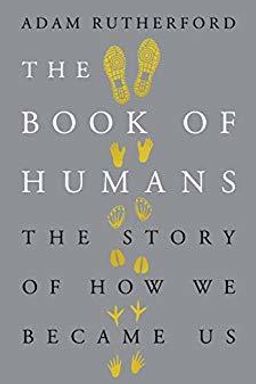
Have you ever wondered what really makes you human? Is it your intellect, your creativity, or the fact that you can reflect on your own existence? In The Book of Humans, geneticist and science communicator Adam Rutherford embarks on a fascinating exploration of these questions, arguing that our species’ uniqueness lies not in the things that separate us from animals, but in how we expand upon the same basic patterns of behavior found throughout nature. We are, as Darwin observed, animals stamped with our lowly origins—yet we have built art, technology, and morality on top of these biological foundations.
Rutherford’s central claim is that humans are both utterly ordinary and profoundly extraordinary. Ordinary because our biology and behaviors—sex, violence, cooperation, tool use—are found everywhere in the animal kingdom; extraordinary because only we have taken those instincts and built an entire cultural world around them. We are apes that make art, talk in symbols, teach ideas, and pass them down through generations. Understanding this duality is essential, he argues, to grasp who we are and how we got here.
From Animal to Paragon
The book begins with a question that has haunted philosophers and scientists for centuries: What makes us special? Rutherford turns to both biology and cultural history to answer it. Drawing inspiration from Hamlet’s famous words—‘what a piece of work is a man!’—he explores how we have long oscillated between seeing ourselves as divine creations and as clever animals. Darwin settled the debate when he placed us firmly in nature, yet that didn’t erase the paradox: we are creatures of instinct capable of reasoning about infinity.
Rutherford then unfolds this paradox across two sweeping parts. In Part One: “Humans and Other Animals”, he surveys where our behaviors overlap with other species—our tool use, sex lives, violence, and creativity. In Part Two: “The Paragon of Animals”, he asks what tipped the balance, turning another clever ape into a species that builds cities and ponders its own mind. The hinge between the two is culture: the ability to transmit knowledge, skills, and stories beyond genetics, creating a self-sustaining web of ideas.
Technology, Tools, and Fire
Rutherford traces technology back not to smartphones but to sharpened rocks. Tools like the Oldowan chopper and Acheulian hand axe were our first great inventions—simple yet revolutionary. They reveal planning, fine motor control, and teaching, all hallmarks of cognition. Yet, as he points out, tool use itself isn’t unique to us: chimpanzees fish for termites, dolphins wear marine sponges as protective gloves, and crows craft hooks from twigs. What separates us is not making tools, but making tools that make culture. We pass on expertise, improve it, and teach one another in a loop of cumulative innovation.
Fire, too, becomes a character in our story. It’s more than chemistry—it’s a metaphor for our ability to control a force of nature. We’re “obligate pyrophiles,” he says, the only species that not only harnesses fire but builds civilization around it. Even here, we learn humility: Australian raptors use fire deliberately to flush out prey, spreading flames like avian arsonists. We’re not alone in manipulating nature’s power, but no other species transformed it into industry.
Sex, Violence, and the Joy of Being Animal
Sex, one of Rutherford’s key lenses, serves as both mirror and microscope. He catalogues a carnival of mating scenes: self-fellating bats, necrophiliac penguins, dolphin coercion rings, and the polymorphous passion of bonobos. His point is both sobering and liberating—human sexuality, in all its variety, is perfectly natural. Pleasure, homosexuality, and even violence have deep evolutionary histories. But unlike animals, we can choose. We alone codify sex as moral or immoral, criminal or sacred, joyful or shameful. Evolution gave us desire; culture gave us meaning.
Violence, too, echoes in our genes. Chimpanzee warfare eerily mirrors human conflicts, complete with premeditated raids and territorial conquests. Yet we are distinguished not by aggression but by inhibition—the ability to channel violence into politics, ritual, or sport. As Rutherford puts it, nature is indifferent, but humans are capable of conscience.
The Birth of Modern Minds
In the book’s second half, Rutherford explores what he calls “the full package” of humanity: symbolism, language, art, and consciousness. Through archaeological treasures like the Löwenmensch lion-man and the Venus of Hohle Fels, he demonstrates that imagination—the ability to envision something that doesn’t exist—marks a cognitive revolution. When humans started to make music, carve figurines, and paint animals on cave walls, something irreversible happened: art became evidence of thought.
But this shift didn’t come from a sudden “spark of genius.” It emerged slowly, through growing populations, better social transmission, and subtle genetic changes like the FOXP2 gene for speech. As we learned to talk, we learned to teach—and culture became cumulative. This demographic and cognitive feedback loop, Rutherford argues, was the true engine of modernity.
Why It Matters
Understanding our animal origins, Rutherford insists, isn’t about diminishing humanity but deepening it. Recognizing ourselves as part of nature allows us to marvel at both evolution’s creativity and our capacity for reflection. “We almost never murder, we almost never rape,” he concludes, “and we create and teach all the time.” The Book of Humans doesn’t tear down human exceptionalism—it reframes it. We are special not because we transcend nature, but because we embrace it, make meaning from it, and build worlds around it.
If you’ve ever looked at your hands, wondered at your mind, or asked what separates imagination from instinct, Rutherford’s answer will change how you see yourself. You are a great ape with god-like intellect, a story among billions, and the storyteller, too.