
Idea 1
The Way of Mastery: Musashi’s Eternal Path to Clarity and Victory
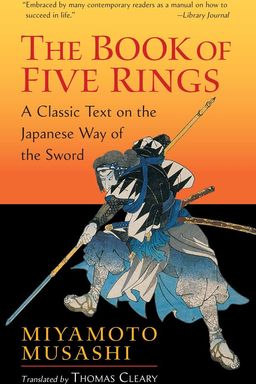
What does it truly mean to master yourself—to face confrontation, fear, and ambition, and walk away victorious without ever drawing your sword? In The Book of Five Rings, the legendary 17th-century samurai Miyamoto Musashi argues that the art of combat and the art of life are one and the same. To succeed in either, you must cultivate an unwavering clarity of mind, mastery of rhythm and timing, and an understanding that real victory comes from recognizing and transcending illusion.
Musashi, undefeated in over sixty duels, wrote his treatise in 1643 near the end of his life. While it’s often associated with swordsmanship, the book’s power lies far beyond the battlefield. It’s a manual for strategy in any domain—business, leadership, creativity, or self-cultivation. “The Way,” as Musashi calls it, is an all-encompassing discipline, a way of perceiving and responding to life’s conflicts with mastery rather than emotion.
Five Scrolls, Five Dimensions of Mastery
Musashi structures his teachings into five parts—the Earth, Water, Fire, Wind, and Emptiness Scrolls—each representing an aspect of the warrior’s journey from foundation to transcendence. The Earth Scroll lays the groundwork, aligning martial arts with crafts like carpentry to show that mastery in one art teaches mastery in all. The Water Scroll teaches flexibility and mental stillness, urging students to flow like water in both victory and defeat.
In the Fire Scroll, Musashi addresses real confrontation: how to read opponents, seize initiative, and move through chaos without flinching. The Wind Scroll critiques other schools, warning against dogma and showmanship that obscure the true Way. Finally, the Scroll of Emptiness moves beyond all dichotomies, describing a consciousness that acts in perfect harmony with reality—free from distortion or obsession. “In emptiness there is good but no evil,” Musashi declares, pointing to a state of selfless awareness akin to Zen enlightenment.
A Philosophy Born from a Lifetime of War
Musashi’s Japan was a land in transition—from centuries of civil conflict to the strict peace of Tokugawa rule. The samurai’s external wars were ending, but his internal battles began. Having lived as a rōnin—a masterless warrior—Musashi turned his experience of survival into timeless teaching. He lived ascetically, rejecting comfort and fame, to embody the idea that strength arises from stillness, clarity, and integrity of purpose.
Complementing Musashi’s voice, Yagyū Munenori’s The Book of Family Traditions on the Art of War expands the same principles into governance, ethics, and Zen philosophy. Together, they reveal a civilization where the sword was not just a weapon but a mirror for the mind. For Yagyū, the greatest victory was to kill evil itself—to use the “Life-Giving Sword” to preserve balance and peace.
Why These Lessons Still Matter Today
At its heart, The Book of Five Rings invites you to confront your own conflicts—the doubts, distractions, and false rhythms of modern life. Whether you’re leading a team or facing personal adversity, Musashi’s message holds: true power comes from clarity of mind, perception of timing, and the ability to act without attachment. Victory, in his view, is not about crushing others but mastering the self so completely that conflict dissolves on its own.
“Determine that today you will defeat your yesterday self.”
—Miyamoto Musashi
The book endures because it’s not about the sword. It’s about perception. It’s about rhythm. It’s about learning to see clearly when everything around you seems uncertain. The same principles that won duels centuries ago can help you navigate today’s challenges—with strategy, patience, and the calm strength of one who understands the Way.