
Idea 1
Thriving Through a Century of Upheaval
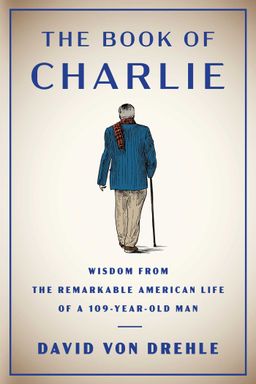
How do you stay steady when your world won’t stop changing? In The Book of Charlie, David Von Drehle argues that it’s possible to live well—joyfully, courageously, and usefully—through relentless upheaval. He contends that the key isn’t hidden hacks or superhuman talent; it’s an earned weave of Stoic clarity, action bias, resilience, and an eye for wonder. Charlie White—born in 1905, dead at 109—serves as the living case study. He crossed the arc from horse-drawn carriages and pre-penicillin medicine to jet travel, open-heart surgery, and smartphones, yet he kept his equilibrium and humor intact.
Von Drehle’s core claim is deceptively simple: you can’t control history’s waves, but you can learn to surf them. Charlie’s life becomes a field manual for surfing—equal parts “let go” (of outcomes, status, rage, and what-ifs) and “hold on” (to values, effort, and problem-solving). This blend shows up in dozens of moments: an 8-year-old absorbing his father’s sudden elevator death without becoming bitter; a teenager hopping freights from Los Angeles back to Kansas City; a Great Depression doctor trading house calls for eggs; a midlife pivot from general practice to anesthesiology when antibiotics rewired medicine overnight.
What the book argues
The book isn’t a conventional biography; it’s a quest for a usable philosophy. Von Drehle set out to give his children a survival guide for the digital revolution by finding someone who had already crossed a comparable chasm. He discovered that model across his suburban street: Dr. Charles Herbert White, one of the last living Americans born before women had the vote. The argument lands in three moves. First, radical change is the human condition now. Second, resilience is learnable—especially when you distinguish what you control (your actions and attitude) from what you don’t (fate, other people, outcomes). Third, joy isn’t naïveté; it’s a discipline that makes endurance sustainable.
Charlie’s two-beat wisdom
“Let it go” for what you can’t control. “Hold on” to what you can—your effort, your choices, your cheer.
Why this matters now
If you feel whipsawed by AI, remote work, and algorithmic everything, you’re living Charlie’s dilemma at a faster frame rate. He began doctoring when mercury and mustard plasters were common prescriptions; he finished his career icing patients in a horse trough to pioneer early heart surgery, then embraced modern anesthesiology after a wartime crash course at the Mayo Clinic. That same mental flexibility—curious, humble, iterative—is what you need when your industry or identity gets refactored by code. (Compare to Nassim Taleb’s Antifragile and Angela Duckworth’s Grit.)
How the book teaches
Von Drehle teaches by story. You’ll sit on a Kansas City hillside with 9-year-old Charlie as Union Station rises by horse and human muscle. You’ll lurch across America at 16 in a 1917 Model T with two friends, paint “The Unconscious Three” on the door, and learn to pour soda pop into a boiling radiator. You’ll scavenge golf balls, tune in to WDAF’s midnight jazz, and teach yourself tenor sax by playing along with the Coon-Sanders Nighthawks. You’ll treat pneumonia in a crowded tenement with a coal range warming ether; you’ll barter a tonsillectomy for an 1890s Encyclopaedia Britannica. And you’ll pivot—again—when penicillin and war reorganize the medical world.
What you’ll take away
You’ll learn a resilient frame: decide fast on the next right action; do not outsource your attitudes; keep a playful eye for the marvelous. You’ll see a practical method for career reinvention (recognize inflection points, re-skill quickly, and iterate forward). You’ll absorb an ethical core—“Do the right thing,” as Charlie’s mother taught—that stops you from becoming brittle or cynical. And you’ll have a set of compact maxims to carry: “This will pass.” “Keep your daubers up.” “Nobody’s going to do it for you.”
Why Charlie convinces
He isn’t airbrushed. He loses two marriages—one to addiction and suicide (Mildred), one to misfit timing with WASP pilot Jean Landis—and later marries Lois, then becomes a widower again. He makes wrong bets (turns down investing in Aspen and in Ewing Kauffman’s basement pharma start-up). He works amid Kansas City’s mobbed-up Pendergast machine, refuses kickbacks, and loses hospital privileges for it. Yet he keeps choosing courage over comfort—quitting and rejoining the military, learning cutting-edge anesthesia, and literally tying a suicidal patient’s swollen tongue to a bedrail to keep him alive. His optimism isn’t a mood; it’s a practiced stance.
If you want a modern, portable philosophy for turbulent times, this book offers one—tested across world wars, pandemics, depressions, and the digital dawn. It’s not about living longer; it’s about living better while everything changes around you.