
Idea 1
Drawing the Line: The Power of Boundaries
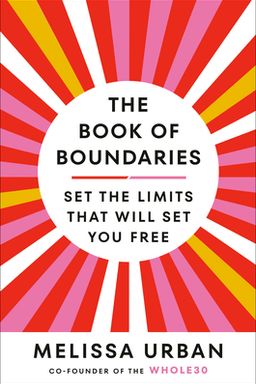
What does it really mean to protect your peace without controlling others? In The Book of Boundaries, Melissa Urban argues that boundaries are not walls meant to keep people out—they are bridges that preserve connection while safeguarding dignity, energy, and emotional safety. Boundaries define what belongs to you and what doesn’t, so you can interact from a place of autonomy rather than resentment.
Urban, best known for co-creating Whole30, brings her recovery background to explore how boundaries shape sobriety, relationships, and even workplace effectiveness. She proposes that almost every interpersonal or self-regulation problem traces back to unclear limits. The book’s central message is simple: you can’t control other people, but you can control your own actions when your needs aren’t respected.
Boundaries as personal limits, not ultimatums
A boundary defines what behavior you will accept and what you will do if that limit is crossed. They are not designed to manipulate others’ behavior but to preserve self-respect. Picture Urban’s signature metaphor: you standing in the middle of a field and drawing a circle around you. Inside the circle are conditions you find safe; outside lie actions or topics that feel harmful. That circle is your responsibility—it’s not a fence for others, but a guide for your responses.
Boundaries keep you from falling into resentment or burnout. They preserve energy, create clarity, and often defuse conflict before it grows toxic. Urban illustrates this vividly in her recovery story: when a friend offered her drugs, she replied firmly, “If you offer me drugs again, we can’t be friends.” That decision, she says, saved her life because it separated her commitment to health from others’ pressures.
Why we struggle to set them
Most people are never taught the skill of setting boundaries; they’re socialized to be “nice” instead of truthful. This cultural training makes saying no feel selfish and triggers guilt responses that erode autonomy. Urban reframes the idea entirely—assertiveness isn’t cruelty; it’s kindness through clarity. If you start noticing dread, emotional fatigue, or avoidance around someone, those are early boundary signals, your nervous system’s way of warning you before bitterness sets in.
Learning boundaries, Urban says, is like learning to speak an emotional language you were never taught. The process is both cognitive and somatic: your body provides signals; your words give them structure. Over time, practicing boundaries rewires your nervous system to expect respect instead of tension.
Language and practice shape effectiveness
Boundaries fail when communication is fuzzy. Urban borrows Brené Brown’s adage, “Clear is kind, unclear is unkind,” to stress that warmth and firmness are not opposites. Be kind in tone but precise in language. Phrases like “I’m not available for that,” or “I don’t talk about weight,” are short and unambiguous, giving others no room for misinterpretation. Boundary-setting, then, is less about confrontation than precision.
Equally powerful is Urban’s idea of “alerts”—brief signals such as “Oof,” “Wow,” or raised eyebrows that buy you a second to pause, assess, and prepare a full response. These micro-interruptions let you shift from instinctive politeness to protective clarity, which is especially crucial in emotionally charged or unsafe situations.
The three-step practice: identify, set, hold
Urban’s method condenses the art of boundaries into three repeatable steps. First, identify the discomfort—dread, anxiety, or resentment are the clues. Second, set the boundary using clear, compassionate words. Third, hold it with consistent consequences. For tough cases, she layers her “Green/Yellow/Red” color-code: green signals a gentle request, yellow a firmer reminder, and red a final statement with clear consequences.
These tools apply everywhere—from family dinners and romantic partnerships to Slack messages at work. At its heart, this method transforms boundaries from emotional outbursts into structured communication that fosters mutual respect.
The flow of the book
Urban guides readers from personal awareness to practice across life contexts. Early chapters teach the basics of recognizing signals, naming boundaries, and using language tools; later ones dive into specific domains—family, work, friendships, romance, sex, technology, co-parenting, and even self-discipline. Each section provides real-world scripts, practical frameworks (like Eve Rodsky’s Fair Play for household division), and communication tools such as Nonviolent Communication for conflict management.
Ultimately, The Book of Boundaries argues that limits are an act of love—for yourself and for others. When you honor your own circle, you teach people how to treat you and model emotional honesty for relationships, workplaces, and even future generations. Boundaries are not about keeping people out. They are about letting relationships stay intact without costing you your peace.