
Idea 1
The Body Remembers What the Mind Forgets
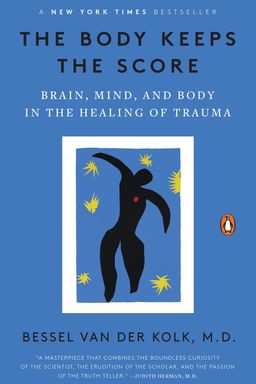
Trauma isn’t just a bad memory—it’s a lasting reorganization of both the brain and the body. In The Body Keeps the Score, psychiatrist Bessel van der Kolk shows that experiences of overwhelming fear or helplessness rewrite the circuits that control emotion, language, and physical regulation. The body literally "keeps the score," storing sensations, muscle tension, and autonomic patterns long after the conscious mind has moved on.
You learn that trauma is not a moral or psychological failure but a biological shift: the brain’s survival systems—amygdala, brainstem, limbic networks—stay on guard while the frontal lobes that tell coherent stories often shut down. Van der Kolk’s own neuroimaging studies display this vividly: when patients recall trauma, the emotional brain lights up while Broca’s area, the speech center, goes dark. The result is a reliving, not a remembering—an experience trapped in unspoken images and body sensations.
How trauma rewires perception
Trauma hijacks your triune brain: the reptilian base governs survival reflexes, the limbic system generates emotion, and the frontal lobes make meaning. Under siege, the lower layers take over. Veterans like Tom explode with rage or go numb because their alarm system learned to overreact. Survivors like Marsha experience flashbacks where a single smell or sound yanks them into the past. These reactions aren’t irrational—they’re memory in its rawest, sensory form.
When emotional circuitry dominates, you lose the normal dialogue between body and mind. Stress hormones flood, muscles tense, and breathing shortens. Without retraining these bottom-up systems, talking about trauma often fails or even worsens symptoms.
Why early relationships matter
Childhood experiences teach your nervous system what safety feels like. If your caregiver is attuned—responsive gaze, gentle voice—the ventral vagal complex grows strong, allowing calm and social engagement. If you grow up amid abuse or neglect, arousal patterns become rigid and unpredictable. Longitudinal studies (Sroufe, Putnam, Felitti’s ACE project) show how early insecurity predicts lifelong problems: depression, addiction, and even heart disease. Van der Kolk reframes this as physiology, not character. Neglect reshapes hormones and immune tone just as surely as it scars emotions.
Restoring safety through body, language, and connection
Healing begins when the body feels safe enough for the mind to join. Van der Kolk’s clinical work integrates therapy from opposite directions: top-down methods like narrative reconstruction and cognitive work help label experience, while bottom-up methods—yoga, breathing, neurofeedback, and EMDR—retrain the organism itself. Each aims to reconnect the rider (prefrontal cortex) with the horse (limbic and brainstem networks) so that words, movement, and emotion align again.
If you have been traumatized, recovery means reclaiming your agency in the present. Whether through theater, group rhythm, or Internal Family Systems dialogue, the core skill is learning to inhabit sensations safely and to witness old memories without drowning in them. Clinicians, too, must respect this biology—therapy must teach regulation before revisiting terror. Talking alone cannot heal what the body still believes is happening.
A new map of trauma and hope
Taken together, the book argues for a revolution in trauma care. You cannot separate mind from body, or individual pain from social context. Diagnosis should evolve beyond PTSD’s narrow event model toward developmental trauma, where chronic interpersonal harms are central. Healing requires more than clinical expertise; it requires restoring community rhythm, compassionate witnessing, and self-leadership—learning to feel alive again. The body keeps the score, but with attention and care, it can also keep the story of recovery.