
Idea 1
The Extraordinary Story of You
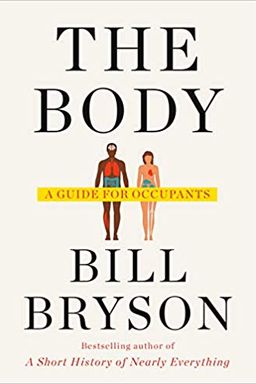
What are you, really? In The Body: A Guide for Occupants, Bill Bryson contends that you are a masterpiece of biological organization—a structure of ordinary atoms arranged so precisely that the result is consciousness, sensation, and life. His argument is that understanding what you're made of, how your systems interact, and how fragile and ingenious those systems are reveals both humility and wonder.
From atoms to thinking matter
You start as common materials — carbon, hydrogen, oxygen — worth only a few dollars in raw form. Yet through cellular organization those elements become tens of trillions of living factories that each maintain metabolism and repair. Bryson’s playful tally (the Royal Society of Chemistry’s $151,578 estimate for the purified elements of one person) reminds you that the miracle is not in the materials but in the arrangement. DNA, coiled meters deep in each nucleus, encodes billions of instructions that your body follows with near-perfect fidelity yet enough mutation to fuel evolution.
Systems of life and balance
Throughout the book, Bryson moves through your major systems—the skin that protects and signals, the heart that pumps, the brain that interprets, the gut that nourishes, and the immune and endocrine networks that keep you steady. Each part operates in conversation with microbes, hormones, and environmental forces. You are, he emphasizes, an ecosystem of human and non-human cells: trillions of bacteria on your skin and in your intestine contribute genes, digest foods, and modulate immunity. Even your skin color and microbial balance are results of evolutionary trade-offs—melanin for UV protection versus vitamin D synthesis, hygiene versus microbial diversity.
Evolution, trade-offs, and fragility
Bryson connects everyday traits to long evolutionary stories. Walking upright gave you freedom to speak and invent tools but introduced back pain and difficult childbirth. Your throat evolved for speech but increased choking risk. Temperature regulation, sweating, and fat storage optimized survival in scarcity, yet modern abundance distorts these adaptations into obesity and chronic disease. Even your immune system’s vigilance sometimes misfires—producing allergies and autoimmunity instead of protection. These balances are recurring motifs: systems that evolved for resilience now resist modern convenience.
Medicine, progress, and humility
Bryson celebrates human ingenuity—from William Harvey’s discovery of circulation to Banting’s insulin isolation, Fleming’s penicillin, and the invention of heart-lung machines and transplants. But he insists on humility: scientific triumphs often bring new dilemmas. Antibiotics bred resistance; radical cancer surgeries caused needless suffering; and sleep deprivation, sedentary work, and poor diets outpace medicine’s ability to repair the consequences. The book’s narrative urges you to see medicine as partnership with biology, not conquest.
The mystery of consciousness
The brain, a three-pound organ consuming one-fifth of your energy, constructs your entire experience from electrical impulses. It interprets rather than perceives reality directly, and memory itself is reconstructed—a narrative shaped each time you recall it. In patients like Henry Molaison, Bryson shows how loss of the hippocampus erases the ability to form new memories, emphasizing that identity itself depends on fragile circuits. Consciousness, he concludes, remains unsolved: we can map neurons but not yet explain subjective experience.
The overarching lesson
Across organs and stories—from Alexis St. Martin’s gastric fistula to Michel Siffre’s cave sleep experiment—Bryson maintains that understanding the body means appreciating complexity and imperfection. You are the interplay of molecules, microbes, hormones, sensations, and ideas—a system tuned for balance that modern habits frequently unsettle. The book is both anatomy and philosophy: by learning how you work, you gain profound respect for what keeps you alive and connected to the long story of life on Earth.
Central insight
Your body is ordinary matter performing extraordinary coordination—its success lies less in the parts than in their relationships. Bryson asks you to marvel at that fact, care for it wisely, and recognize how rare and fragile such complexity is.