
Idea 1
Living in a World of Black Swans
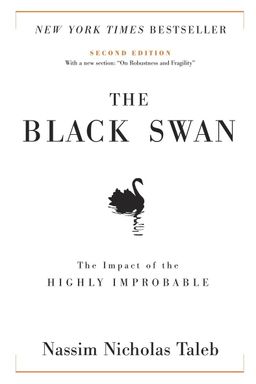
You live in a universe governed less by the predictable average than by the rare and disruptive. In The Black Swan, Nassim Nicholas Taleb argues that the most consequential events in history—wars, inventions, crises, discoveries—are not predictable by standard methods because they belong to a class of phenomena he calls Black Swans. These are events that are outliers, carry massive impact, and are only made 'explainable' after the fact through stories and theories that give us the illusion of foresight. The book of ideas is not about forecasting, but about humility, skepticism, and survival in an uncertain world.
The Core Argument
Taleb’s central claim is simple but destabilizing: you are addicted to order and pattern, yet you live in an environment dominated by randomness. Most traditional models, especially those in economics and social science, assume that outcomes hover around a mean and follow 'normal' bell-shaped distributions. But in reality, most measurable things that matter—wealth, book sales, city sizes, and wars—follow power laws, meaning a few instances account for almost everything. This leads to a world divided between Mediocristan (mild variation) and Extremistan (wild variation), and most modern life takes place in the latter.
In Mediocristan, you can rely on averages: if you measure a hundred human heights, the sample mean stabilizes quickly. But in Extremistan—where wealth, fame, or market outcomes reside—a single data point can overwhelm all others. That’s where the Black Swan lives. Confusing these two worlds, Taleb warns, is intellectual malpractice: economists, statisticians, and technocrats often use Mediocristan mathematics in an Extremistan world, producing overconfidence and systemic fragility.
Why You Misread the World
Taleb examines the psychological and epistemological roots of your blindness. You suffer from the narrative fallacy: your brain craves coherent stories, so it imposes cause and pattern where none exist. You fall for confirmation bias and ignore invisible evidence—the graveyard of failures never recorded (silent evidence). You assume the past is a reliable predictor of the future—an error known as the problem of induction. You treat abstract probabilistic games as if they describe real life—the ludic fallacy. All these habits converge to produce epistemic arrogance: you think you know more than you truly do.
Experiments confirm these biases. People who claim 98% certainty about factual estimates turn out wrong in nearly half of their answers. Bookmakers given more data grow more confident but not more accurate. Experts, in Philip Tetlock’s massive forecasting study, perform worse than chance—and the more famous they are, the more confidently wrong they become.
The Limits of Knowledge and Prediction
Taleb connects these cognitive traps with deep philosophical limits explored by thinkers like Hume and Popper. The problem of induction shows that no number of confirming observations can guarantee future regularity—the thousand-and-first day can always surprise you. Popper offers a solution: focus on falsification, not confirmation; eliminate falsehoods rather than accumulate fragile truths. Taleb extends this into a practical ethics: become a skeptical empiricist who values what you don’t know (Umberto Eco’s 'antilibrary' of unread books) and tinker your way through reality rather than cling to neat theories.
From Awareness to Action
Once you see that the world is dominated by rare, unpredictable events, your task shifts: not to forecast them, but to organize your life to survive or benefit when they happen. This means building robustness and optionality—what nature already does. Systems survive because they hold redundancy (two kidneys, spare capacity) and tolerate shocks. Optimization, efficiency, and overconfidence make you fragile. Taleb’s strategy, the barbell approach, mirrors this: keep most of your resources in safe assets but expose a small portion to high-risk, high-reward possibilities that capture positive Black Swans.
On a societal level, Taleb pushes for an epistemocracy—a world that prizes humility over hubris. His 'Ten Principles for a Black-Swan-Robust Society' read like warnings from the future: avoid 'too big to fail', decentralize systems, punish moral hazard, and let small failures happen early rather than systemically. Nature’s logic—redundant, experimental, decentralized—should guide human institutions.
The Practical Philosophy
The Black Swan is ultimately an argument for living wisely under ignorance. Rather than pretending to know, you act as if you don’t—and build strategies that can withstand being wrong. You cultivate optionality (many small opportunities for upside), practice skeptical empiricism (test and tinker rather than proclaim), and design for convexity (systems that gain from volatility). You prefer the humility of the antischolar who experiments over the arrogance of the theorist who optimizes on false assumptions. And you learn that sometimes the best decision is restraint—avoiding iatrogenic harm by doing less, not more.
By the end of Taleb’s work, you realize this is not a book about predicting rare events, but about thriving amid unpredictability. Knowledge has limits, but preparation, flexibility, and humility multiply your chances of surviving—and sometimes, profiting from—the unknown.