
Idea 1
Revolution from Chains: The Making of Haiti
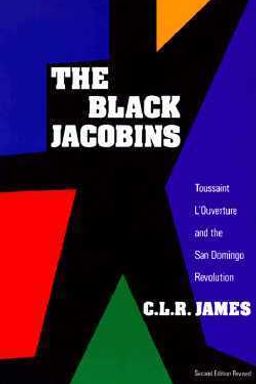
How does a society built on human bondage transform itself into the first Black republic in the modern world? In The Black Jacobins, C.L.R. James argues that the Haitian Revolution was not a local or accidental event but the most radical application of the French Revolution’s slogans—Liberty, Equality, Fraternity—by those whom Europe least expected to act upon them. He contends that to grasp its true meaning, you must see the revolution as both a response to the brutal logic of slavery and a mirror of the global economic and ideological transformations of its time.
The Engine of Slavery
James begins by exposing the Atlantic slave system as a man-made machinery of profit and suffering. San Domingo—France’s richest colony—became a laboratory for the industrialization of human exploitation. Africans were captured, chained, and packed into ships where mortality rates soared above twenty percent. Those who survived the Middle Passage faced plantation life governed by the lash, legal codes that institutionalized cruelty, and the constant threat of mutilation or death. Yet James reveals that within this horror grew rebellion: maroon communities thrived in mountains, and cultural forms like Voodoo preserved unity and memory for future revolt.
A Fractured Colony
San Domingo’s society was a volatile pyramid of interests. Big white planters dominated wealth, small whites coveted status, free Mulattoes fought for recognition, and half a million enslaved Africans bore the weight. These groups competed under the watch of distant French bureaucrats. Mulatto property owners, often educated and economically successful, were barred from political power—an exclusion that produced the colony’s first political crisis. (Note: James emphasizes that race and class intersect, not merely coexist, shaping each revolt’s character.)
When France Sneezes, San Domingo Burns
The French Revolution’s debates about rights and representation shook the colony. When men like Mirabeau questioned whether slaves counted as citizens, they exposed contradictions that could not remain theoretical in a plantation society. Free Mulattoes sent delegations to Paris demanding equality; their repression—culminating in Ogé’s execution—ignited racial and social tensions. James shows how the revolution’s ideals, coded in metropolitan law, became triggers for revolt in the colonies.
The Spark of 1791
By 1791, under spiritual leaders like Boukman, the enslaved masses transformed secret religious gatherings into political meetings. The ceremony at Bois Caïman became the moral and organizational start of the uprising that razed the North Plain. What followed was not chaotic vengeance but a disciplined war waged by army commanders—Jean François, Biassou, and later Toussaint Louverture—who turned rebellion into revolution.
Toussaint: The Revolutionary Statesman
Toussaint Louverture stands at the book’s core as James’s model of a modern revolutionary. A self-educated ex-slave steeped in Enlightenment thought, he fused military strategy with political pragmatism. Through logistics, diplomacy, and restraint, he built a functioning administration in a ravaged land. Yet his greatest flaw, James notes, was believing that order and property could secure freedom without continuous mass participation.
Global War, Local Genius
San Domingo’s upheaval became a theater of world politics. Britain and Spain sought to occupy the island; France oscillated between radical emancipation under Sonthonax and imperial reaction under Bonaparte. Toussaint navigated these shifting allegiances with masterful diplomacy, defeating British campaigns and producing an autonomous constitution in 1801 that abolished slavery and centralized authority under his governance.
Fall and Legacy
Bonaparte’s expedition in 1802, led by Leclerc, combined deceit and violence. Toussaint’s arrest and death in prison in France inspired renewed resistance led by Dessalines, culminating in Haiti’s independence in 1804. For James, Toussaint’s tragedy lies not only in betrayal by France but in his failure to mobilize the very masses who once lifted him to power. The revolution’s final victory, while bitter, became a beacon for Black liberation worldwide.
The Core Argument
James’s central claim is that history’s driving force is not abstract ideals but the actions of ordinary people making those ideals real. Slaves, Mulattoes, and workers, not philosophers or planters, realized the Enlightenment’s promise. The Haitian Revolution thus foreshadows every modern liberation struggle—the moment when oppressed people learn to wield the tools of modernity against their masters.
When you finish this story, you have traced a full arc: from a commercial machine of profit and cruelty to the invention of freedom under fire. It is both a specific tale—the creation of Haiti—and a universal one about how power, race, and revolution intertwine to create modern politics.